
Search
Search

 Eng
Eng
 Eng
Eng
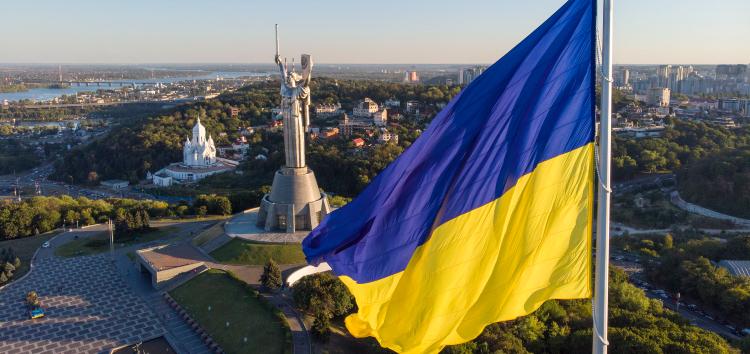
The EBRD, Ukraine’s biggest institutional investor, deployed €1.7 billion in Ukraine and mobilised a further €200 million from partner banks in 2022. The Bank has committed to deploy €3 billion there in 2022-23 and has so far mobilised €1.5 billion from international donors. The EBRD’s primary focus in Ukraine in wartime is on maintaining energy and food security, restoring critical infrastructure at national and municipal level, providing trade finance and supporting the private sector.
Governors stated their full commitment to providing the shareholder support required to enable the Bank’s role in Ukraine and agreed that paid-in capital is the most efficient, effective and fairly shared instrument to provide such support, noting that a €3-5 billion paid-in capital increase would enable investment of the nature and scale outlined without the need for systematic donor risk-sharing in 2024 and beyond.
“We warmly welcome this decision. It reflects the commitment of our shareholders to support Ukraine and the trust our shareholders have in the EBRD to deliver that support’s role in Ukraine, in both wartime and subsequent post-war reconstruction. Given the magnitude of the financial challenge in supporting Ukraine, a paid-in capital increase is the most efficient form of support that shareholders can provide and we are looking forward to working with shareholders to prepare a decision by year-end,” said EBRD President Odile Renaud-Basso.
If approved, the capital increase will mark the third time the Bank’s shareholders have agreed to boost its capital base. The EBRD was founded in 1991 with capital of 10 billion ecu. This doubled in 1996 to 20 billion ecu, then increased further in the wake of the global financial crisis to €30 billion in 2010.
The Bank has a unique role to play in this crisis. After more than 30 years of promoting economic transition in Ukraine, the EBRD’s emergency response to the war focuses on the real economy. EBRD funding is also used to help refugees in neighbouring countries and to assist the municipalities hosting them.
Last year, EBRD support for Ukraine included the provision of €150 million of emergency liquidity to Ukrainian Railways, a total of €520 million to the electricity company Ukrenergo, and a €500 million package for the gas company Naftogaz. By keeping the lights and heating on and the train running, this finance provided assistance to Ukraine’s businesses and helped maintain livelihoods.
The EBRD is currently expanding its support for municipal authorities around the country. With support from the USA, in December the Bank lent €25 million to the city of Lviv, in western Ukraine, and, with support from the EU and the USA, is providing Khmelnytskyi, a city that became a home to thousands of displaced people, with €10.6 million to improve its public transport system by renewing its trolleybus fleet.
The Bank is working with Ukrainian Railways and private investors on rehabilitating transport infrastructure in the west of the country, to improve connectivity with the European Union, and supporting private investment including by committing US$ 40 million to Horizon Capital Growth Fund IV, a fund which has raised more than US$ 250 million to make growth equity investments in Ukraine and Moldova.
The Governors’ decision on support for Ukraine was one of three key resolutions to be approved at the meeting in Samarkand. The second was to give the formal go-ahead for a limited expansion of EBRD activities to countries in sub-Saharan Africa, while including Iraq as part of the Bank’s “southern and eastern Mediterranean region” for the first time. The third was to modernise the framework for managing the Bank’s capital.
(*) Donors who have extended support for Ukraine so far are The United States, Norway, France, The Netherlands, Spain, the European Union, Canada, the United Kingdom, Italy, Japan, South Korea, Switzerland, Taipei China, Germany, Austria, Denmark, Finland, Ireland and Sweden.