Read our Cookie policy here.
Search
Search
Who we are
Overview: about the EBRDWho we are
Overview: about the EBRD
Learn about the EBRD's journey to investing more than €220 billion in over 7,800 projects.
What we do
Overview: how the EBRD operatesWhat we do
Overview: how the EBRD operates
Across three continents, the EBRD supports the transition to successful market economies.
Work with us
Overview: how you can work with the EBRDWork with us
Overview: how you can work with the EBRD
We draw on three decades of regional knowledge and financial expertise to tailor our products and approaches to each client's needs.

 Eng
Eng
 Eng
Eng
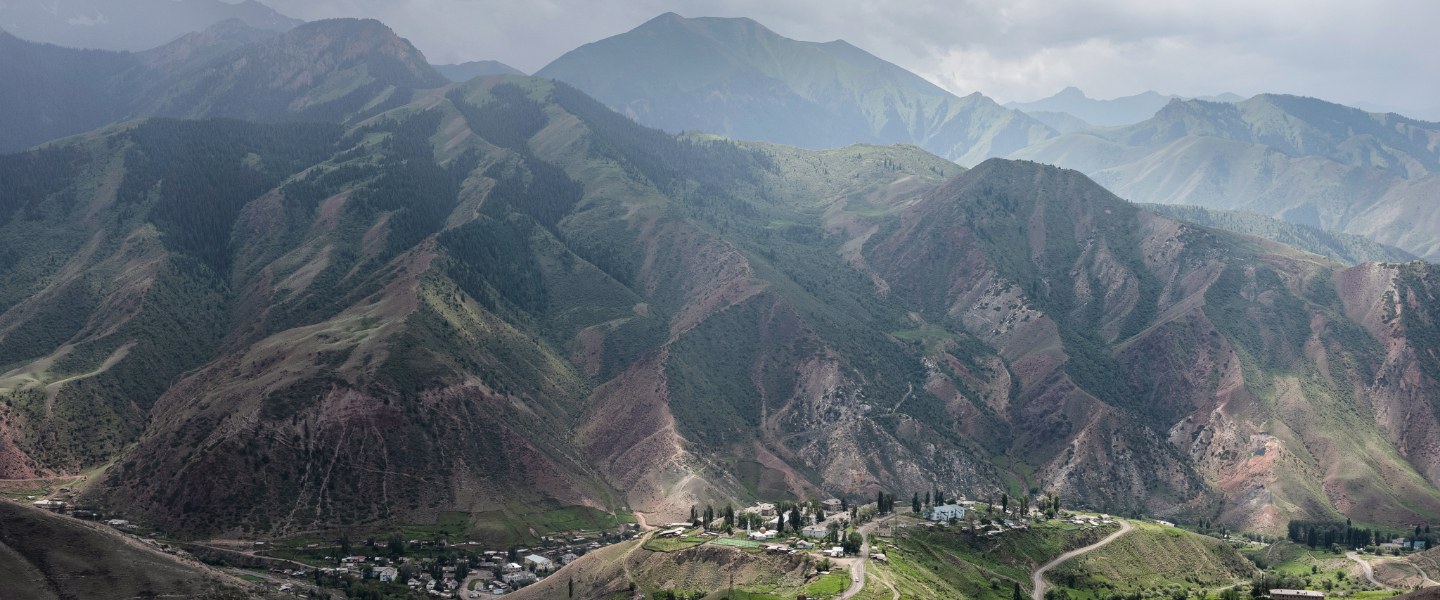
Central Asia played a significant role in providing uranium to the former Soviet Union, with mining operations spanning over 50 years. Despite the closure of most mines and processing facilities by 1995, little effort was made to address the environmental and health risks posed by the remaining toxic and radioactivewaste.
To tackle these hazards, EBRD established the Environmental Remediation Account (ERA) in 2015.
ERA is backed by the European Union as the largest donor, Belgium, Lithuania, Norway, Spain, Switzerland, and the United States of America. As of end-2025, the fund has received contributions of around €70 million.
The ERA addresses the urgent threats posed by uranium legacy sites in the Kyrgyz Republic, Tajikistan, and Uzbekistan, with particular emphasis on protecting the region’s breadbasket, the Fergana Valley from transboundary contamination.
By 2025 ERA has completed the remediation of four out of seven high priority uranium legacy sites identified in the IAEA’s strategic master plan. Min-Kush and Shekaftar in the Kyrgyz Republic and Charkesar and Yangiabad in Uzbekistan. All projects were completed on budget and schedule. Clean-up operations are now underway at the complex Mailuu-Suu in the Kyrgyz Republic. Addressing the Tajik sites is currently out of reach due to lack of funding.
The EBRD manages work to clean up sites in Central Asia that were polluted by the Soviet uranium industry.
Cookie consent
Cookies are pieces of code used to track website usage and give audiences the best possible experience. Use the buttons to confirm whether you agree with default cookie settings when using ebrd.com.
Read our Cookie policy here.
These cookies cannot be disabled. They are essential for core functionality in ebrd.com to ensure a seamless and secure experience.
We use Adobe Analytics cookies to measure usage of the website in order to improve it and respond to end user actions. We review anonymised data on how people reach the site, where they click and so forth. Learn more here about specifics of our cookie use.
We use Adobe marketing cookies to enable us to customise ebrd.com to tailor the website and email marketing services based on the interests of each end user.