
Read our Cookie policy here.
Search
Search

 Eng
Eng
 Eng
Eng
Min Kush in the Kyrgyz Republic is one of two sites selected for the initial phase of the remediation programme managed by the EBRD. This once flourishing town’s population shrank dramatically when the uranium works closed. Those who remain have had to live with increased radiation levels and a contaminated water supply.
With the work in Min Kush complete – on time and on budget - the threat to the health of residents is now in the past. Clearing and securing the site was the first step towards a long-term solution to the danger the abandoned uranium mining and processing sites in Central Asia still pose 20 years after the demise of the Soviet Union.
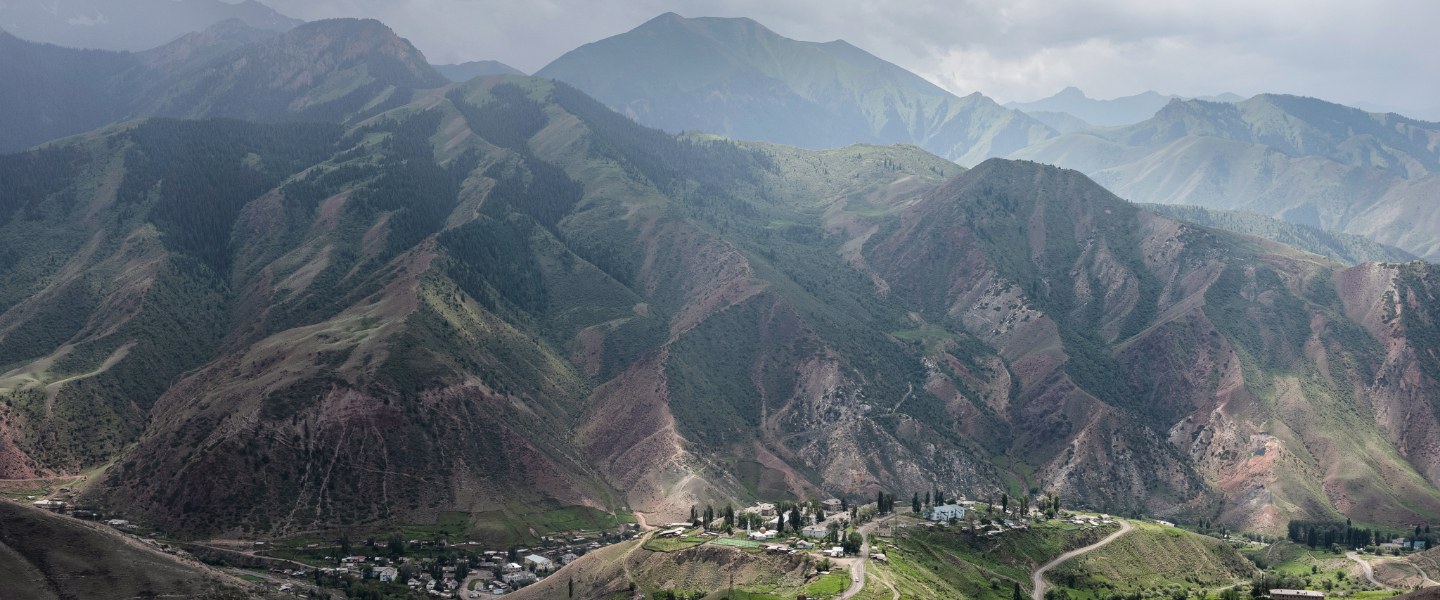
View of Min Kush
A view of Min Kush in the centre of the Kyrgyz Republic. The town is the site of former uranium mining and processing operations. The town’s name means ‘1000 birds’ in the Kyrgyz language. It’s a stunning location inspiring hope that the town may become a centre for tourism – once the residual radioactive contamination has been cleaned up.
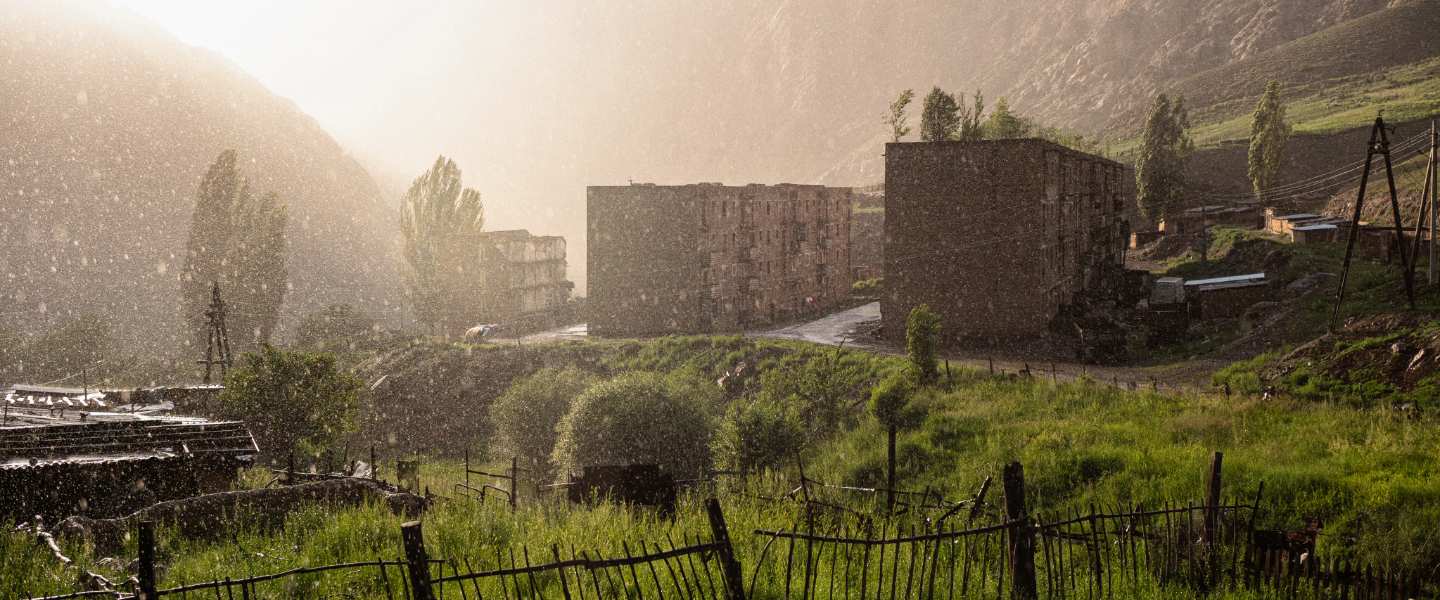
Sunlight through summer rainfall
Sunlight through summer rainfall in Min Kush. The collapse of the Soviet Union, and the abandonment of the uranium plant, has seen population numbers in Min Kush plummet as people of working age leave for the capital Bishkek or for Russia. Once numbering as many as 20,000, the town has fewer than 3000 inhabitants today.
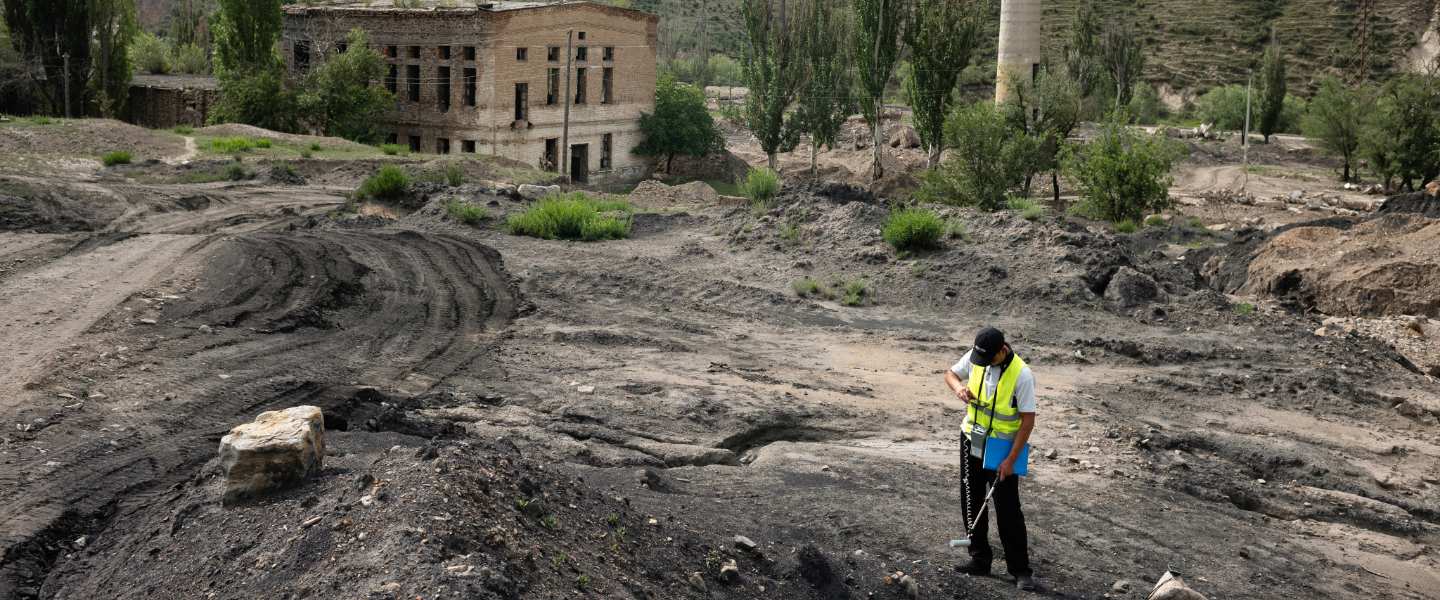
Radiation levels
A member of the Kyrgyz Academy of Sciences monitors radiation levels at the former uranium processing site in Min Kush. Careful monitoring ensures that demolition and remediation works are carried out safely.
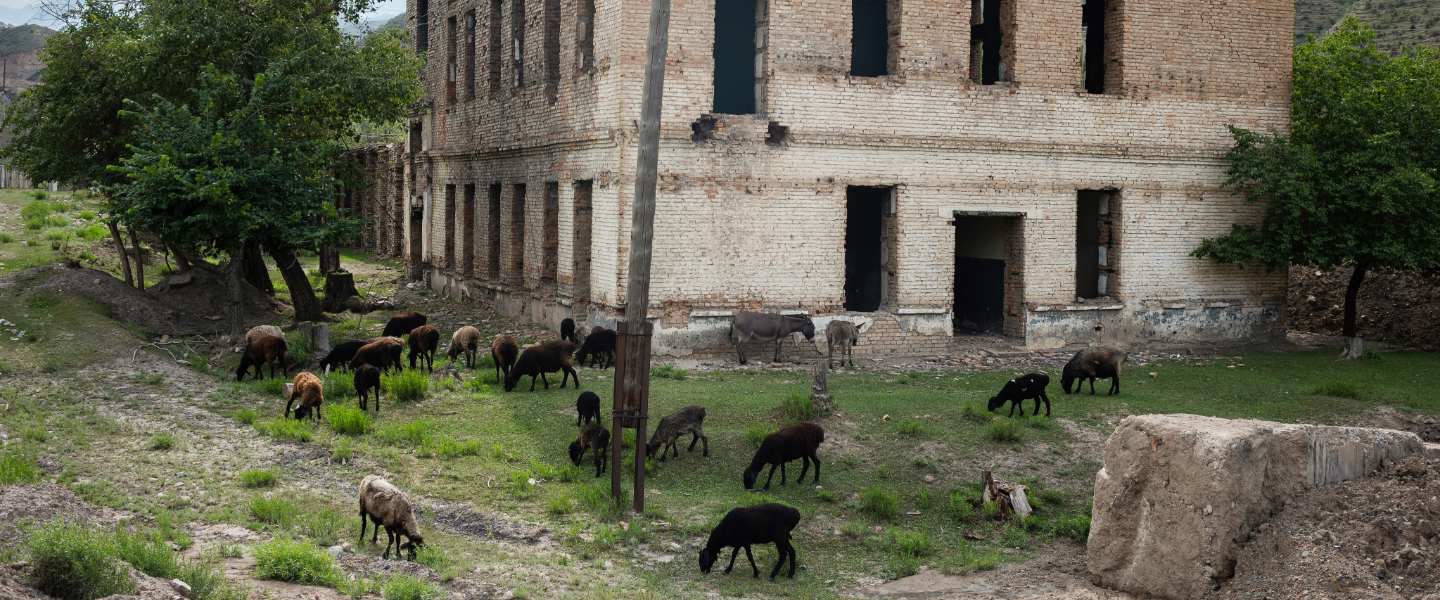
Flock of sheep
A flock of sheep grazes on contaminated grass beside an abandoned administrative building and laboratory at the site of the uranium processing plant. One of the purposes of the remediation programme is to ensure that radioactive substances do not enter the water supply and food chain.
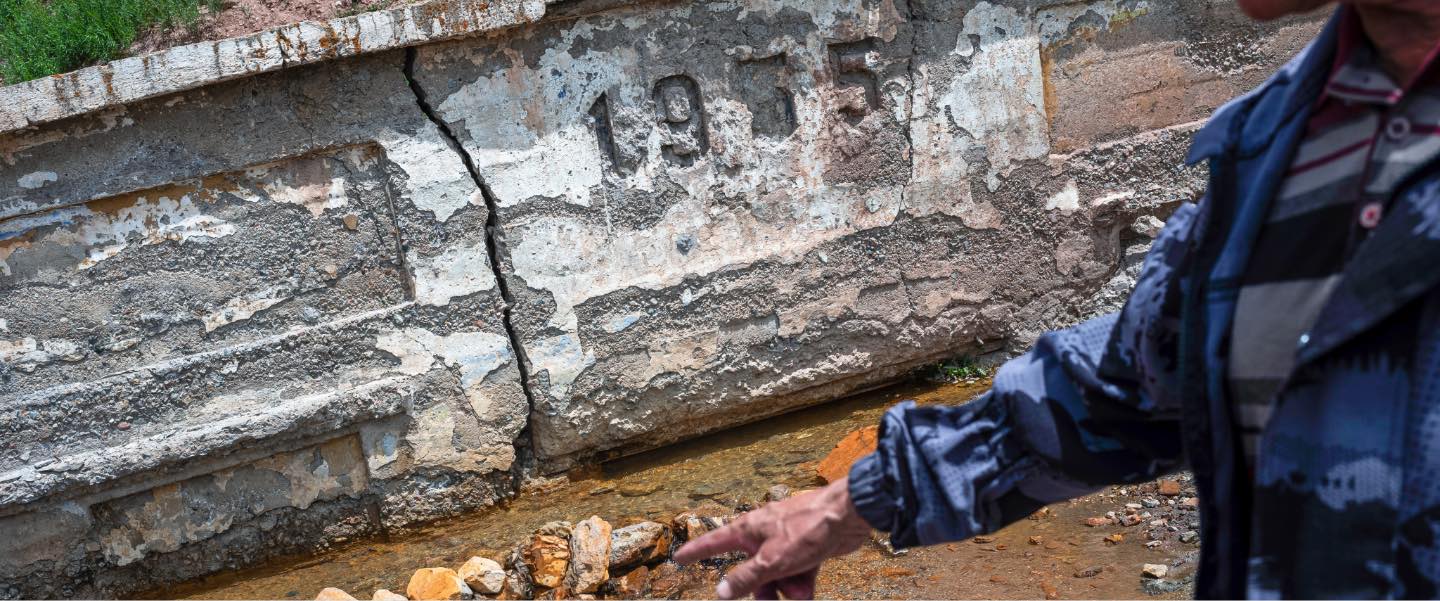
Ministry of Emergency Situations
A representative of the Ministry of Emergency Situations points to the sealed off entrance to a uranium mine in Min Kush. It was blocked to stop humans entering, but this did not stop water gaining access. Many such uranium facilities in the region were built near waterways - and the risk of contaminated substances entering the regional river system remains serious. The results could be catastrophic.
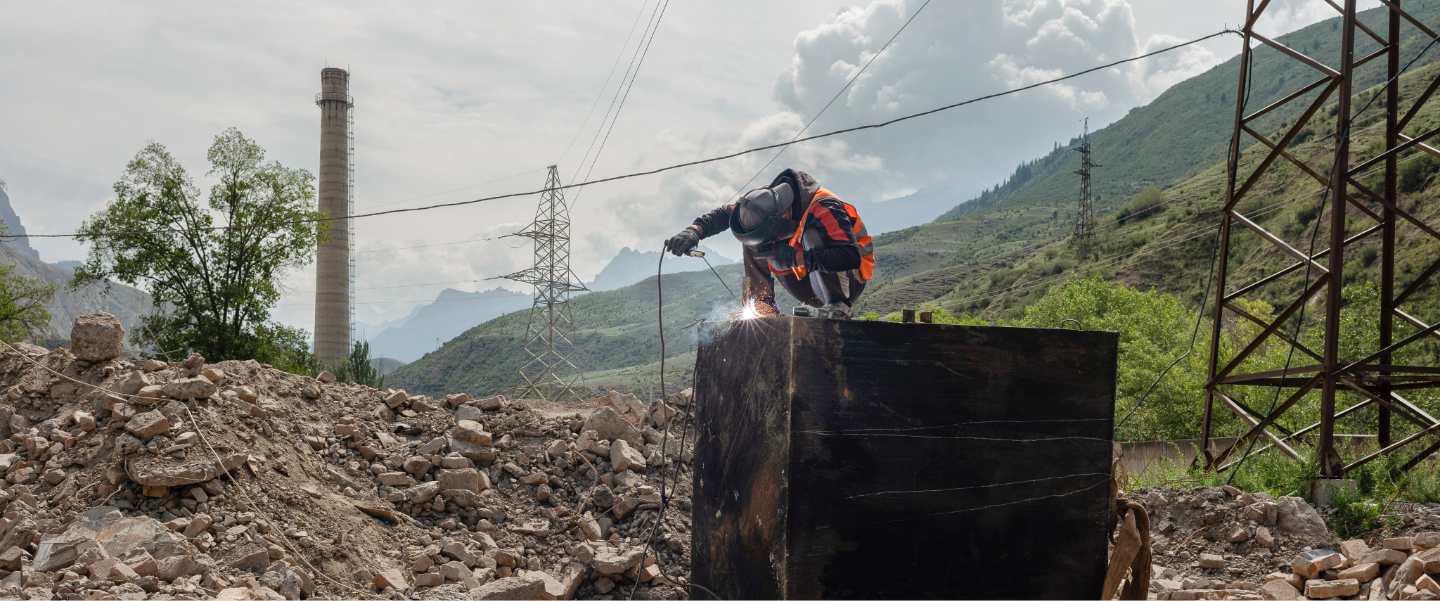
Kutman Bekchoro Uluu
Kutman Bekchoro Uluu, 20 years old, is employed as a welder at the remediation site. He originally worked in the construction industry, but joined the programme to help complete it as quickly as possible. All his relatives live in the surrounding area.
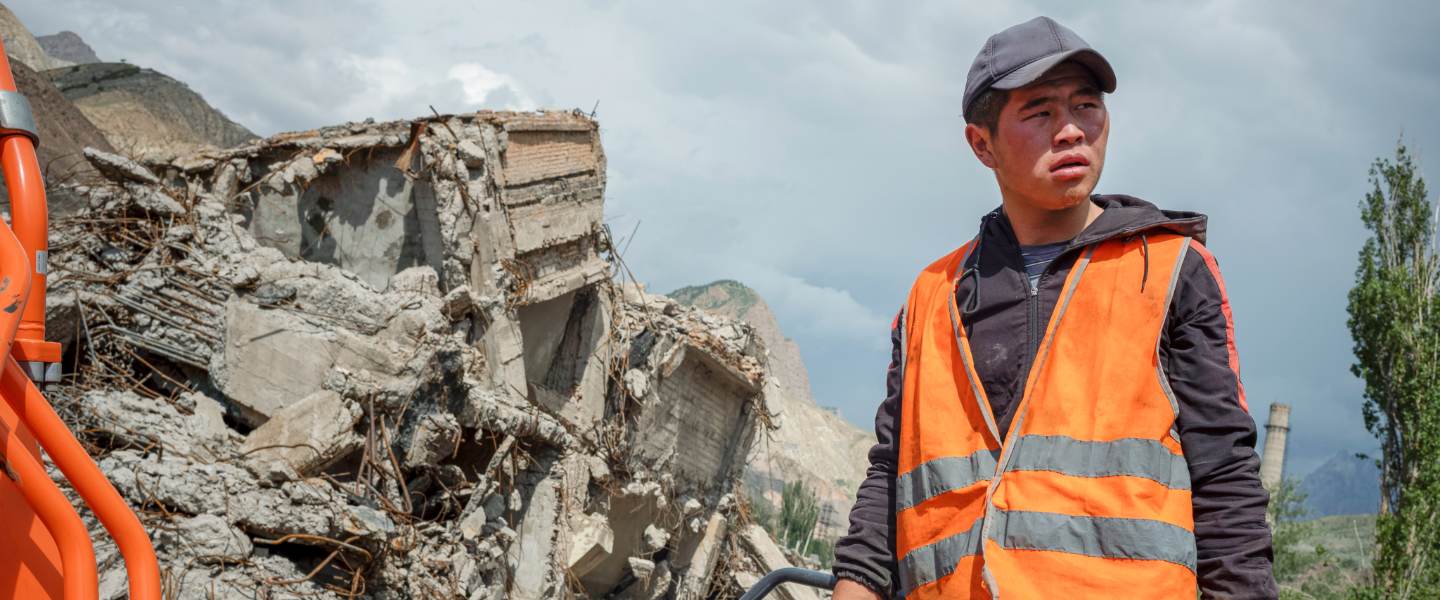
Daily responsibilities
Kutman’s daily responsibilities, besides welding, include taking care of machinery and dismantling metal items extracted from the site. When the remediation work is completed, he wants to start his own business, build a house and find a wife.
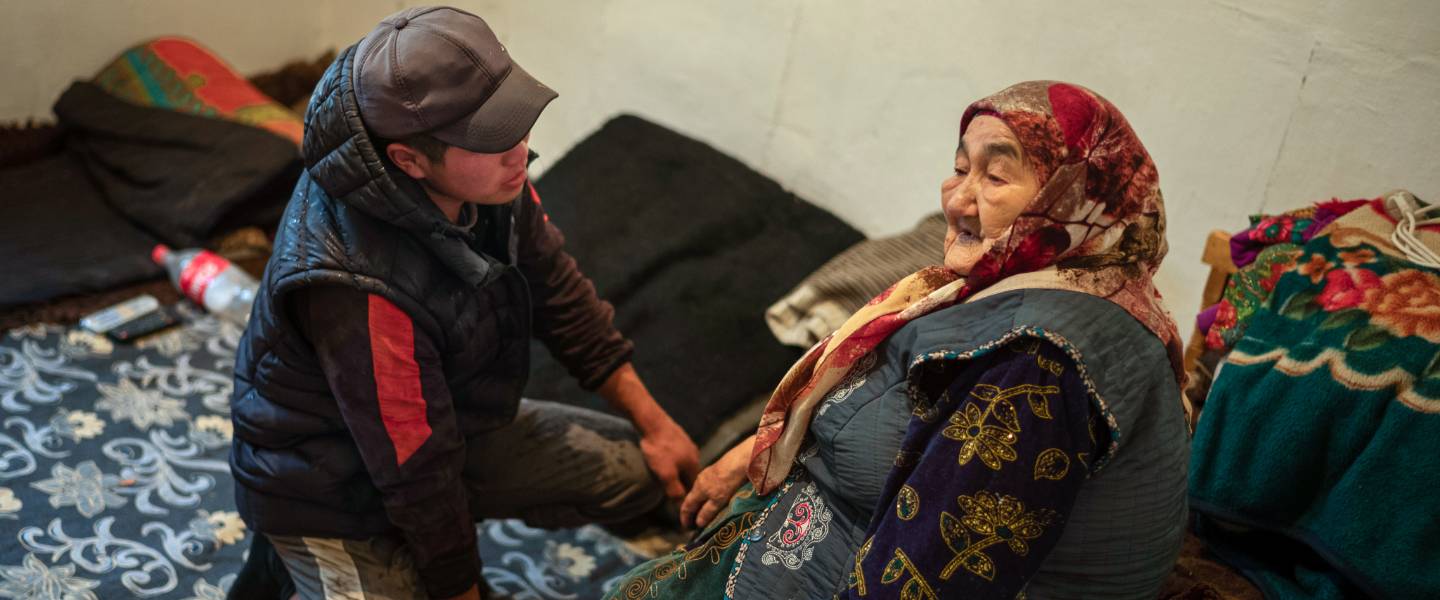
Kutman
Kutman lives in a settlement nine kilometres further up the valley but during his days on shift he lives with his grandmother in central Min Kush. She welcomes the company because she struggles to take care of herself, and is barely able to manage on her tiny state pension.
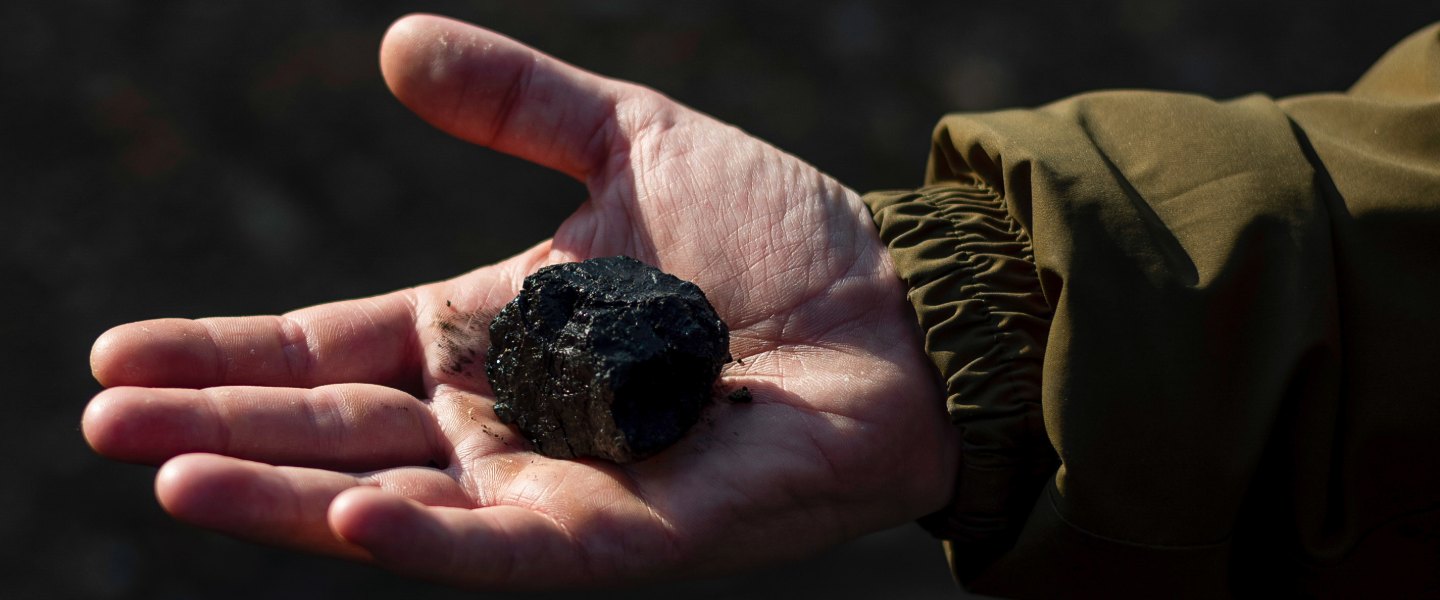
Open cast coal mines
Apart from the ongoing remediation works at the uranium site, the main source of work in Min Kush is a series of open cast coal mines.
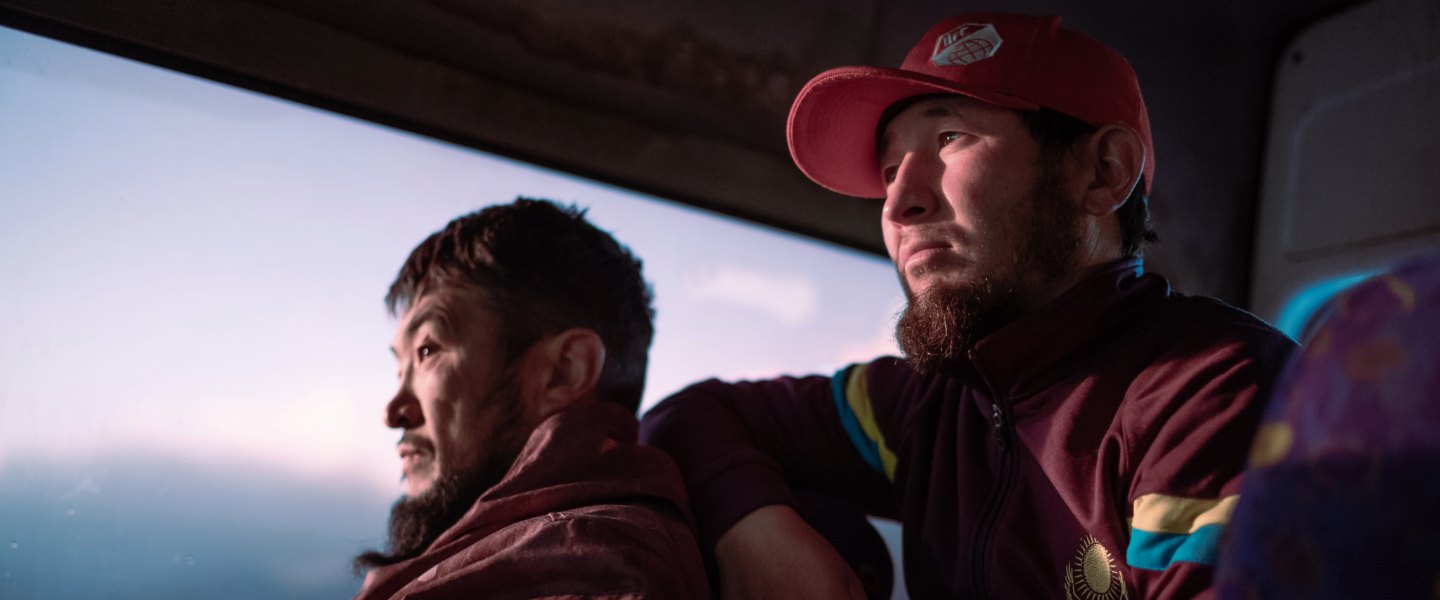
Uzak Asyrankulov
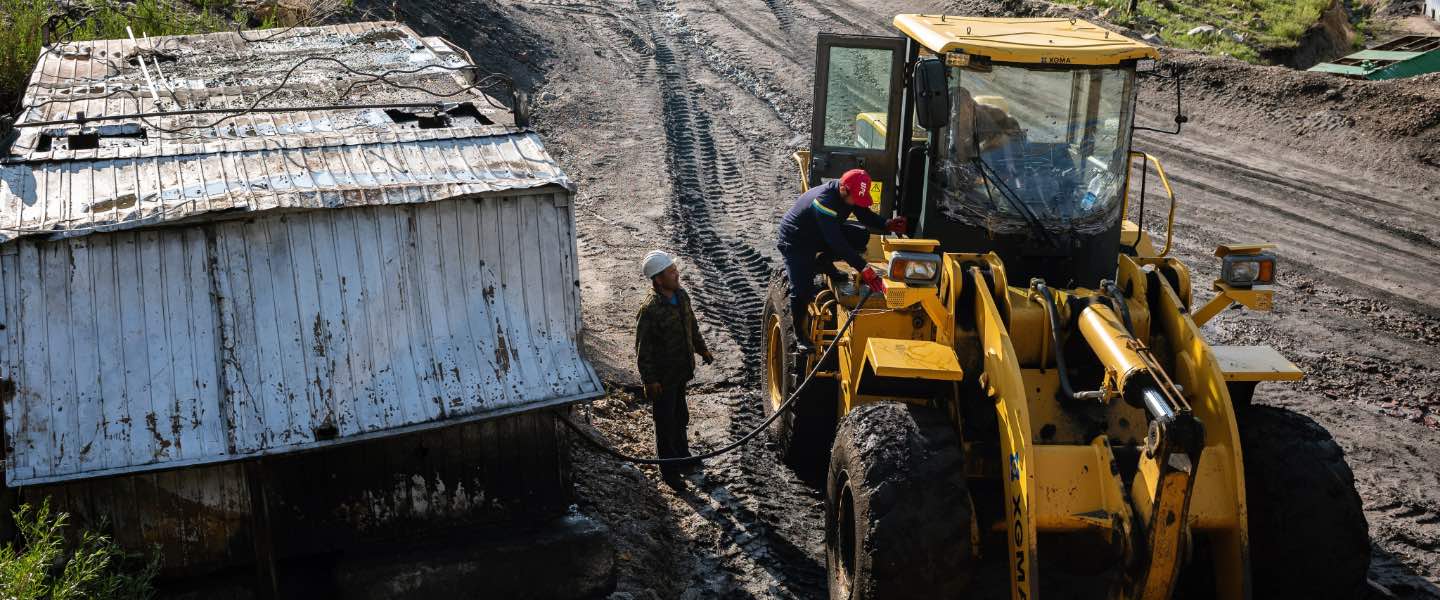
Uzak Asyrankulov (r), 34 years old, on his way to a coal mine at the start of the working day.
Uzak
Uzak is a logistics expert at the mine. Among his tasks is to ensure the vehicles and equipment are fuelled.
High school graduation
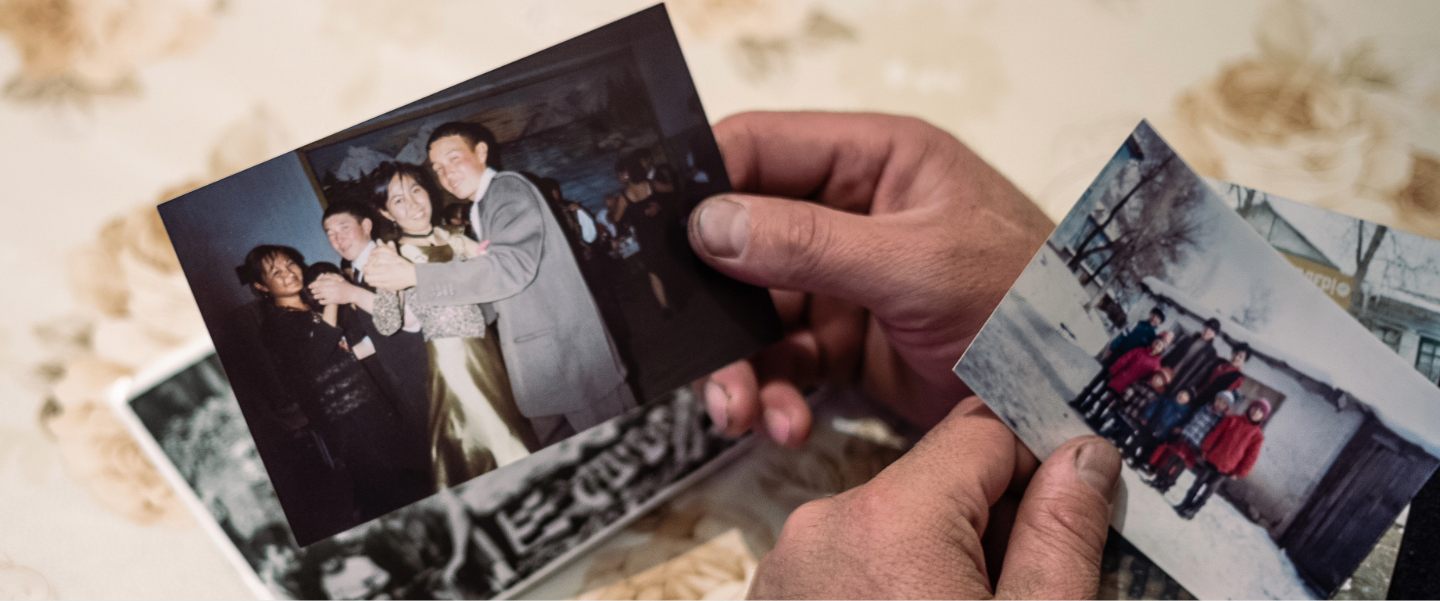
Uzak shows a photograph taken at his high school graduation. Most of his classmates have been gone for a long time now and, as far as he knows, none of them plan to return to Min Kush at present. The remediation of the uranium legacy, however, will enable alternative sources of employment to be developed here.
Uzak at home
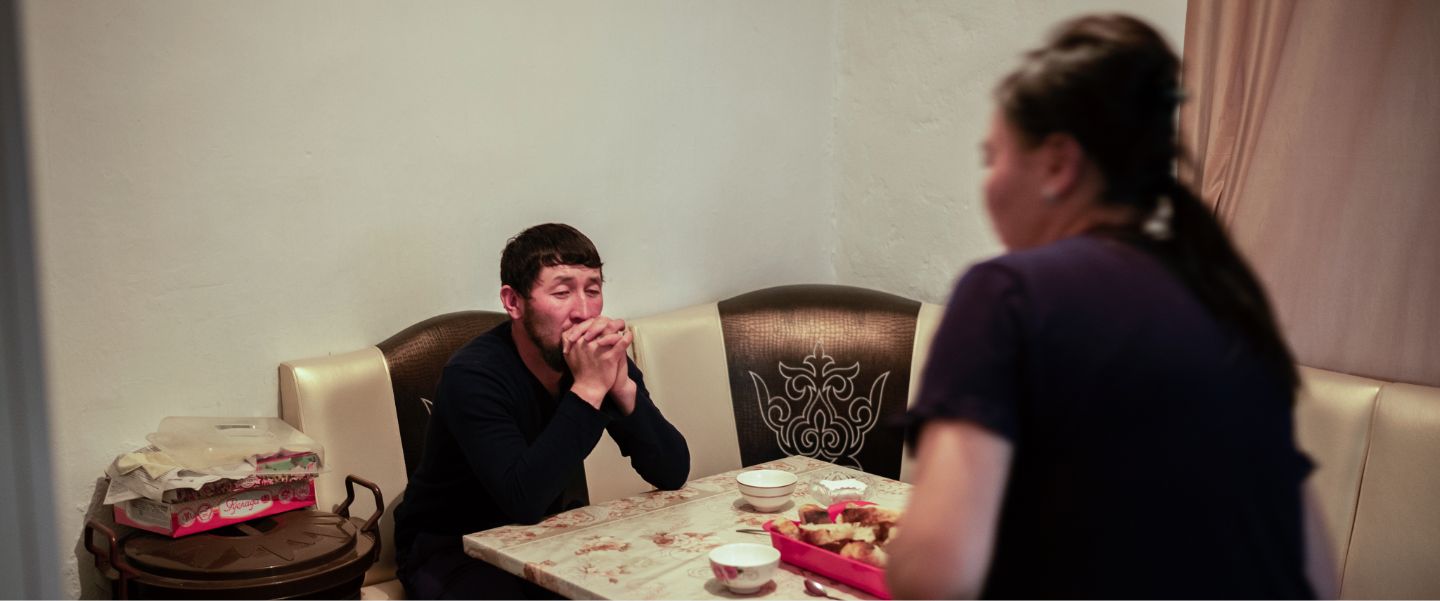
Uzak at home with his wife Baktygul, 25 years old, who is a teacher at the local school. They own three flats in their building, which is partially deserted. They live in one of the flats.
Nuriman
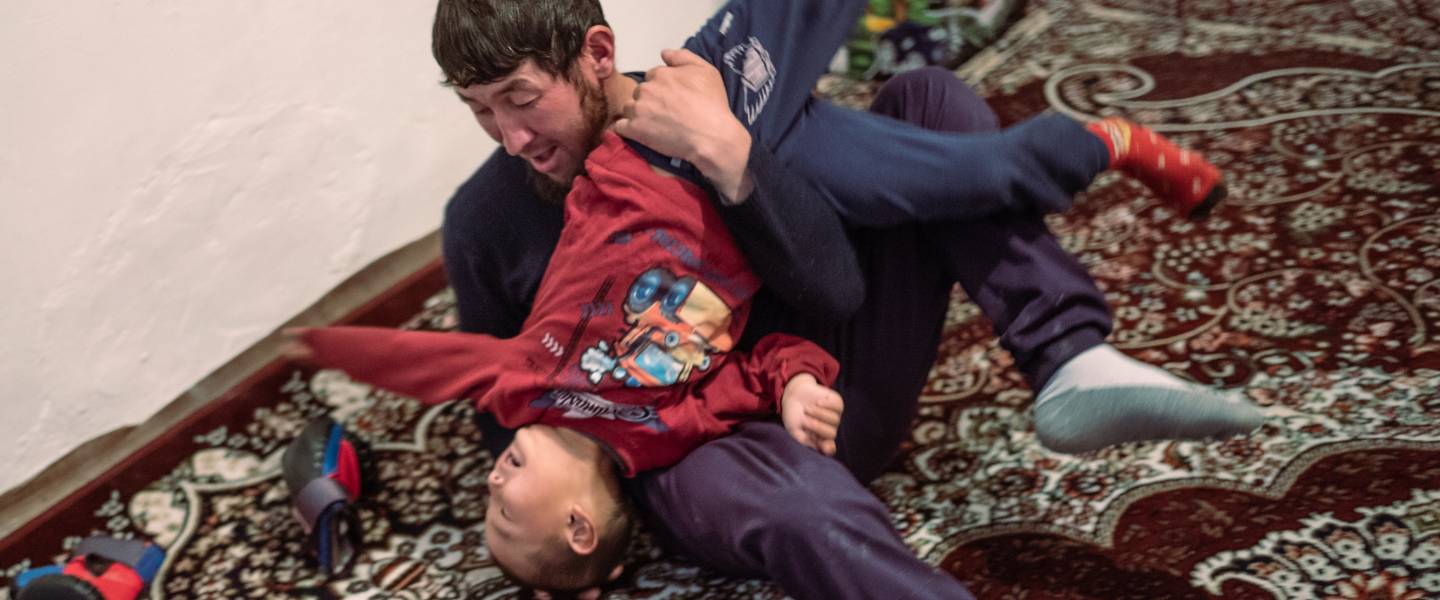
Uzak plays with his son Nuriman, 5 years old. The family’s dream once the remediation is complete is to open a guesthouse in their two spare flats for tourists. Like many of those who still live in Min Kush, Uzak believes tourism holds the key to the town’s future.
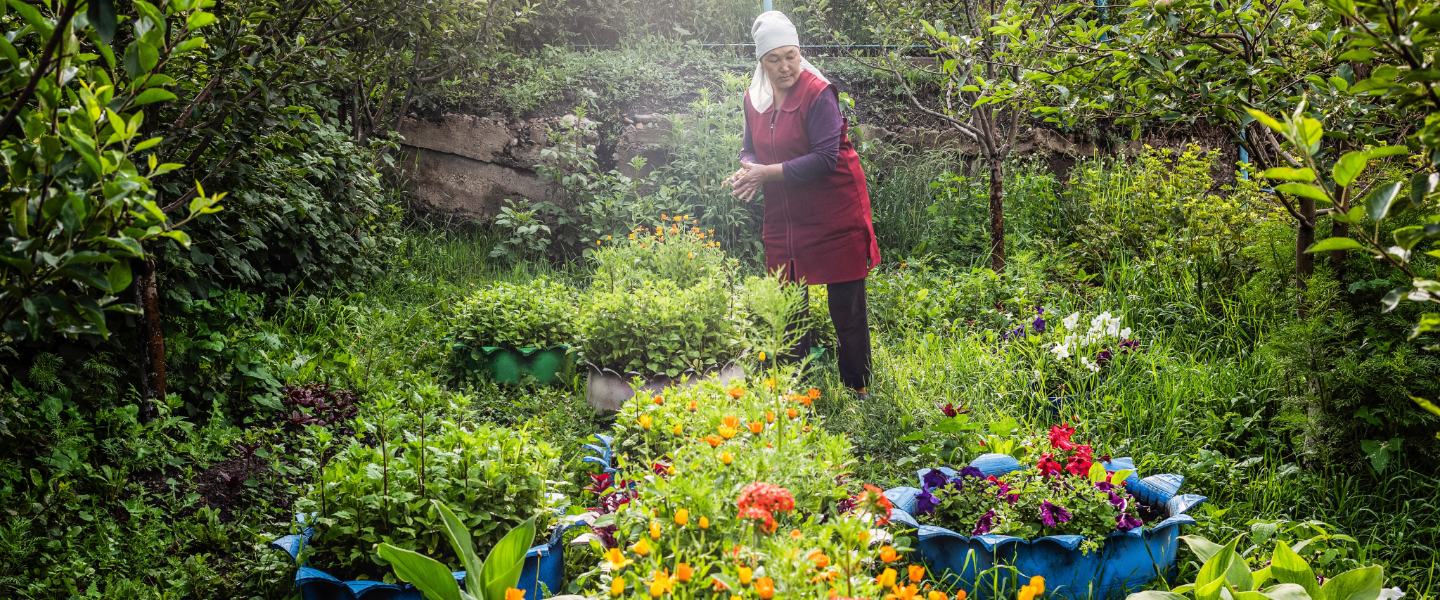
Bubuaim
Bubuaim Umursakova, 59 years old, has spent her all life in Min Kush.
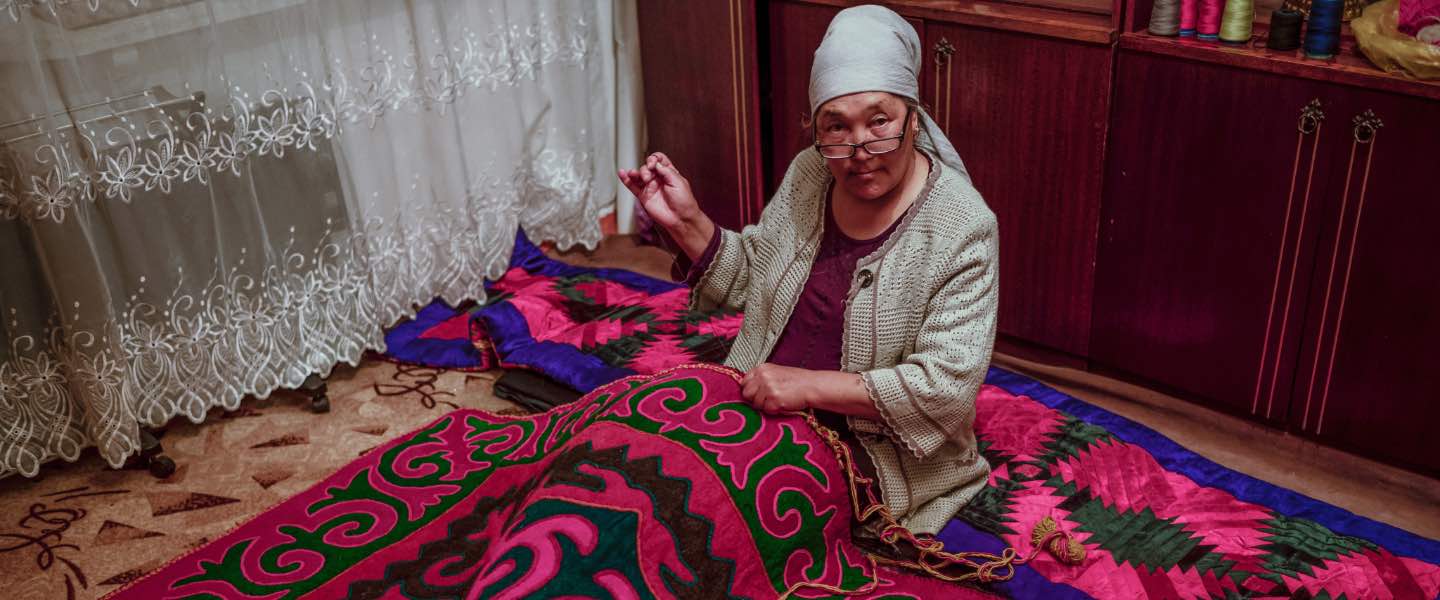
Sewing workshop
At home, Bubuaim has a sewing workshop and produces traditional Kyrgyz carpets as well as tailor made traditional clothes. This used to be her main source of income, providing enough money to live comfortably. But as people have left Min-Kush, she has lost many of her customers, and now has to work at the coal mine to sustain herself.
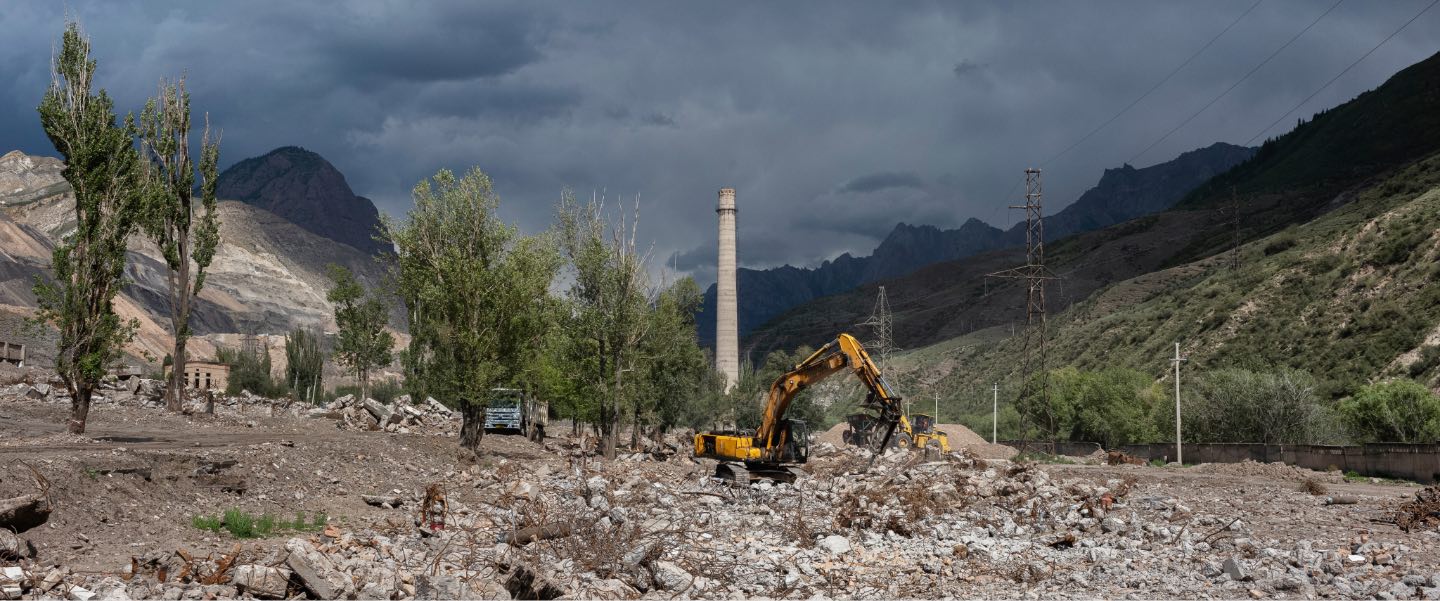
Chimney
Despite the considerable logistical difficulties and delays encountered during COVID-19, the EBRD-managed remediation programme was conducted on budget and well within the expected timetable. The chimney of the uranium processing plant was made available for commercial re-use after rehabilitation.
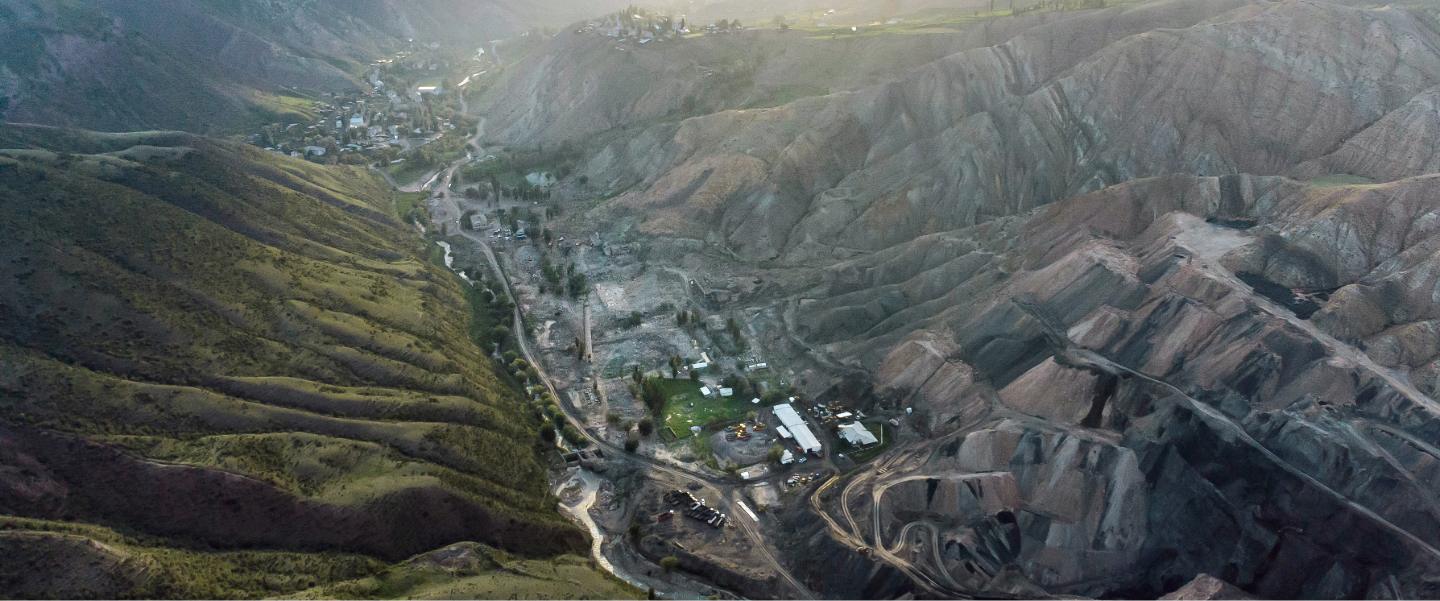
Valley
A view of the valley. The former uranium production facilities, and the big chimney at the heart of it, are visible in the centre of the shot. The site has now been returned to nature, opening a new era for Kyrgyzstan, for Min Kush, its people, those who may return, and for the next generation.