

Video
Helping women entrepreneurs thrive across the southern and eastern Mediterranean
With support, women entrepreneurs in Egypt, Jordan, Morocco and Tunisia are accessing finance and expertise
15 Oct 2026

 Eng
Eng
 Eng
Eng
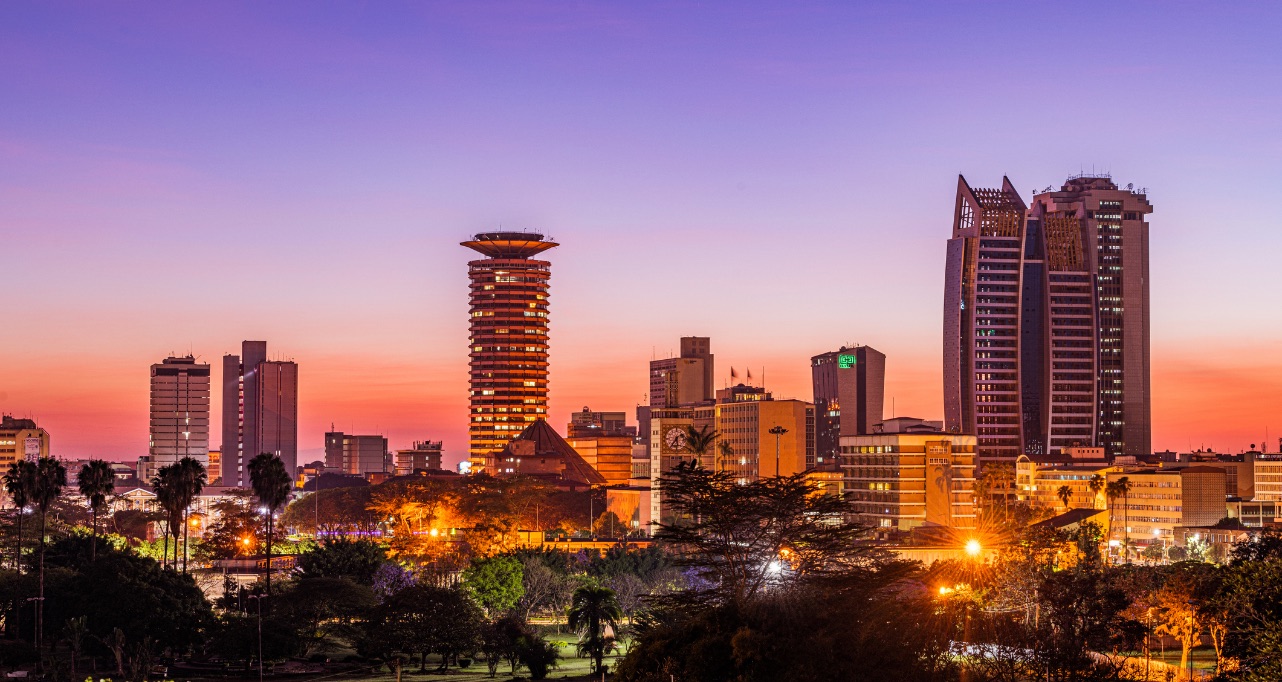
In its latest Regional Economic Prospects report, the European Bank for Reconstruction and Development (EBRD) has revised down its forecast for the Bank's sub-Saharan Africa (SSA) economies from 5.1 per cent in the first half of 2026 to 4.8 per cent for 2026, before moderating it slightly to 4.7 per cent in 2027.
Economic activity remained resilient in the first half of 2026, supported by services, agriculture and commodity exports. However, the external environment has become more challenging; higher oil prices and disruptions to global trade routes linked to the conflict in the Middle East have driven up costs across the region, while fiscal vulnerabilities, El Niño-related risks and weaker cocoa prices continue to weigh on prospects in several markets.
Progress on reforms has strengthened confidence in a number of economies. Benin, Côte d'Ivoire and Ghana completed International Monetary Fund (IMF)-supported programmes in 2026, while Benin, Kenya, Ghana and Nigeria received sovereign rating upgrades during the year. However, high debt-servicing costs continue to constrain fiscal space in several countries.
In the near term, growth is expected to remain supported by agriculture, manufacturing, services and commodity production, although momentum is projected to soften as commodity windfalls fade.
Benin's economy is forecast to grow 7.0 per cent in 2026, before easing slightly to 6.7 per cent in 2027.
Benin successfully completed its IMF-supported programme in February 2026 and, in August, Moody's upgraded the country's sovereign rating by two notches to Ba3, citing fiscal consolidation and improved debt management.
Growth is expected to be supported by expanding agricultural and industrial activity, as well as continued investment in the Glo-Djigbé Industrial Zone. Risks stem from sustained high oil and fertiliser prices, insecurity in the north, the continued closure of the Benin-Niger border and El Niño-related shocks.
Economic growth in Côte d'Ivoire is forecast at 6.1 per cent in 2026 before accelerating to 6.5 per cent in 2027.
Growth moderated in early 2026 as weaker industrial and construction activity offset stronger household consumption, trade and agricultural activity. The country completed its IMF-supported programme in June 2026 and successfully issued a US$ 1.3 billion Eurobond, reflecting strong market confidence.
The outlook remains favourable, supported by stronger hydrocarbon and mining production, expanding manufacturing activity and resilient domestic demand. Lower cocoa prices, higher fuel and fertiliser costs, adverse weather conditions and security risks in the wider Sahel region remain downside risks.
Ghana's economic growth is expected at 5.0 per cent in 2026 and 2027, down from 6.4 per cent in the first half of 2026.
Economic activity remained strong in early 2026, supported by investment and consumption. Inflation remained relatively contained despite higher fuel costs, while the fiscal deficit narrowed significantly and public debt fell to 40.6 per cent of gross domestic product (GDP) from 62 per cent in 2024.
The IMF completed the final review of Ghana's Extended Credit Facility programme in July 2026, while improvements in sovereign credit metrics supported investor confidence. Growth is expected to be increasingly driven by investment in oil, gas and transport infrastructure, although challenges in the cocoa sector and climate-related risks remain.
Kenya's economy is forecast to grow 4.7 per cent in 2026 and 4.6 per cent in 2027. Higher freight costs linked to trade disruptions have affected exports and contributed to renewed inflationary pressures.
Rising oil prices, trade disruptions and El Niño related risks continue to pose risks to growth, while sovereign rating upgrades and discussions on a new IMF-supported programme have bolstered investor confidence. Agriculture, financial services and real estate are expected to remain the key drivers of economic activity,
Nigeria's economic growth is forecast to hold at 4.2 per cent for 2026, before moderating slightly to 4.0 per cent in 2027.
Growth is expected to be sustained by economic reforms, investment activity and improved external balances. While growth remains resilient, higher energy prices, trade disruptions and climate-related risks continue to weigh on the outlook and moderate momentum.
Real GDP growth decelerated from 5.2 per cent in the first quarter of 2026 to 2.5 per cent for the whole of 2026 as the initial boost from the start of production at the Sangomar oil field has faded. At the same time, non-hydrocarbon sectors, particularly services, have strengthened, while inflation has remained low and external balances have improved.
Fiscal vulnerabilities remain significant. Central government debt stood at around 120 per cent of GDP at the end of 2025 and Senegal received a further sovereign downgrade in August 2026. On 1 September 2026, the authorities and the IMF reached a staff-level agreement on a new US$ 2.2 billion Extended Credit Facility programme.
Higher food and energy prices, El Niño-related shocks and limited fiscal space continue to weigh on the outlook, although successful implementation of reforms could help improve financing conditions and market sentiment.
Growth is expected to pick up slightly to 2.7 per cent in 2027.