

Search
Search

 Eng
Eng
 Eng
Eng
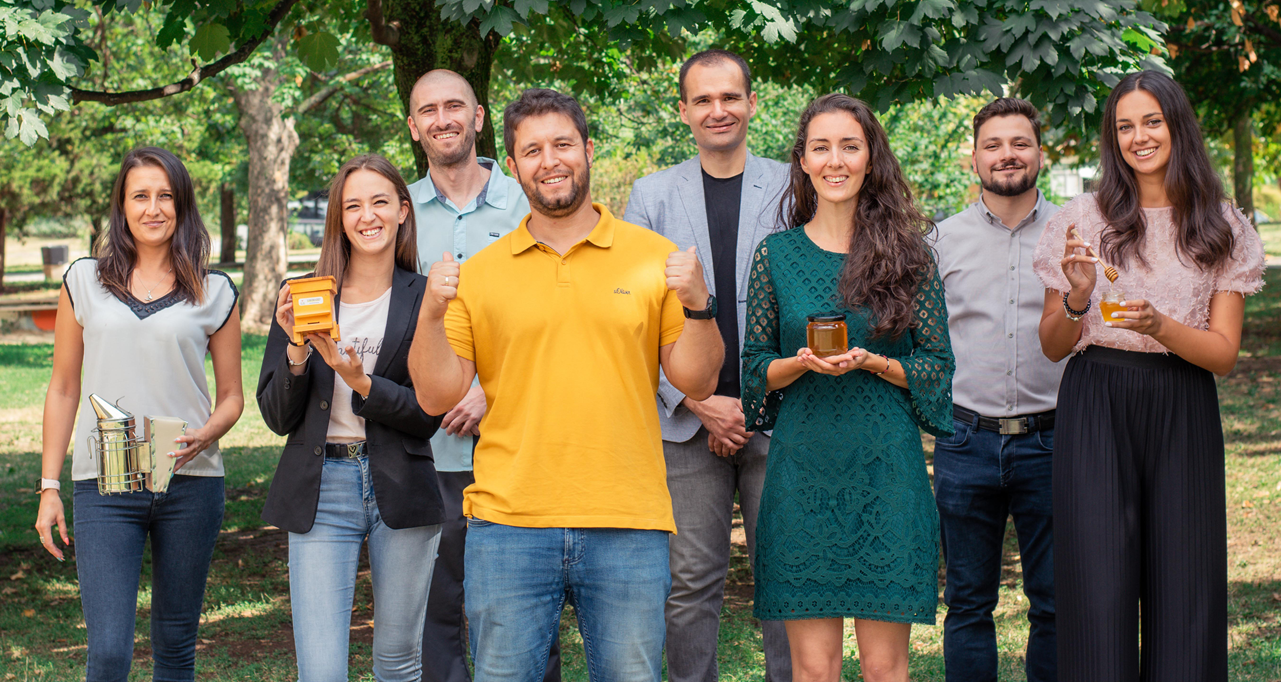
Beekeeping serves a dual purpose: honey production – which has clear commercial value – and also maintaining healthy bee colonies and a balanced ecosystem. But beekeepers are not paid for the latter, says tech entrepreneur and engineer Sergey Petrov, founder of Pollenity, Bulgaria.
Bees play a vital role in global food chains. They pollinate 70 of the top 100 food crops that supply the fruits, vegetables and nuts that we eat. This makes bees the business of everyone, Sergey reminds us, not just beekeepers.
But around the world, bee colonies are declining. Bees are dying at alarming rates due to combined pressures from pesticides, fungicides and loss of habitat, among other environmental factors. At the same time, beekeeping is becoming an increasingly difficult livelihood to sustain, as beekeepers struggle with low compensation and low consumer trust in the honey industry.
Inspired by his family’s traditions and his own experience in beekeeping, Sergey launched his startup Pollenity (formerly known as Bee Smart Technologies AD) to digitalise this traditional sector and support a sustainable future for the sector.
The EBRD’s tailored advisory programme, with support from the European Union and the EBRD Small Business Impact Fund, is helping Pollenity scale its solutions to international markets and continue to raise awareness of the urgent need to nurture and preserve these vital little creatures.
So can technology help save the bees?
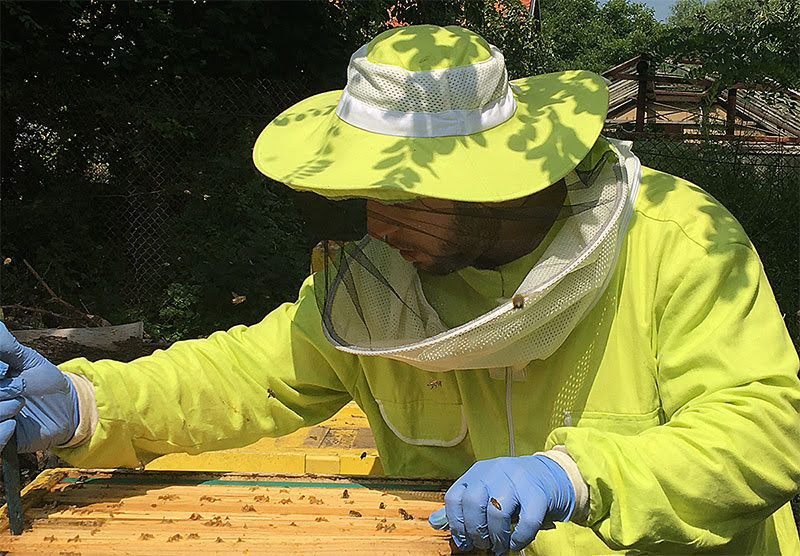
Sergey has always been captivated by the natural world, biodiversity and space, ever since his early years in Sofia. He dreamed of becoming a pilot, but with very little government support available at the time, he was unable to pursue that path.
Instead, he earned a degree in aerospace engineering and applied for a tech innovation programme based in Silicon Valley where researchers, engineers and problem solvers around the world gather to tackle the biggest challenges facing the planet. There he was asked to answer how he would change the lives of one billion people over the next ten years.
Childhood memories of helping out his grandfather with bees and his own stint as a beekeeper drew his attention to the plight of one of nature’s smallest yet most essential creatures: bees.
“I realised we still know relatively little about bees because they are so difficult to observe,” says Sergey. “I thought, surely with today’s technology there must be a better way to understand what’s going on inside the hive.”
In 2014, Sergey developed his first prototype and upon returning to Bulgaria the following year launched his startup Bee Smart Technologies, aiming to bring beekeepers into the digital era and help preserve the bee population through innovative technologies.
In came BeeBot – a tiny sensor device that brings every beehive into the Internet of Things. Small enough to be mounted on a hive, the device measures temperature, humidity and other key indicators like buzzing frequency that convey the health and productivity of a bee colony in real time.
Sergey explains that each colony has its own distinct buzzing frequency. Understanding the difference between them can provide valuable information for beekeepers.
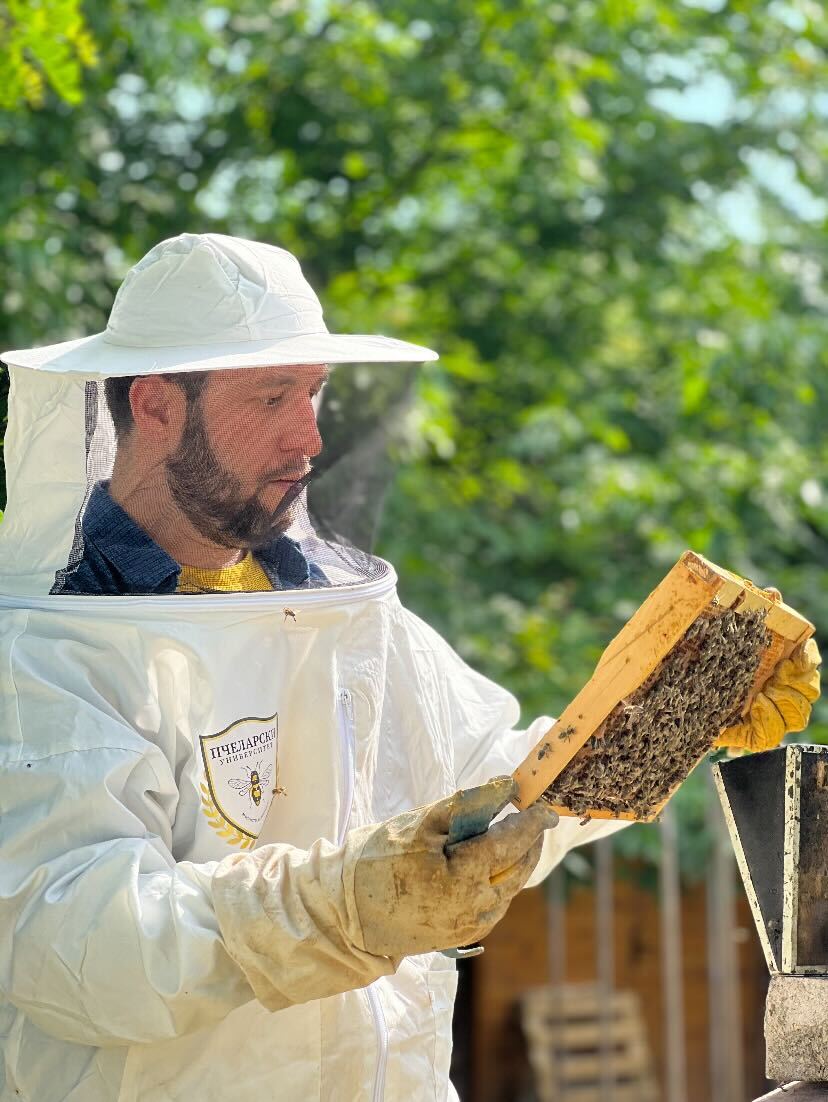
The BeeBot wirelessly transmits data in real time to beekeepers, enabling them to monitor their hives remotely and take any preventative measures.
Pollenity’s IoT devices have been well received in scientific circles, attracted pre-seed investment, and earned Sergey and his team a place in the HIVEOPOLIS Consortium with six European universities. But running a business in Bulgaria and selling to US markets proved challenging, as he needed to be there, on the ground, monitoring the hardware.
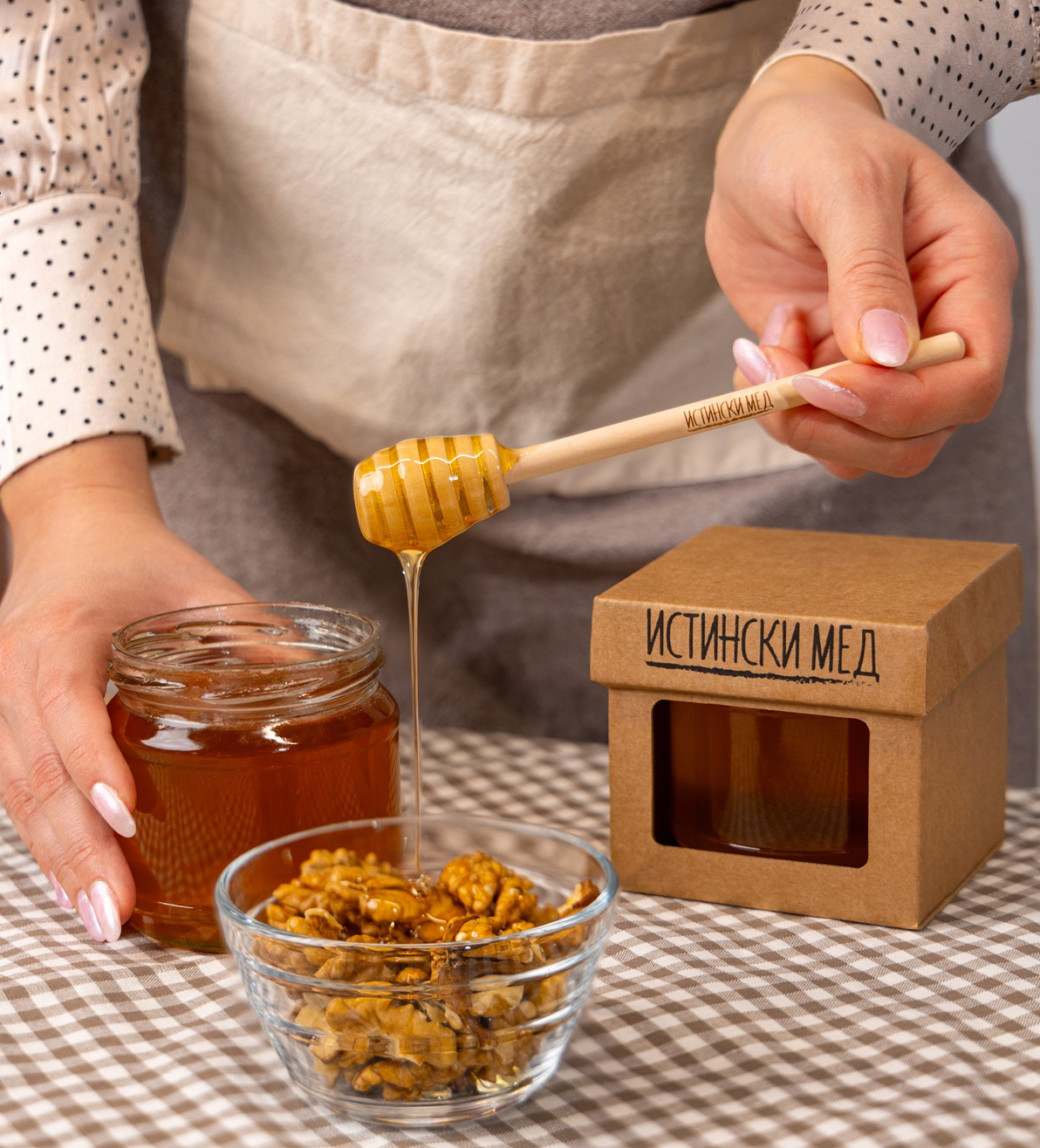
In an effort to further support Bulgaria’s beekeeping economy, Sergey diversified his business by launching ‘Istinski Med’ (meaning ‘real honey’), a platform connecting beekeepers directly with consumers looking for high-quality, authentic honey. Pollenity’s technology analyses each honey jar, ensuring transparency and traceability, while ensuring beekeepers are fairly rewarded for their work.
The company then took the concept a step further with ‘Adopt-a-Hive’, an initiative designed to remove the middleman from the value chain and create a fair and sustainable market for European honey production. The idea is simple: individuals or companies can ‘adopt’ a hive through a honey subscription, directly supporting a participating beekeeper while receiving single-origin honey from their hive.
Each batch is analysed to verify its origin and quality, bringing greater transparency to the honey supply chain. Each adopted hive sustains tens of thousands of bees while providing a more reliable source of income for beekeepers.
With support from the EBRD and its Small Business Impact Fund, Pollenity worked with a consultant to strengthen its position as an innovative company and support its commercial growth. The project also helped the company better understand and communicate its impact, including by developing a methodology to measure the environmental contribution of an adopted beehive.
More recently, Sergey has turned his attention towards a project he’s dreamt of ever since he started working with bees.
A single hive can house up to 100,000 bees. Every day, thousands of them will venture out into their surrounding landscape, visiting 100-150 flowers and collecting their DNA. When they return to their hive, they come back with valuable insights of their ecosystem.
“A hive is continuously taking the pulse of its environment,” Sergey explains. What bees bring back and the health of the colony itself can reveal valuable information about the condition of the surrounding ecosystem.
This idea is at the heart of EcoPulse, Pollenity’s latest solution. By analysing material collected by bees, the company aims to provide insights into local biodiversity and environmental contamination. Because pollen reflects the conditions in the surrounding air, water and soil, its analysis can help identify pollutants such as heavy metals, persistent chemicals and pesticides.
“Imagine if just a few beehives in Sofia could provide you with valuable information about contamination and biodiversity across the city.”
EcoPulse is designed in particular for Pollenity’s corporate clients looking to better understand and measure their environmental footprint.
The development and entry to market of EcoPulse is benefiting from a further EBRD advisory project, co-financed by the European Union. Through the project, Pollenity is working with a consultant to strengthen its B2B lead generation, targeted digital marketing and go-to-market strategy, helping the company bring the solution to instrumental markets.
Pollenity is focused on advancing its innovation in the beekeeping industry and raising awareness of the irrefutable place and role in our biodiversity of bees.
As Sergey reflects: “I started out wanting to support beekeepers, and now I’ve come full circle, realising that bees are our most resourceful environmental detectives.”