

Video
Supporting agriculture in wartime Ukraine
Ukrainian farm is restoring irrigation to protect its crops and cut costs with support from the EBRD and its donors
08 Oct 2026

 Eng
Eng
 Eng
Eng
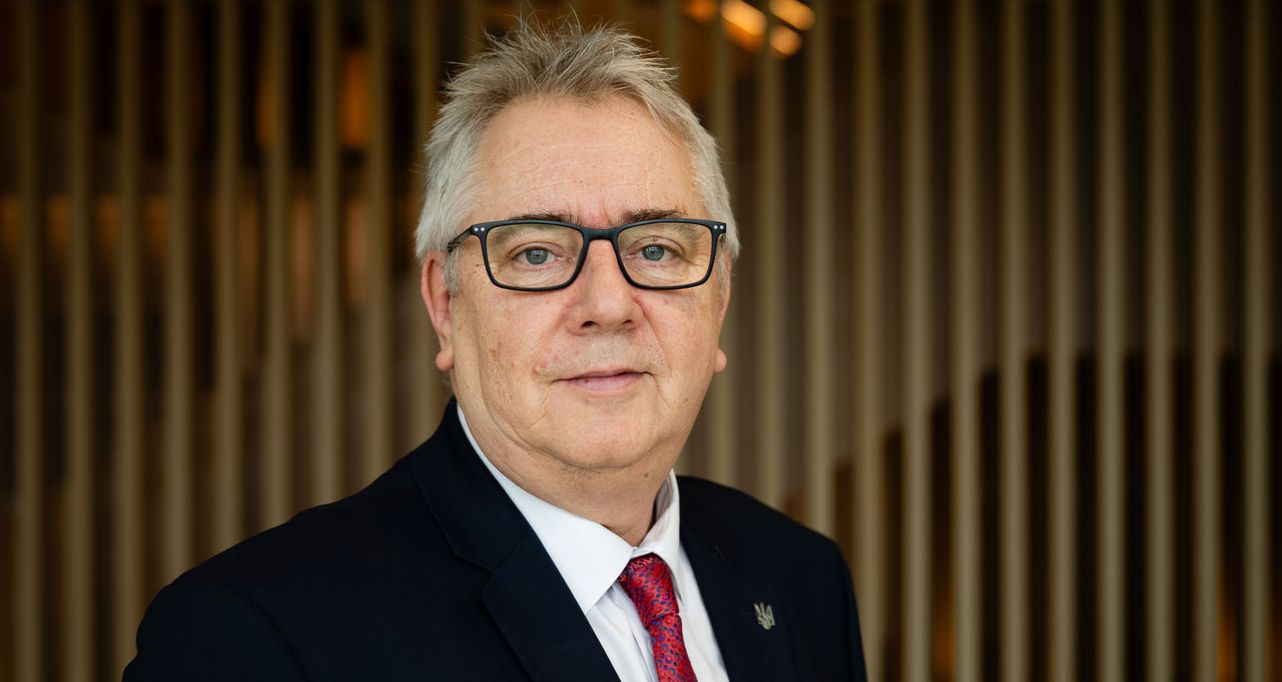
When I first travelled to Ukraine in 1992, I felt as though I had stepped directly into a world suspended between two entirely different eras. The Soviet Union had collapsed only months prior, leaving a nation rapidly trying to find its footing as an independent state, while its borders, institutions and identities were being redefined in real time. For those of us arriving from western Europe, the experience carried an undeniable sense of mystique, heavily filtered through decades of Cold War imagery filled with stories of secrecy and espionage that might have been lifted straight from a John le Carré or Ian Fleming novel. Yet, the reality on the ground was far more nuanced, deeply human and ultimately far more compelling than any fiction.
Kyiv in those early post-Soviet years was a city defined by its stark contrasts. It was dimly lit, physically worn in places, and still bore the heavy, visible imprint of the Soviet system. Infrastructure was severely limited, international hotels were few and the options for eating or socialising were incredibly modest by modern standards. Moving through the city at night, I was often struck by a quiet stillness that reinforced the sensation of being in a place teetering on the very edge of profound change, but with a persisting hint of menace. Yet beneath that surface austerity, Kyiv possessed a deep cultural gravity. Its rich history, stunning architecture and sweeping river landscape gave it a powerful presence that no painful economic transition could ever diminish.
What stayed with me most during this formative period, however, were the people. The engineers, regulators, scientists and officials I met were navigating an extraordinary, turbulent period of transformation. Many had spent their entire professional careers working strictly within the rigid Soviet system and were suddenly forced to adapt to an entirely new national and international context. Our early conversations were frequently formal and cautious, deeply shaped by habit and history, but this restraint quickly gave way to an impressive openness, pragmatism and shared determination to solve problems that were both technically complex and historically unprecedented.
Hospitality was central to every single visit I made. Professional meetings rarely remained confined to sterile conference rooms; it was common to be invited to share food – and, of course, vodka – continue debates over dinner, or sit late into the evening in informal settings where professional boundaries softened into genuine relationships. Traditional dishes like borscht, varenyky, cured fish, pickled vegetables and dark rye bread were always served with immense pride and generosity. Toasts were frequent, conversations ranged across every topic imaginable, and there was always a profound sense of welcome extended to international guests. On my first ever visit, my manager advised me to prepare to give a toast and relate an anecdote. He assured me that only the first toast would need to be downed in one; he was wrong, very wrong!
Over the decades, I watched as Kyiv itself transformed from that dimly lit, austere post-Soviet capital into a vibrant, booming European city, increasingly confident in its unique identity and outward looking in its development.
Against this backdrop of cultural and urban evolution, my own professional journey in Ukraine transformed steadily into a lifelong engagement with one of the most complex nuclear legacies in human history.
My direct involvement began that very first year, in 1992, at the international Chornobyl conference, hosted at the site in the camp set up for the liquidators at the time of the 1986 accident. At the time, the sheer scale of the environmental challenge was already becoming apparent, though any long-term strategy remained highly uncertain. Early technical visits to the Chornobyl site followed soon after, including intense time spent within the heavily restricted exclusion zone and close exposure to the mangled remains of the damaged Unit 4 reactor. Entering the damaged reactor structures remains one of the most striking, sobering and definitive experiences of my entire career, serving as a stark physical reminder of the consequences of the accident and the terrifying urgency of developing a credible, long-term containment solution.
By the mid-1990s, my responsibilities expanded as I moved into formal technical and leadership roles. This included the position of Technical Director, based in Paris for several years, leading the early development of what would become the New Safe Confinement project, with the same companies who would eventually design and construct the New Safe Confinement we see today (Vinci and Bouygues). This particular period was pivotal in shaping the project from a loose engineering idea into a deliverable, international programme.
The engineering challenge before us was entirely unprecedented, as we had to design and construct a structure capable of safely enclosing the existing, deteriorating industrial Shelter, enabling its eventual dismantling while guaranteeing long-term environmental protection. This immense engineering complexity was matched only by the daunting institutional challenge of coordinating a vast web of multiple donors, international governments, regulators and distinct technical organisations into a single, coherent delivery framework.
A new chapter began for me in 1996 when I joined the EBRD’s Nuclear Safety Department.
The Bank became the central financial and coordinating institution for the bulk of the international Chornobyl effort, marking the start of a long, intensive period where I worked across multiple interlinked programmes designed to systematically address the site's full nuclear legacy. One of the most significant and exhausting initiatives was the Interim Spent Fuel Storage Facility, known as ISF-2. This facility was developed to provide a safe, long-term solution for the complex storage and eventual management of spent nuclear fuel removed from the Chornobyl reactors. The project was fiercely demanding, involving the delicate retrieval, conditioning and dry storage of highly radioactive materials under conditions that required exceptional precision and safety assurance. Because of its pioneering nature, ISF-2 faced considerable contractual and technical setbacks over its long lifetime, requiring sustained international diplomacy and technical engagement to finally bring it to successful completion.
Closely linked to this effort was the Liquid Radioactive Waste Treatment Plant, which addressed one of the most hazardous and complex waste streams left at the site.
This facility was essential for processing and permanently stabilising the liquid radioactive waste that had accumulated over decades of routine operation and chaotic post-accident management. Much like the fuel storage project, it required the seamless integration of advanced Western technology with robust regulatory oversight, perfectly reflecting the broader, systemic challenge of introducing Western engineering and procurement standards into a rigid, post-Soviet industrial environment.
In parallel, I was heavily involved in supporting the critical safety upgrade programmes that ultimately enabled the final, historic shutdown of Unit 3 in December 2000. This was a massive milestone for the entire international Chornobyl programme.
Achieving it required not only complex technical modifications to ensure safe continued operation in the short term, but also delicate political and regulatory coordination, as the permanent closure of the last operating reactor carried significant energy supply implications for a developing Ukraine. When the switches were finally thrown, its shutdown marked the definitive, historic end of electricity generation at the Chornobyl site and a critical, irreversible step towards full decommissioning.
More recently, my lifelong involvement with the site has taken an unexpected turn in the context of maintaining and actively protecting this unique structure. Following a dangerous drone strike on the New Safe Confinement, I have been actively engaged, as Head of the International Chornobyl Cooperation Account (ICCA), in leading the urgent technical response and physical repair efforts.
While the unfortunate geopolitics and immediate circumstances of today are vastly different to the post-Soviet uncertainty of the early 1990s, the underlying objective governing my work remains exactly the same: ensuring long-term safety, structural stability and environmental protection at a site that continues to demand global attention.
Looking back now across more than three decades, the immense technical complexity of this work has always been perfectly matched by the rich human experience that accompanied it. From the early Cold War echoes of 1992 to Kyiv's inspiring transformation into a modern European capital, the single truest constant has been the extraordinary commitment of the people involved.
Together, we have worked across disciplines, national borders and entire generations to successfully address one of the most challenging nuclear legacies in human history. It is my genuine hope that we can return to Ukraine and Chornobyl soon without the spectre of Russian drones, missiles and military aggression.
Slava Ukraini!
Watch our newly released documentary, 40 years on: Making Chornobyl safe.
Steven White
EBRD Associate Director, Head of Bohunice International Decommissioning Support Fund, Nuclear Safety