

Video
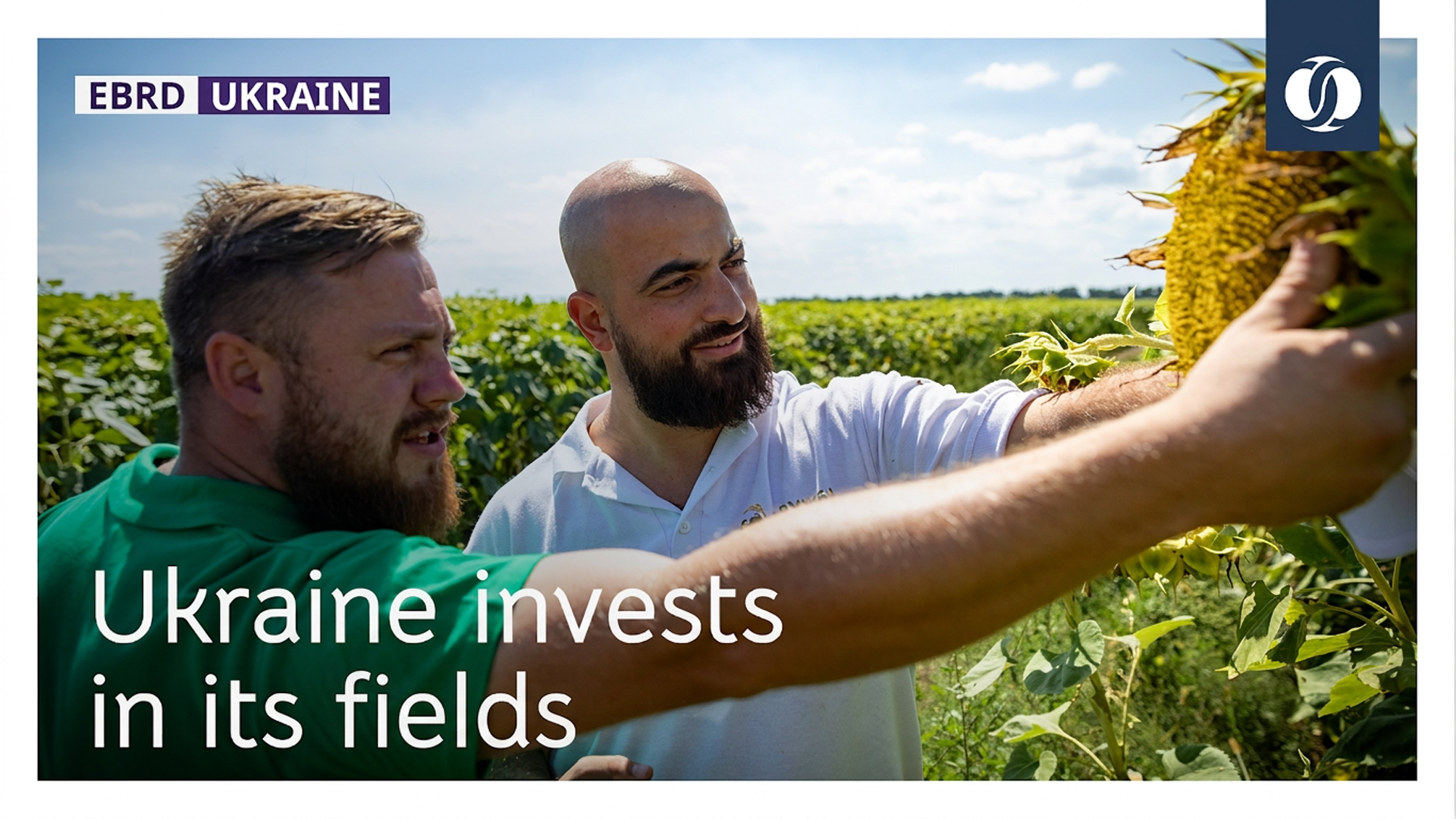
Supporting agriculture in wartime Ukraine
Ukrainian farm is restoring irrigation to protect its crops and cut costs with support from the EBRD and its donors
08 Oct 2026

 Eng
Eng
 Eng
Eng

For those who have been part of the EBRD journey, the Bank’s expansion into Sub-Saharan Africa (SSA) will feel both familiar and new. Familiar, because the challenges, weak investment climates, infrastructure gaps, shallow financial markets, echo those faced in other regions of operation. New, because SSA brings a different scale of demographic momentum, informality, and opportunity to apply our transition model in a rapidly evolving context.
What defines EBRD’s approach has always been more than financing. It is the combination of investment, policy engagement, and institution building, applied in a way that helps markets function more effectively over time. That same transition toolkit is now being deployed in SSA, where the need is less about identifying opportunity and more about making it investable.
Many of you will recognise this dynamic from the early days in Central and Eastern Europe or later expansions into the Southern and Eastern Mediterranean (SEMED) region. In SSA, the fundamentals are strong: young populations, growing urban centres, and significant potential in energy, logistics, and digital sectors. Yet, as in other EBRD regions, bankability remains the binding constraint, driven by project preparation gaps, limited long-term finance, and high perceived risk.
This is where the Bank’s comparative advantage comes into focus.
First, policy dialogue remains central. Regulatory predictability and transparent frameworks are essential to crowd in private capital. In SSA, this means working with governments on PPP frameworks, energy sector reforms, and investment climate improvements. Reforms and investments are most effective when they reinforce each other.
Second, the emphasis on project preparation and structuring is as critical as ever. Many infrastructure opportunities in SSA are economically sound but fail to reach financial close without support on risk allocation, revenue models, and procurement design. The EBRD’s ability to translate opportunity into bankable projects, something honed over decades, remains a key differentiator.
Third, the Bank continues to play its catalytic role in mobilising private capital. If anything, this is even more relevant in SSA, where perceived risk often exceeds actual risk. Through blended finance, guarantees, and co-investment structures, EBRD helps bridge that gap, building investor confidence.
There is also a familiar focus on local financial sector development. SMEs dominate SSA economies, yet access to finance remains constrained. Working through local banks, building capacity, designing specific investment vehicles for SMEs and expanding trade finance, these approaches have been fundamental in other regions and are now being replicated and adapted.
At the same time, SSA offers something distinctly forward-looking. Unlike earlier regions burdened by legacy infrastructure, many countries have the opportunity to leapfrog directly into green and digital systems. This aligns closely with the Bank’s evolution toward the green transition. From renewable energy to digital connectivity and green industrialisation, SSA provides a platform to apply the EBRD model in a way that integrates transition and sustainability from the outset.
The EBRD is not just extending its footprint, it is reapplying a tested model in a new context, adapting tools while staying anchored in its core mission: building well-functioning, inclusive, and sustainable market economies.
SSA represents a continuation of the EBRD story. The difference is the scale of opportunity and the chance to apply our accumulated experience in one of the world’s most dynamic regions. For those who helped shape that experience, this next chapter is a powerful reminder: the transition toolkit travels well and its relevance endures.