


Video
Supporting agriculture in wartime Ukraine
Ukrainian farm is restoring irrigation to protect its crops and cut costs with support from the EBRD and its donors
08 Oct 2026

 Eng
Eng
 Eng
Eng
When the EBRD was inaugurated in April 1991, it was an “instant unicorn”, a start-up with an immediate capital stock of ECU 10 billion and an incredible mandate to advance the transition of centrally planned economies to open-market, democratic ones that would form the basis for a Europe that stretched from Reykjavik to Vladivostok.
While the Bank is the product of a major historical event in the fall of the Berlin Wall in November 1989, the historical evolution did not stop there, as within months of the EBRD opening, the Soviet Union had collapsed and 15 new countries of operation had emerged. In parallel, Yugoslavia was breaking up. In 1991, it was difficult to keep pace with history while setting the basis for a new financial institution.
Following the Bank’s inauguration, we started with very few staff. The first meeting of Banking staff comprised four bankers and one assistant. We opened a map of the region and, as there was little infrastructure in the office in terms of desks and computers, each banker went in a different direction in search of the Bank’s first projects. Due to the pressure to get the Bank off the ground and the limited number of staff, we worked highly unreasonable hours. Leaving much before 22.00 was generally frowned upon, as if you were letting your colleagues down. And every night, I took the Tube back home with dozens of CVs under my arm, as hiring new staff was essential to survival – both the Bank’s and my own.
Indeed, 1991 was quite a year from an internal perspective, too. Try, if you can, to imagine an EBRD with no procedures and guidelines. What should the project approval process be? What should project due diligence cover? What should a project Board document contain? For some colleagues, this was a confusing period. For others, it was organisational nirvana.
The following anecdotes give a taste of that first EBRD year:
My first meeting that very evening was in the Romanian Ministry of Works. Following initial introductions, the Minister stood up and said, “let’s go out to see where investment from your bank is needed”. We therefore ventured outside into a dark Bucharest, with the minister stopping at every building on one of the main boulevards, saying: “this building needs X million dollars to be rehabilitated, this one Y and this one Z.” There had been a strong earthquake in 1986 and many buildings in the city had serious structural damage. By the end of the boulevard, the minister’s requests added up to several hundred million dollars in state spending. Not exactly private sector.
This was followed by a request that the Bank finance the completion and transformation of the crown jewel of the Avenue of the Victory of Socialism, the House of the People (today the Palace of the Parliament), into an international conference centre. Reputed to be the second-largest building in the world, with 1,100 rooms, eight underground levels and a nuclear bunker,
the building was estimated to have been built by as many as 100,000 people. This was the ultimate physical embodiment of central planning, with one building containing all organs of state. It did not pass the sound banking test.
And so, there we were in that initial year, with the potential for hundreds of millions of dollars in requests for EBRD financing, but for the wrong types of project. Time would be needed to see
the emergence of a private sector that the Bank could work with, support and finance.
In all, then, 1991 was an intense year both for the Bank’s countries of operation and for the organisation, which had to be created from scratch. A “pioneering spirit” prevailed, however, as each colleague brought their particular expertise with the intent to build a new organisation capable of contributing meaningfully to the historical shift in our region. Exciting. Exhausting. Purposeful.
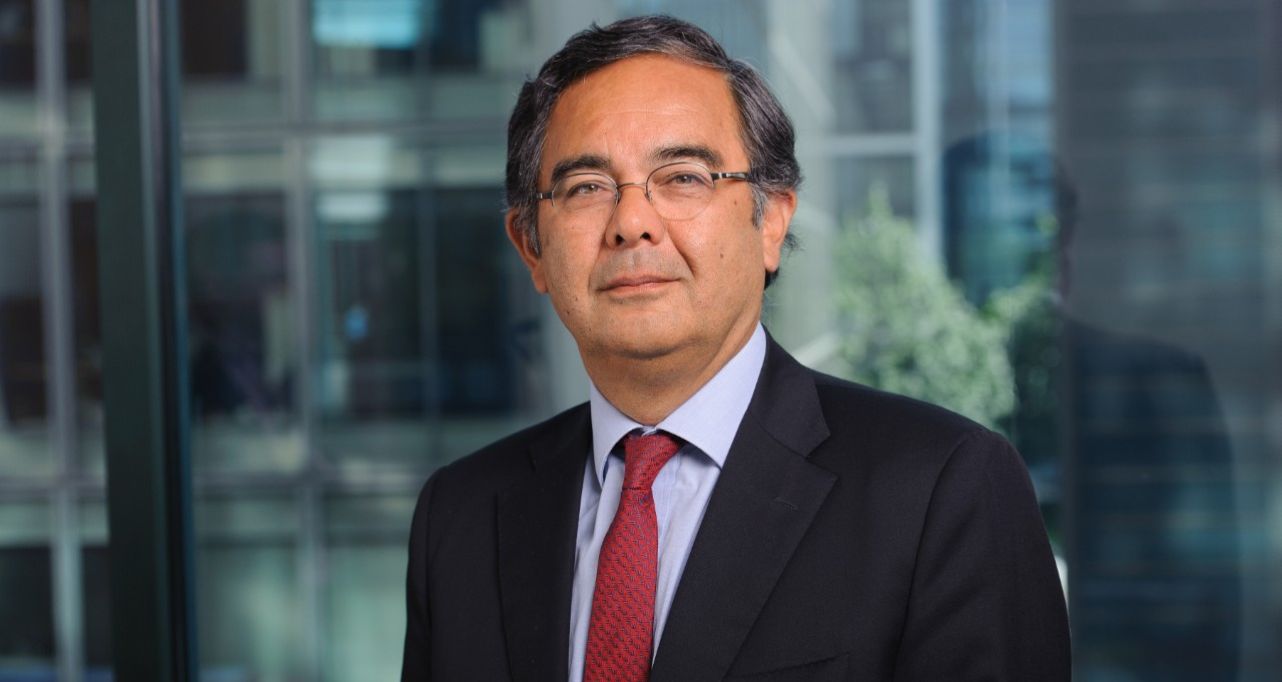
Josué Tanaka | Visiting Senior Fellow at the Overseas Development Institute
Former EBRD Managing Director, Energy Efficiency and Climate Change, Operational Strategy and Planning