

Read our Cookie policy here.
Search
Search

 Eng
Eng
 Eng
Eng

Over the past five years, Serbia has made a concerted effort to reposition itself as a competitive, innovation‑driven economy. Investments in digital infrastructure and skills, and a progressively more supportive regulatory environment have accelerated these efforts, supporting the growth of Serbia’s information and communications technology (ICT) sector into the country’s largest net exporting industry and turning Serbia into an emerging international hub for innovative and high-value digital services.1
However, the enabling environment for this expansion did not exist a decade ago. Limited access to finance constrained the upscaling ability of technology firms; weak linkages between startups, established companies and research institutions slowed knowledge transfer; and disparities in digital infrastructure reinforced a persistent rural-urban divide in opportunity, skills and inclusion. Addressing these constraints has required a systemic approach that goes beyond individual investment.
The EBRD has delivered a series of targeted interventions combining investments, advisory work and policy engagement to help Serbia develop a more integrated innovation ecosystem – one that connects firms, skills, infrastructure, finance and public institutions and enables innovation to diffuse across sectors and regions.
At company level, acquisition financing or upscaling capital for asset-light IT companies was almost non-existent in Serbia before the EBRD began working with two of the country’s fastest-growing digital engineering firms, HTEC and Vega IT. The Bank’s pioneering loans and business advisory support – the Enterprise Expansion Fund (ENEF) and ENEF II – helped the companies expand their footprints, enter new global markets and compete for higher‑value digital engineering projects.2
HTEC has grown more than tenfold since receiving an initial €12 million EBRD and ENEF package in 2020 to finance its first acquisition. More loans have followed to support further acquisitions, helping the firm to broaden its engineering base across south-eastern Europe, expand into the German, Austrian, Swiss and US markets, and secure high‑value contracts with global technology clients. The projects have also helped HTEC to launch an artificial intelligence (AI) enablement programme to upskill staff and have been complemented by advisory support to strengthen and harmonise policies and practices across an increasingly complex group structure.
Vega IT has experienced rapid growth since the start of the EBRD’s engagement, with revenue rising 12.5 per cent year on year to €43.4 million in 2024. This growth followed the introduction of a “satellite” ownership model – majority-owned delivery hubs where key engineers hold minority shares – and the opening of new international sales hubs in the United States of America, United Kingdom and Middle East, expanding its capacity to deliver projects internationally. The satellite model was supported by the EBRD’s Advice for Small Business programme, while the sales hubs benefited from a €3.1 million loan co-financed with ENEF II.
Numerous small tech firms have also benefited from EBRD advisory support. Around 75 per cent of Serbian companies involved with the Star Venture programme for high-potential startups have reported higher turnover since the initiative began scaling up in the country in 2019, while more than half have increased employment. Star Venture’s 35 portfolio companies in Serbia had raised approximately €35 million as at the end of 2025, and collaborations between them and larger companies have strengthened the connectivity and professionalism of Serbia’s innovation ecosystem.
75% of Serbian startups
involved with the EBRD's Star Venture programme have reported higher turnover since 2019
350 schools and 63,000 households
had benefited from rural broadband rollout projects by the end of 2025
EBRD-supported programmes to expand rural broadband and science and technology park (STPs) are further bolstering the country’s innovation ecosystem. The development and expansion of four STPs is under way, with EBRD policy dialogue having informed the government’s strategic thinking around the role of STPs as innovation “connectors” that bring together essential infrastructure with startup support and mentorship.
Simultaneously, rural broadband rollout projects are broadening the inclusion of rural communities and firms in the innovation ecosystem by enhancing opportunities for digital entrepreneurship and remote work (see image below). By the end of 2025, the schemes had reached more than 350 schools and 63,000 households across 382 communities. They aim to reach 152,000 households across 1,100 communities in the rollout’s second phase.
The rollout has also introduced a new public-private broadband deployment model that was developed and implemented with EBRD assistance. It sees the government finance “mid‑mile” backbone digital infrastructure to rural settlements, while private-sector operators are selected through competitive tenders to deploy last‑mile connections to households and schools.
This model was made possible by Serbia’s adoption of three bylaws on universal service obligations. Put in place following EBRD policy engagement, the reforms have enabled nationwide “open access” to broadband infrastructure, meaning that multiple service providers can use the same networks to offer services to end users. By boosting competition among private-sector telecom operators, this has the potential to enhance affordability for consumers while reducing demand on public-sector budgets.
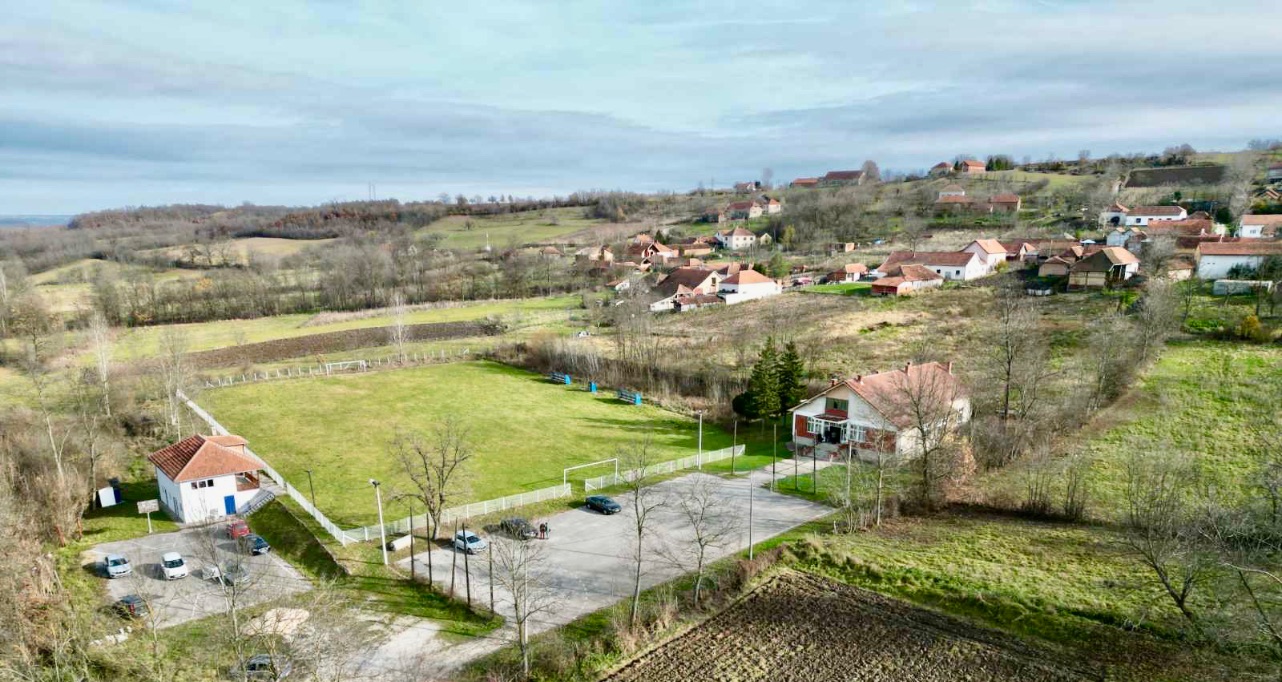
Rural broadband rollout projects are benefiting schools, households and communities, and enhancing opportunities for digital entrepreneurship and remote work
EBRD projects have contributed to a shift in Serbia’s approach to innovation infrastructure, from isolated assets and firms to an ecosystem fostering innovation and private-sector growth.
The successful support for HTEC and Vega IT has led to a shift in market behaviour, encouraging financial institutions and investors to reassess the bankability of ICT firms that lack hard collateral. As well as showing that structured debt models and cash flow‑based lending can be effective for these firms, the EBRD has validated mergers and acquisitions as a growth strategy in the Western Balkans tech sector.
The international expansion of HTEC and Vega IT has also enhanced Serbia’s positioning as a regional hub for high‑value digital engineering. This is underlined by intensified ICT sector competition – which has pushed peers to upgrade their service offerings into areas such as AI, embedded engineering and design – as well as Star Venture’s work to strengthen Serbia’s early‑stage pipeline and skills diffusion stemming from initiatives such as HTEC’s AI upskilling.
The rural broadband rollout is one of Serbia’s largest digital infrastructure investments, and its success has prompted the government to consider a third phase of development, as well as to create a national strategic digital infrastructure agenda. Spanning almost the entire country, the scheme – which has attracted donor financing, including €33 million through the Western Balkans Investment Framework – is enabling network operators to reach previously unconnected areas and narrow the urban-rural digital divide, helping boost national integration and resilience.
The initiative’s public-private infrastructure model has also created a new benchmark in Serbia. Granting operators a 25‑year right of use, it has demonstrated a sustainable, risk‑sharing approach that has strengthened competition by mobilising new private-sector actors. Replication of this model is now under consideration for other projects, including several supported by the EBRD in Albania, Bosnia and Herzegovina, Montenegro and Tajikistan.
Combined with open‑access reforms, this public-private approach has boosted market transparency, reduced monopolistic structures and incentivised telecoms operators to invest in rural areas where projects were previously commercially unviable.
Together, these interventions have helped to address systemic constraints and are translating Serbia’s digital momentum into a more resilient, inclusive and geographically broad-based innovation ecosystem capable of sustaining growth beyond individual firms and locations
Finding sector-appropriate financial instruments is imperative for investments to be successful. For asset-light digital services firms, flexibility around use of proceeds is required to unlock growth. Risks should also be priced appropriately, starting with a higher margin before shifting to more standardised terms as scale increases. Strong governance at this type of client company is key to maintaining margins throughout investment cycles.
Results may also accrue from providing repeat loans to the same company. In the case of HTEC, this allowed the progressive introduction of additional elements of transition impact, with its third loan adding inclusive and Gender SMART elements to key performance indicators.
Serbia’s plan to expand the rollout of STPs to act as innovation clusters that manage the wide range of innovation ecosystem stakeholders, including infrastructure providers and firms, is essential to cement Serbia’s status as an international ICT hub.
1. US Department of Commerce (2025), “Serbia Country Commercial Guide”, Washington, DC. Available at: www.trade.gov/country-commercial-guides/serbia-information-and-communications-technology-market.
2. Supported by the European Union (EU) and invested in by the EBRD, the EU, Cassa Depositi e Prestiti (CDP), Kreditanstalt für Wiederaufbau (KfW) and Banca Intesa Beograd.