
Read our Cookie policy here.
Search
Search

 Eng
Eng
 Eng
Eng
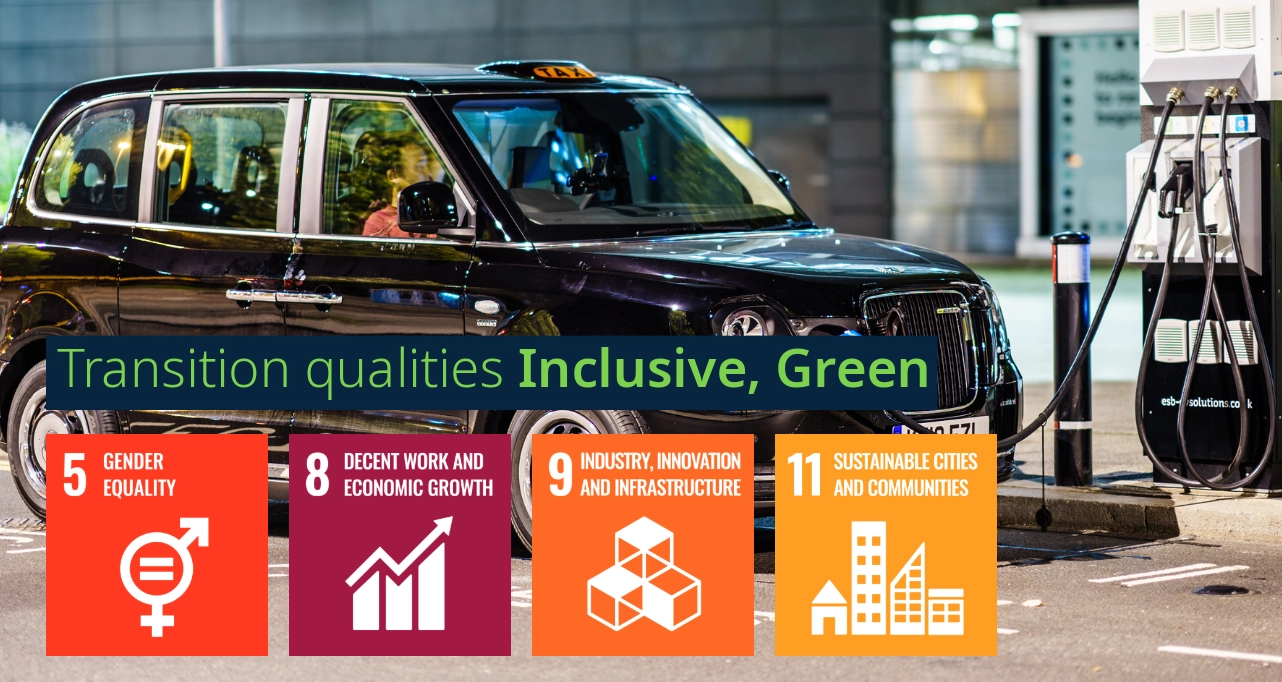
Egypt’s economy has been growing, but to sustain this path the country needs to adapt skills towards emerging growth areas, such as the green economy transition. A key sector with potential is private transport, where the shift towards electric mobility (e-mobility) is opening up opportunities in vehicle operations, maintenance, customer service and fleet management. This shift is underpinned by various national strategies aimed at reducing vehicle emissions (a cornerstone of the country’s Vision 2030), including commitments to phase out petrol and diesel cars by 2040 and accelerate the transition to e-mobility.
For these opportunities to translate into jobs and productivity gains, it is necessary to develop the right skills. However, transport companies have been constrained by talent shortages and by weak pathways between training systems and market demand for green transition-related skills. In a country with a youth unemployment rate of 18 per cent1 and where women's labour-force participation is far below that of men, it is essential to equip young people and women with skills to enter the expanding e-mobility workforce.
The EBRD has directly supported skills development and the expansion of economic opportunities for women and young people in e-mobility through its work with one of Egypt’s leading private transport operators, Abou Ghaly Motors (AGM).
The Bank’s financial and advisory support for AGM has responded directly to both the client's and the market's needs, addressing a structural gap in accredited, industry-relevant skills pathways capable of supporting the growth of Egypt's e-mobility sector.
To support the electrification of AGM’s London Cab Egypt fleet, in 2022, the EBRD signed a loan of up to EGP 187.4 million (around €10 million at the time) with AGM, followed in 2024 by a US$ 6.2 million loan (around €6.0 million) and a US$ 1.5 million grant (€1.3million). These investments enabled AGM to become one of Egypt's largest electric taxi operators, adding 100 range-extended electric vehicles (EVs) and bringing its total fleet to 350 as of March 2026, including an increased number of wheelchair-accessible vehicles. The project also created an opportunity to deepen skills and human capital development not only for AGM but the wider market, supporting capacity building for drivers on inclusive service delivery.
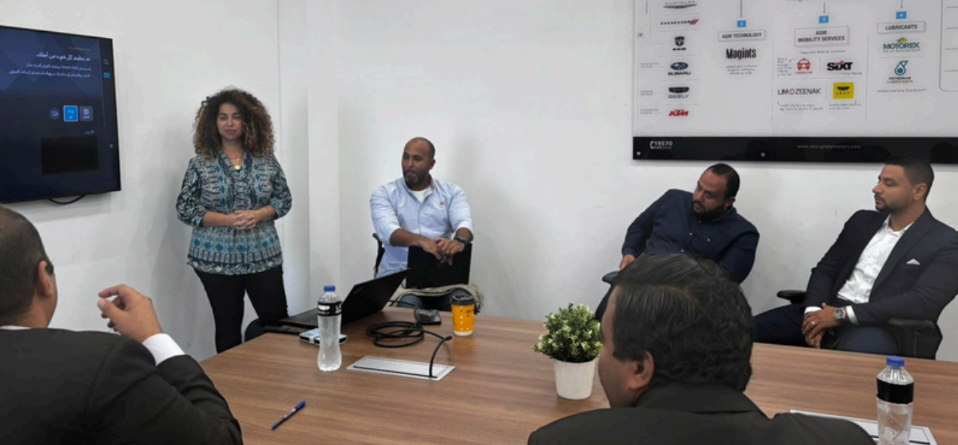
The EBRD’s advisory support helped AGM introduce an accredited five-day training programme covering EV maintenance and repair, the first course of its kind in Egypt. Developed in partnership with local training institution NASS Academy and the UK’s RG Specialist Solutions, the programme is tailored to AGM's operational needs, is aligned with international quality standards and includes a practical placement day in AGM's workshops. By October 2025, 26 students had completed the course in two pilot cohorts, and six trainers had become certified through its training-of-trainers element, including four at AGM.
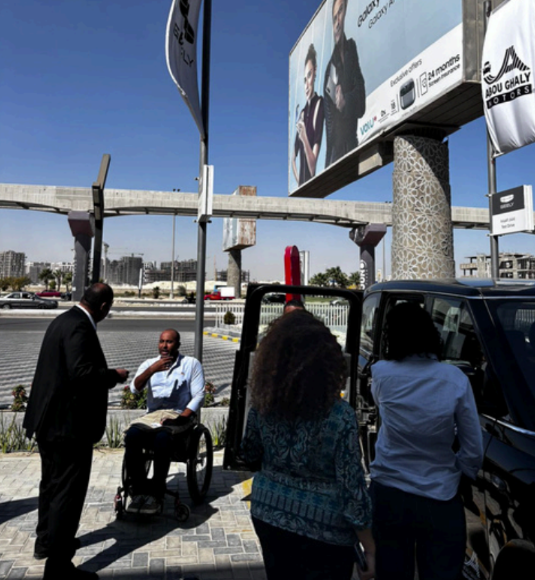
The Bank’s advisory support also contributed to measurable improvements in inclusive service delivery. Disability awareness training, completed by 350 AGM drivers and now embedded in AGM’s standard driver induction, has changed how drivers interact with passengers who require additional support, improving accessibility and consistency across services.
Developed with Helm, a leading disability inclusion non-governmental organisation (NGO) in Egypt, the hands-on course covers how to assist passengers in five categories of disability: mobility, visual, hearing, speech and intellectual. AGM drivers are reporting benefits from the disability awareness training, saying they are applying what they learned on a daily basis, including built-in accessibility features such as wheelchair ramps. Mohamed Atef, an AGM driver who completed the training in October 2024 after five years at the firm, has also noted a broader shift in attitudes among his peers, saying they no longer see working with passengers who are disabled as a challenge or an exception, but as a normal and expected part of delivering high-quality service. The training-of-trainers model is expanding the reach of this training, with two AGM staff now accredited as in-house trainers, equipped to share knowledge more widely.
Targeted recruitment partnerships with local training providers and NGOs further enabled AGM to begin diversifying its workforce, including by onboarding the company’s first female taxi drivers in a traditionally male‑dominated sector. This is a groundbreaking step i
n broadening economic opportunities for women and more community outreach is under way to increase the number of female drivers.
Collectively, these results demonstrate how coupling finance with skills and inclusion interventions can strengthen commercial performance while ensuring that the benefits of green transition investments translate into broader economic opportunities.
Select an image to expand



Select an image to expand
By integrating skills development and inclusion into a commercial e‑mobility investment, the EBRD helped expand a fleet electrification project into a programme that is building long-term capabilities, improved service quality and more inclusive access to emerging green economy jobs.
The EV maintenance training is spreading transferrable skills not just within AGM but also among partner institutions. The course is also now embedded in NASS Academy’s nationally accredited certification on advanced automotive electrical and control systems, making it available to any student enrolled at NASS.
Institutionalising skills development within AGM has also been critical. The company established a training academy within its operations, with clear review cycles and performance indicators led by a dedicated academy head. This is shifting the firm’s ad hoc approach to training to an evidence-based, systemic method of workforce development, allowing for continuous updates to skills in line with the evolving private transport sector. It is also positioning AGM as a training leader in Egypt’s growing e-mobility space, creating opportunities to scale up and replicate these programmes.
The training-of-trainers model is enabling the dissemination of skills beyond the end of the EBRD project lifecycle. In addition, AGM hosts around 60 university students each year on placements and internships, providing a further way for EV maintenance skills and inclusive practices to spread to the wider market. Following a successful pilot of the operational planning and service delivery programme, this course is also ready for wider rollout.
The project has also helped to shift accepted norms in the sector. Around 15 per cent of Egypt's population lives with a disability, yet accessible transport remains limited. Building inclusive service standards into driver training shows that accessibility is not only a social obligation but sound business practice, as it will broaden AGM’s customer base. It will also raise the bar within the sector, encouraging others to follow AGM’s example.
AGM's recruitment of female drivers represents a cultural shift, creating visible pathways for women in Egypt's transport industry, particularly the growing e-mobility industry. Asmaa Hassan, one of the first female drivers hired, said she decided to apply after seeing an advertisement on social media and has experienced a huge boost in self-confidence personally and professionally since starting the role. Asmaa now encourages other women who are considering entering the profession, telling them to trust their own abilities and not to be discouraged by negative stereotypes. Heba Wahby, another female driver at AGM, also actively recommends the role to other women, highlighting how its flexibility makes it compatible with parenting responsibilities.
The project’s success was underpinned by strong client ownership, targeted programme design to meet specific business needs, and early steps towards the institutionalisation of the EV maintenance programme within AGM’s training academy. It is also strongly aligned with national strategies and policies towards the electrification of the transport sector and developing skills for future growth.
From the outset, AGM was engaged in shaping the content and delivery of the training, ensuring it responded to clear operational needs. This commitment was reinforced by AGM’s appointment of a dedicated academy head, indicating its plans for long-term workforce development beyond the life of the EBRD project.
Strategic partnerships were central to translating project objectives into measurable and successful outcomes:
Lessons learned in developing this replicable pathway for future EBRD skills and inclusion projects include:
1. See World Bank Group (2026), “Unemployment, youth total (% of total labor force ages 15-24) (modeled ILO estimate) – Egypt, Arab Rep”, Washington, DC. Available at: https://data.worldbank.org/indicator/SL.UEM.1524.ZS?locations=EG.