Search
Search
Who we are
Overview: about the EBRDWho we are
Overview: about the EBRD
Explore the EBRD’s journey over the decades, investing in businesses, supporting economies and driving lasting change across its regions.
What we do
Overview: how the EBRD operatesWhat we do
Overview: how the EBRD operates
Across three continents, the EBRD supports the transition to successful market economies.
Work with us
Overview: how you can work with the EBRDWork with us
Overview: how you can work with the EBRD
We draw on three decades of regional knowledge and financial expertise to tailor our products and approaches to each client's needs.

 Eng
 Eng
January 2020
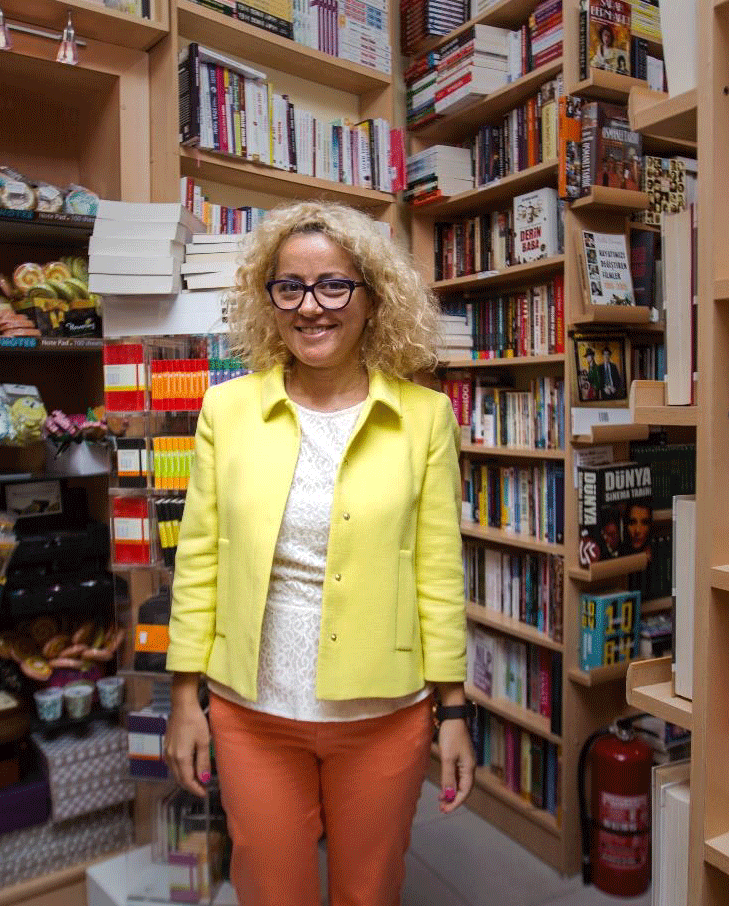
WiB programmes aim to promote women’s participation in business by addressing: (1) bottlenecks on the supply side through the facilitation of access to finance (via EBRD credit lines, First Loss-Risk Cover [FLRC], technical assistance to PFIs); and (2) bottlenecks on the demand side through the increase of access to know-how (via advisory services and other activities that support women-led micro, small and medium-sized enterprises). The programme is co-led by three teams: the Advice for Small Business, the Gender & Inclusion team and the FI team.
The first phase in Turkey comprised seven credit lines to five PFIs. A dedicated credit line of up to €300 million was intended for on-lending to at least six commercial banks and leasing companies in Turkey, each under a stand-alone project. The programme was of interest to the EU and Turkey due to its capacity to increase the participation of women in the labour market. The overall objective of the TC programme was to promote women’s entrepreneurship in Turkey, and more broadly their participation in business by assisting women-led SMEs to access finance, know-how and non-financial business development services. Funding was provided by the EU Instrument for Pre-Accession Assistance fund (€32.3 million) and the Turkish Ministry of Labour, Social Security and Family (€6.7 million).
TurWiB successfully increased the offer for on-lending to women-led SMEs and increased access to finance. This was achieved through an increase of the PFIs’ WiB loan portfolios, targeting start-ups and first-time loan customers. It allocated funding outside of the three big cities (Ankara, Istanbul and Izmir). It was essential to raise PFIs’ knowledge of the women-led SME segment and its potential.
The availability of FLRC was essential to the success of the programme. However, it may not be sustainable without a risk-sharing mechanism. The FLRC helped incentivise PFIs to consider lending to the WiB segment, but at least two PFIs will not offer similar products after termination of the WiB loan.
There were limited synergies between the financial and non-financial components of the programme. Regional seminars proved successful in bringing together PFIs and women-led SMEs and disseminating information on the programme. Yet there is little evidence that the diagnostic services helped women-led SMEs obtain a WiB loan. Advice to Small Businesses services were not promoted effectively, or at all by the PFIs.
The sustainability of changes at the PFI level is questionable. All PFIs valued the baseline assessment carried out by the consultants, but some avoided making significant changes in their management information systems, SME strategies, products offered to the women-led SMEs and the collection of gender-disaggregated data. Most stated that they did not follow the consultants’ recommendations because the implementation cost was greater than the value created.
There is considerable scope to leverage other IFIs’ resources. TurWiB could be better used as a platform for wider policy engagement. Collaborating with other IFIs was a missed opportunity for EBRD in the first phase of the programme.