Search
Search
Who we are
Overview: about the EBRDWho we are
Overview: about the EBRD
Explore the EBRD’s journey over the decades, investing in businesses, supporting economies and driving lasting change across its regions.
What we do
Overview: how the EBRD operatesWhat we do
Overview: how the EBRD operates
Across three continents, the EBRD supports the transition to successful market economies.
Work with us
Overview: how you can work with the EBRDWork with us
Overview: how you can work with the EBRD
We draw on three decades of regional knowledge and financial expertise to tailor our products and approaches to each client's needs.

 Eng
 Eng
March 2020
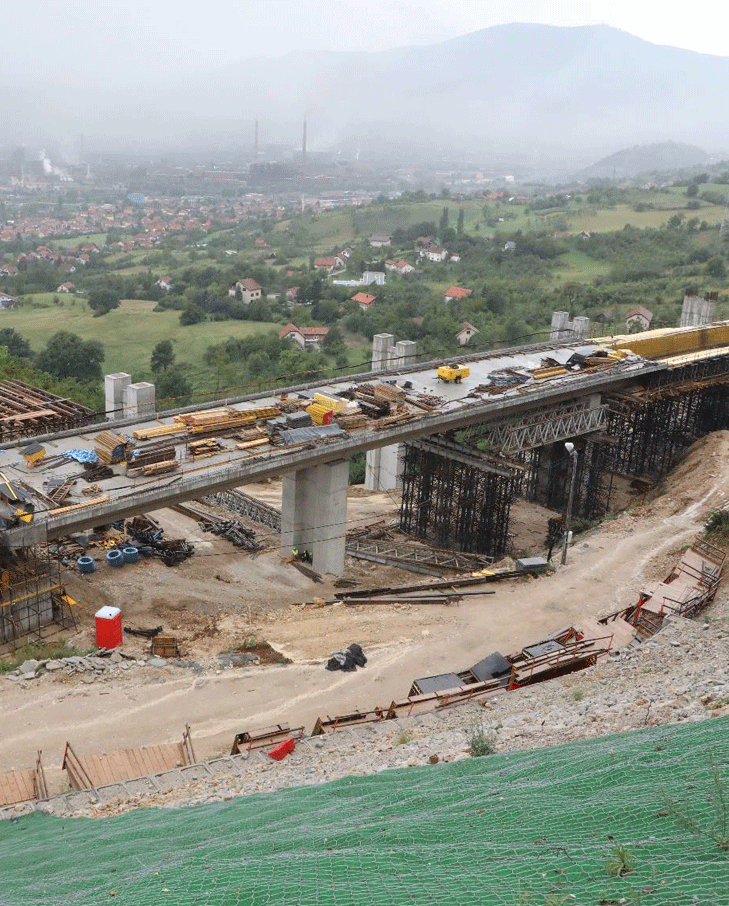
The report on regional integration presented an evaluation of nine infrastructure projects promoting cross-border connectivity, eight in transport and one in energy. It assessed their overall performance, with emphasis on the intended and observable impact on cross-border connectivity and integration. While all but one of the projects were approved and largely implemented before “integrated” was formally introduced as a transition quality, the evaluation nevertheless provided analysis, findings and insights directly relevant to current and future operations with regional integration elements and objectives.
The evaluation sought to establish a broader context fo r the Bank’s project-specific work – starting with a brief analysis of the evolution of its approach to regional integration, and a review of the portfolio of early cross-border projects as well as of more recent operations after “integrated” became one of the six transition qualities. The study examined linkages and the incorporation of regional integration into selected country and sector strategies, along with other IFIs’ approaches to regional integration and the EBRD’s collaboration with them.
Policy and strategy context
It proved challenging to conclusively assess the regional integration impact of most of the cross-border infrastructure projects as the Bank does not have a framing strategy for regional integration or cross-border investments against which to assess its operations, while work on many international corridors is ongoing and relevant data are scarce.
Historically, three-quarters of the Bank’s transport projects with cross-border components by volume were in the road sector. Evaluation of several of them demonstrates that, in most 22 cases, actual traffic was disappointing. They had stronger local, rather than regional, integrating impact.
Historically, the majority of the Bank’s transport projects supported roads, while many interviewees believed rail played a more prominent role in their countries’ cross-border connectivity. The Bank has had relatively few rail projects with regional integration components.
Complex customs and immigration procedures, and long waiting times at border crossings were often the principal hurdles to integration, slowing transportation and impacting the choice of route by consignors. Only one of the four highways projects reviewed included components designed to address them through policy dialogue.
Project design and performance issues
Project documents often cited impact on regional integration, but without completing prior diagnostics. Performance metrics were in sufficient and typically limited to traffic/throughput, with projections simply linked to a country’s forecast gross domestic product.
Most physical infrastructure components were completed (albeit with substantial delays); however, policy dialogue objectives were often not achieved.
Almost all private sector participation enhancement objectives of the reviewed projects failed.
The current traffic or throughput of three quarters of the evaluated projects has been well below projected levels.
The transportation hubs projects (seaports and airports) have been generally able to demonstrate strong integrating impact much faster than those in roads (and were easier to measure).
Most evaluated projects were exposed to political risks, which often materialised, adversely impacting their connectivity potential.