Search
Search
Who we are
Overview: about the EBRDWho we are
Overview: about the EBRD
Explore the EBRD’s journey over the decades, investing in businesses, supporting economies and driving lasting change across its regions.
What we do
Overview: how the EBRD operatesWhat we do
Overview: how the EBRD operates
Across three continents, the EBRD supports the transition to successful market economies.
Work with us
Overview: how you can work with the EBRDWork with us
Overview: how you can work with the EBRD
We draw on three decades of regional knowledge and financial expertise to tailor our products and approaches to each client's needs.

 Eng
 Eng
January 2020
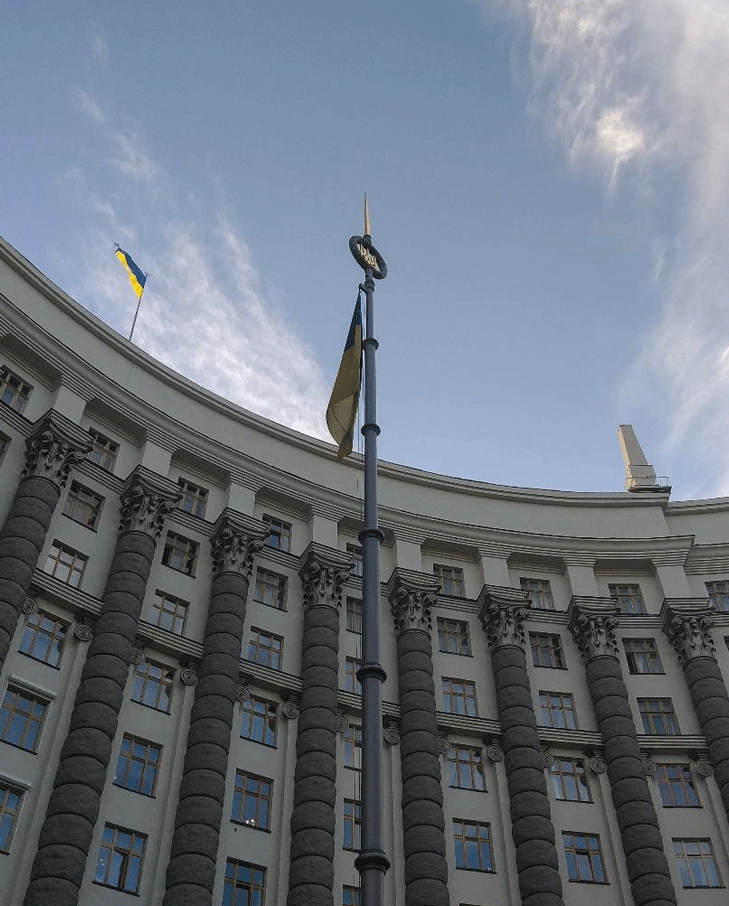
The EBRD-Ukraine Stabilisation and Sustainable Growth MDA was launched in 2014 as part of a multilateral crisis-response measures to provide urgent support to Ukraine in the wake of major political, security, economic and humanitarian crises.
Fourteen donors have contributed a total of €53.5 million to the Ukraine MDA, out of which a portfolio of 38 projects have so far been or are being delivered, with a total earmarked value of €36.9 million. The MDA is managed by EBRD and is the only such single-country focused arrangement within the Bank. Support was targeted at the 26design and implementation of policy reforms and institutional capacity-building in sectors where EBRD has considerable experience as an investor and partner, such as financial policy, the banking sector, capital markets, energy, infrastructure and agribusiness. Originally intended to last for three years, the MDA was extended for another three in 2017.
EBRD management and MDA donors asked EvD to produce an interim evaluation on an accelerated basis in order to inform discussion and decisions about the MDA’s effectiveness and potential extension ahead of its current July 2020 closure date.
The MDA’s scope is in line with EBRD’s mandate and core capabilities.
The MDA’s core principles – additionality, alignment with Ukraine’s priority agenda and international coordination – are sound and relevant.
The MDA has proven to be strategically relevant, operationally efficient and effective, and enabled key institutional changes in Ukraine.
The MDA is managed efficiently and donors are broadly satisfied.
The flexibility of allocations across five pillars is one of the MDA’s most useful features.
Only one instrument – technical assistance – has been used; no investment grants, concessional funding or first-loss guarantees have been used.
MDA support has contributed to specific institutional and structural reforms, including the creation of new institutions such as a Business Ombudsman, a Network of Integrity and Compliance, an Investment Council, a Financial Restructuring Secretariat, and a Prozorro e-procurement platform; turnaround of the Deposit Guarantee Fund; improvements in monetary policy and the banking sector; improvements in technical capacity at multiple public agencies; reforms at several strategic state-owned enterprises and state-owned banks; the abolition of price regulations on food products and services; a new approach to solid waste management; and various other reforms.
The MDA is likely to have contributed to an improvement in Ukraine’s position in key international indices, including the Doing Business survey, the Global Open Data index and the Corruption Perception Index. The Ukrainian economy has stabilised since 2014, and has started to grow.