Search
Search
Who we are
Overview: about the EBRDWho we are
Overview: about the EBRD
Explore the EBRD’s journey over the decades, investing in businesses, supporting economies and driving lasting change across its regions.
What we do
Overview: how the EBRD operatesWhat we do
Overview: how the EBRD operates
Across three continents, the EBRD supports the transition to successful market economies.
Work with us
Overview: how you can work with the EBRDWork with us
Overview: how you can work with the EBRD
We draw on three decades of regional knowledge and financial expertise to tailor our products and approaches to each client's needs.

 Eng
 Eng
June 2024
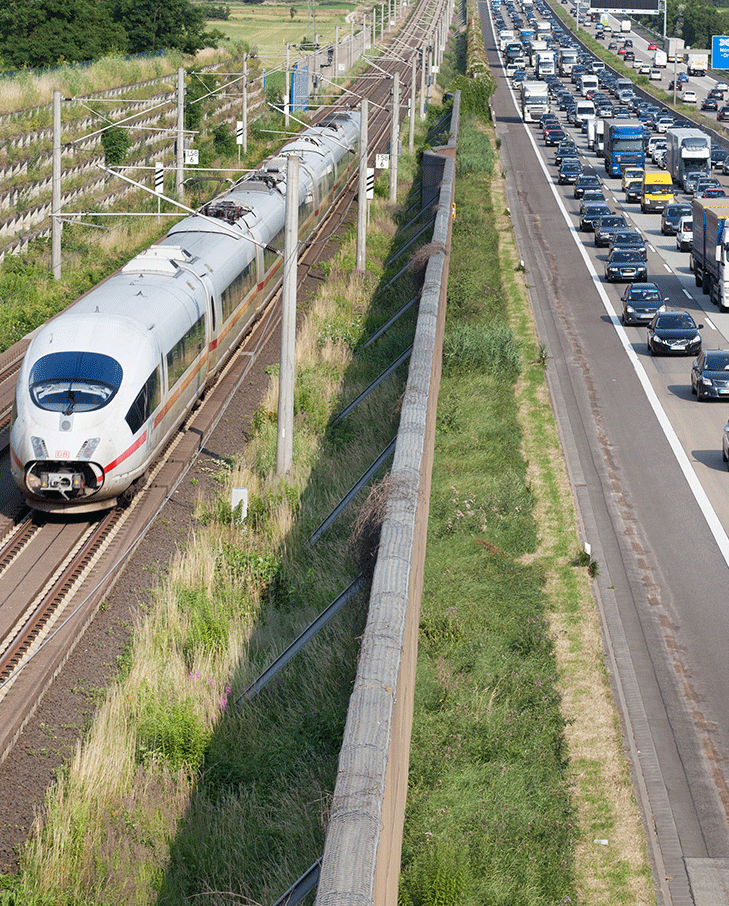
This evaluation covers the first four years of implementation of the Transport Strategy and the last two years of the previous Transport Strategy, with a primary objective to identify issues useful to inform a future Infrastructure strategy. The main methods used included a portfolio and projects document review, as well as client interviews. The evaluation samples include 19 projects and 4 policy dialogue activities in 8 countries.
Sustainability has not typically been the main objective of transport operations, as it was supported primarily by smaller components of more traditional connectivity-focused projects. Nevertheless, the Bank increased its GET commitments in transport by one third from the previous period, lifting the share of GET in its total ABI from one quarter to one third.
Almost all sustainability components of the sample projects were implemented as planned but their specific results were typically unknown due to lack of monitoring. Despite good relevance and financial additionality, the Bank had modest value addition related to sustainability, manifested through support to the ESAPs and diagnostic initiatives. The Bank has committed large, multiple financing, policy dialogue and TCs to railway projects, which could bring future modal shift with long-lasting green benefits.
Other IFIs are increasingly prioritising decarbonisation and integration of transport. Some are prioritising sustainability-related improvements to existing airports rather than their expansion.
The number and volume of private transport operations shrank, nevertheless, the Bank signed several high-profile PPP transactions. The Bank’s strong additionality was clear in its enabling role for PPPs and in their continued support in the early years.
Private operations were implemented faster and more efficiently, however, their transition objectives were not always ambitious and amounted to signing or implementing a project.