Transition Report 2026-27 launch
Watch our launch event live on YouTube at 16.00 London time on 17 November 2026.
Who we are
Overview: about the EBRDWho we are
Overview: about the EBRD
Explore the EBRD’s journey over the decades, investing in businesses, supporting economies and driving lasting change across its regions.
What we do
Overview: how the EBRD operatesWhat we do
Overview: how the EBRD operates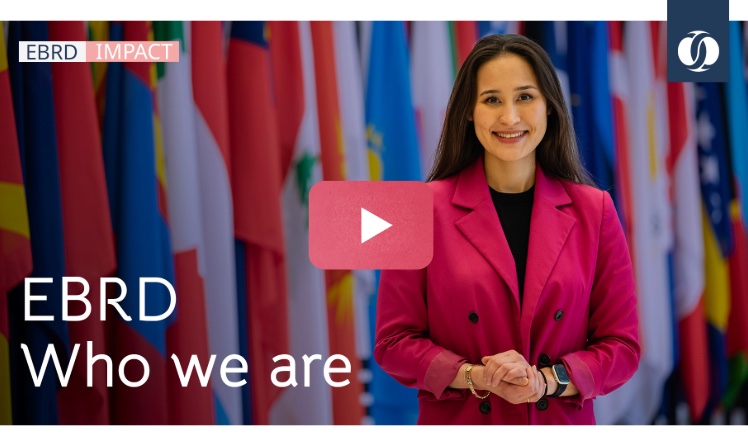
Across three continents, the EBRD supports the transition to successful market economies.
Work with us
Overview: how you can work with the EBRDWork with us
Overview: how you can work with the EBRD
We draw on three decades of regional knowledge and financial expertise to tailor our products and approaches to each client's needs.

 Eng
 Eng
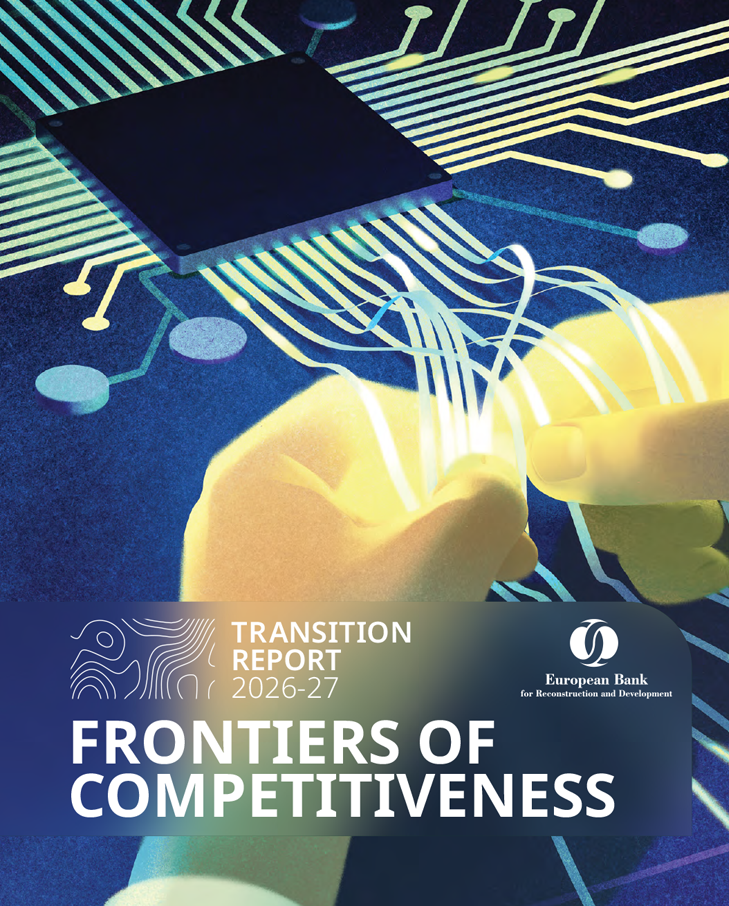
The Transition Report 2026-27 looks at how technological advances and shifting geopolitical priorities are reshaping global demand and examines the implications for economies in the EBRD regions. It focuses on three key areas: the rapid expansion of artificial intelligence, rising defence spending and the potential for entrepreneurship to drive economic growth. Geopolitical fragmentation, rising defence needs and advances in AI are creating new opportunities and challenges for the EBRD regions. Yet capitalising on these opportunities is far from straightforward.
Publication date: 17 November 2026
ISBN: 978-1-898802-58-7
ISSN: 1356-3424

Foreword
"The difficulty lies, not in the new ideas, but in escaping from the old ones,” John Maynard Keynes wrote. For three decades, most economies in the EBRD regions benefited from deepening globalisation, a post-Cold War “peace dividend” and a clear path to technological catch-up. Those favourable conditions are now fading away. Globalisation is giving way to fragmentation, the peace dividend has succumbed to rising defence needs, and the predictable technological catch-up has been engulfed by an artificial intelligence revolution whose speed and implications remain uncertain. The challenge now is not simply to advance along an established path, but to define a new path entirely.

Executive summary
As technology advances and geopolitics shift, what countries produce and export changes. Rising global demand for artificial intelligence and increased defence spending could, in principle, create opportunities for economies to develop new export capabilities. Yet, leveraging these demand shocks will be challenging. Economies’ export structures tend to be highly persistent, and developing new export specialisations is more difficult in the case of complex products such as AI and military goods. Building new capabilities involves trial and error, requires active policy support and tends to be more successful where economies already have established specialisations in related upstream or downstream products.

Chapter 1
Chapter 2

Chapter 3

Chapter 4

Chapter 5
