
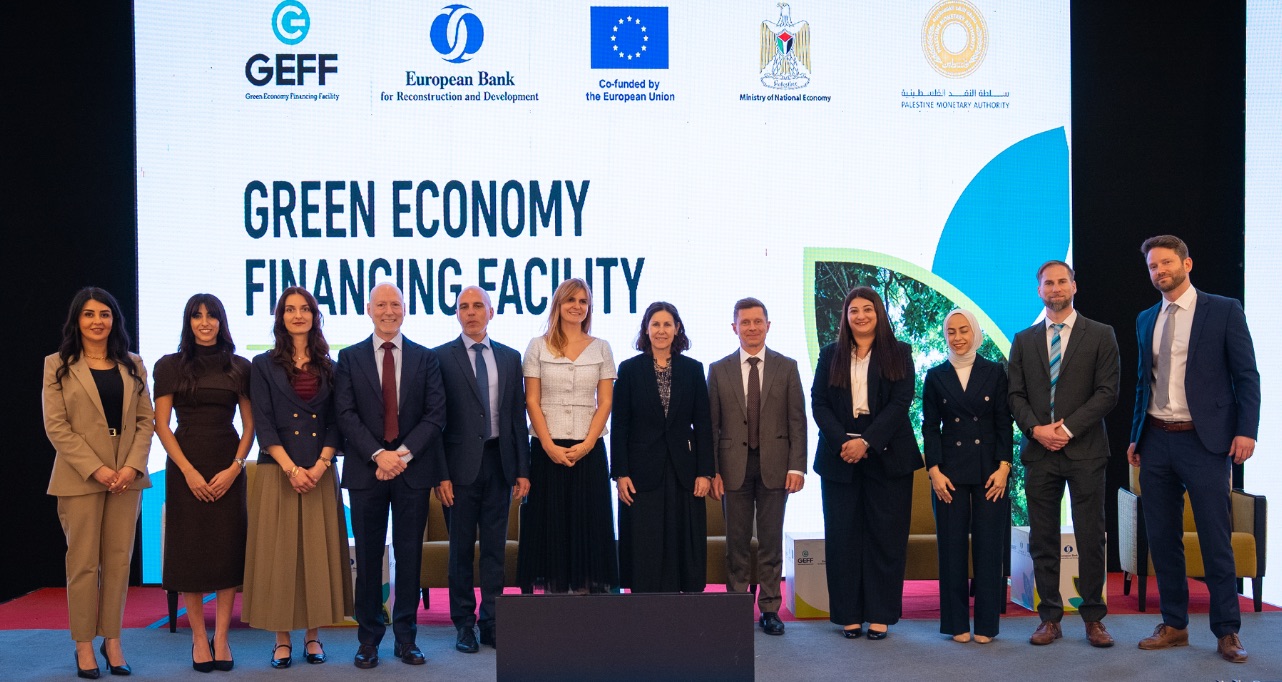
EBRD and EU launch Green Economy Financing Facility to support the Palestinian economy
€25.9 million programme to support green investments by businesses and households
22 Oct 2026
Who we are
Overview: about the EBRDWho we are
Overview: about the EBRD
Explore the EBRD’s journey over the decades, investing in businesses, supporting economies and driving lasting change across its regions.
What we do
Overview: how the EBRD operatesWhat we do
Overview: how the EBRD operates
Across three continents, the EBRD supports the transition to successful market economies.
Work with us
Overview: how you can work with the EBRDWork with us
Overview: how you can work with the EBRD
We draw on three decades of regional knowledge and financial expertise to tailor our products and approaches to each client's needs.

 Eng
Eng
 Eng
Eng
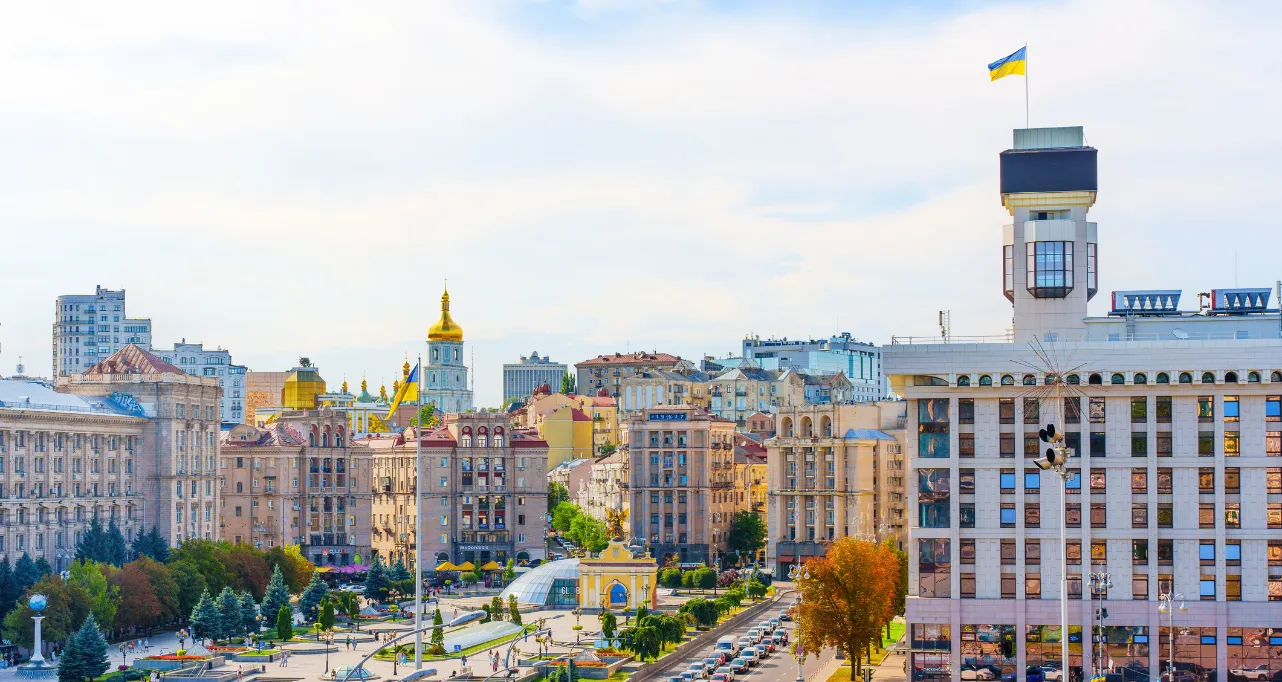
Ukraine is maintaining macroeconomic stability even in the fifth year of Russia’s war of aggression, supported by substantial and frontloaded external financing, according to the latest edition of a flagship economic report by the European Bank for Reconstruction and Development (EBRD).
The EBRD’s latest Regional Economic Prospects (REP) report, published today, forecasts real GDP growth of 2.2 per cent in 2026. This is slightly below the 2.5 per cent it forecast in February, but rises to an unchanged forecast of 4.0 per cent in 2027 if hostilities ease and post-war reconstruction begins. The outlook continues to depend heavily on how the war evolves and the availability of external financial support.
Real GDP growth slowed to 1.8 per cent in 2025, versus an EBRD forecast of 2.0 per cent in February 2026, as the economy remained constrained by labour shortages and repeated disruptions to electricity supply and logistics caused by targeted military attacks.
“Supporting the country’s macroeconomic stability is significant, secured and largely frontloaded external financing,” the report says. “While the war continues to impose substantial human and economic costs, Ukraine’s authorities, businesses and partners have demonstrated strong capacity to stabilise the economy under unprecedented conditions.”
The country’s economic performance in 2025 was shaped by continued wartime constraints. Labour shortages and persistent attacks on energy infrastructure disrupted industrial activity and logistics, while broader supply challenges constrained output. These pressures have continued into 2026, resulting in economic growth remaining modest despite the resilience of firms and households.
Inflation has also begun to rise again, following a deceleration to 7.4 per cent in January 2026 after a period of tighter monetary policy and relative exchange-rate stability. Higher global energy prices linked to the conflict in the Middle East are adding new pressures, increasing costs for businesses and households and contributing to renewed inflationary momentum.
Fiscal support remains crucial. Ukraine’s fiscal deficit, excluding grants, reached 23.6 per cent of GDP in 2025 and is projected to remain elevated at 19.3 per cent in 2026, reflecting exceptionally high defence and social spending. These needs are being financed largely through external official support, which continues to underpin macroeconomic stability. Committed external financing of more than €110 billion for 2026-27 is expected to contain short-term risks.
The EBRD, Ukraine’s largest institutional investor, has significantly increased its support in response to the war. The Bank has made almost €10.0 billion available to Ukraine since the full-scale war began in February 2022, supporting the real economy through its work to bolster energy security, vital infrastructure, food security, trade and the private sector.
€25.9 million programme to support green investments by businesses and households
22 Oct 2026

Video
KumKuma restaurant in Armenia is harnessing solar energy with EBRD and EU support
21 Oct 2026

EBRD President to participate in the Berlin Process Leaders' Summit
21 Oct 2026