Search
Search
Who we are
Overview: about the EBRDWho we are
Overview: about the EBRD
Explore the EBRD’s journey over the decades, investing in businesses, supporting economies and driving lasting change across its regions.
What we do
Overview: how the EBRD operatesWhat we do
Overview: how the EBRD operates
Across three continents, the EBRD supports the transition to successful market economies.
Work with us
Overview: how you can work with the EBRDWork with us
Overview: how you can work with the EBRD
We draw on three decades of regional knowledge and financial expertise to tailor our products and approaches to each client's needs.

 Eng
 Eng
Author: Bojana Vlajcic
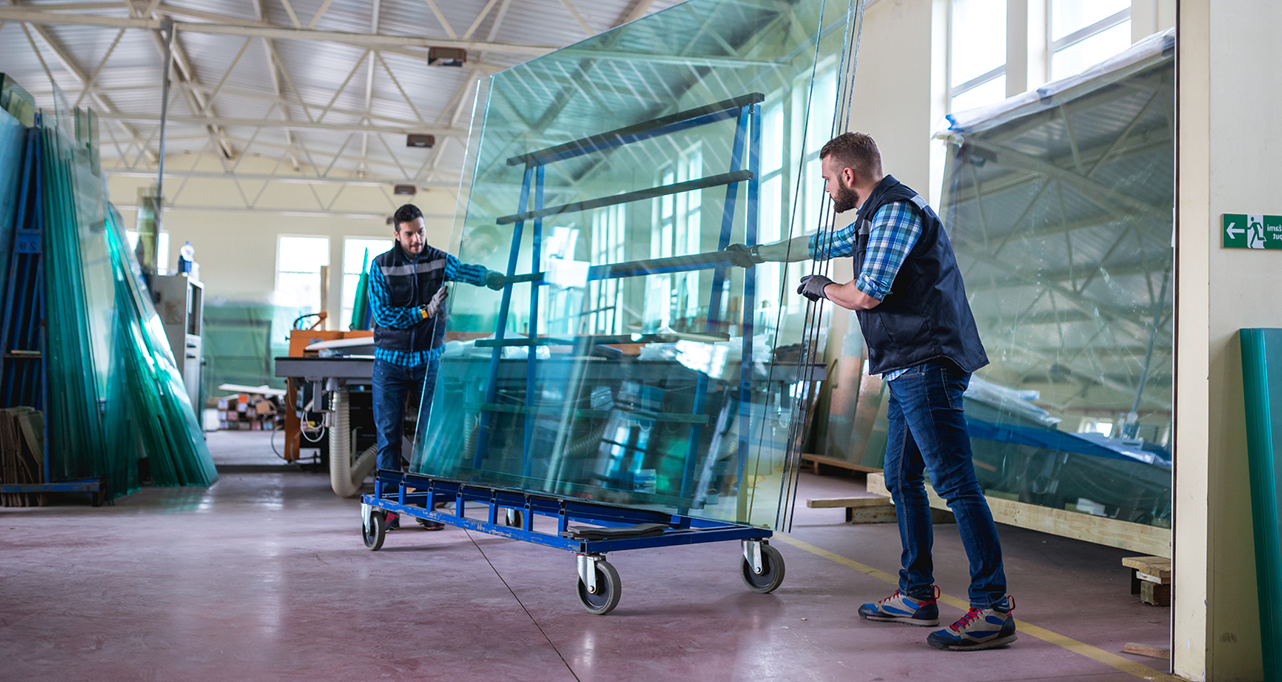
At DMA Koping, investment in a new automated production line is changing the way insulating glass is made.
Processes that once involved frequent interruptions, physical effort and greater risk of error are now faster and more precise. For this Serbian company, which produces aluminium, glass and steel structures and modern facade systems, this investment means increased production capacity, more efficient use of resources and more reliable delivery to customers.
“DMA Koping can now offer more stable prices, which is of key importance in markets where price is one of the decisive factors,” says Vladan Ignjatović, who has led the company since it was founded in 2008.
“This investment has also expanded our capacity to realise potential projects. Time planning is now more reliable and service delivery is faster.”
For many small and medium-sized enterprises (SMEs), investing in modern technology is essential in order to remain competitive, but finding the necessary finance can be difficult.
The SME Go Green programme, which is run by the European Bank for Reconstruction and Development (EBRD) in partnership with the European Union (EU), is helping businesses to overcome that challenge. It combines financing through local financial institutions with EU-funded investment incentives and free technical assistance.
Since its launch in the Western Balkans at the end of 2023, the programme has supported 450 projects, mobilising more than €80 million in investment. In Serbia alone, €45.5 million has been invested in 289 projects.
Companies have invested in solutions ranging from solar power and energy storage to cleaner vehicles and more efficient industrial equipment.
DMA Koping used the programme to invest in an automated production line for its insulating glass. The new equipment has increased capacity and reduced downtime, while improving production planning and reducing waste and the need to redo work. More efficient use of water and gas is also helping to make the company’s operations more sustainable.
The improved quality of the insulating glass itself has an additional benefit, helping to improve the energy performance of the buildings where it is installed.
An EU-funded grant equivalent to 10 per cent of the eligible investment helped to reduce the financial burden on DMA Koping, while technical assistance supported the company in preparing and implementing the investment.
Across the Western Balkans, these individual investments are adding up.
By the end of September 2026, SME Go Green investments had enabled annual energy savings equivalent to the annual energy consumption of more than 12,000 households.
But the benefits go beyond energy and emissions. For SMEs, modern technologies can mean higher productivity, better product quality and safer working conditions. They can also help businesses to respond to the EU’s evolving technical, environmental and market requirements.
In Serbia, SME Go Green financing is available through Banca Intesa, Intesa Leasing, OTP banka, OTP Leasing, NLB Komercijalna banka, UniCredit Banka and Erste Banka. Eligible SMEs can receive EU-funded grants equivalent to 15 per cent of the total loan amount for projects involving renewable energy, agribusiness and related value chains, or 10 per cent for other eligible investments, alongside free technical assistance.
For DMA Koping, that support has translated into something tangible: better technology, more efficient production and greater capacity to grow.
And for an SME competing in a fast-moving market, becoming greener can also mean becoming a stronger business.