Search
Search
Who we are
Overview: about the EBRDWho we are
Overview: about the EBRD
Explore the EBRD’s journey over the decades, investing in businesses, supporting economies and driving lasting change across its regions.
What we do
Overview: how the EBRD operatesWhat we do
Overview: how the EBRD operates
Across three continents, the EBRD supports the transition to successful market economies.
Work with us
Overview: how you can work with the EBRDWork with us
Overview: how you can work with the EBRD
We draw on three decades of regional knowledge and financial expertise to tailor our products and approaches to each client's needs.

 Eng
Eng
 Eng
Eng
The European Bank for Reconstruction and Development (EBRD) is providing essential support for critical infrastructure in Türkiye.
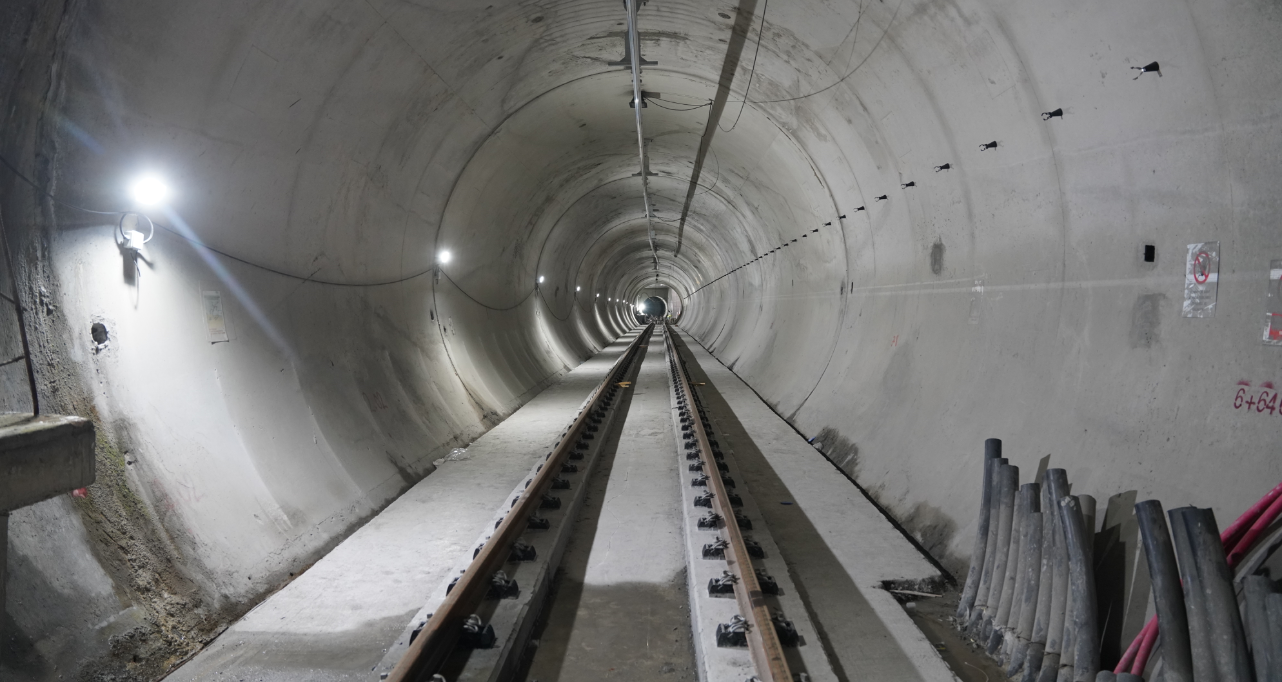
The Bank is providing financing for two major projects: a €110 million loan extension to complete the Ümraniye-Ataşehir-Göztepe metro line in Istanbul; and a €42 million sovereign loan to construct a new wastewater treatment plant in Osmaniye, one of the provinces heavily impacted by the February 2023 earthquakes.
The Ümraniye-Ataşehir-Göztepe metro line will connect major residential districts, business centres and a key healthcare institution, including the rapidly developing Istanbul Financial Centre, significantly improving mobility on Istanbul’s Asian side. By offering a fast, low carbon alternative to private vehicles, the project will support economic productivity and improve congestion and quality of life for Istanbul’s residents.
In addition to boosting connectivity, the project is aligned with the action plan that Istanbul has adopted under the EBRD’s Green Cities initiative and will make a strong contribution to the city’s climate objectives by reducing congestion, pollution and emissions. The city adopted its action plan in February 2025 following a development process supported by the EBRD, with donor funding from the TaiwanBusiness-EBRD Technical Cooperation Fund.
In Osmaniye, meanwhile, the Bank is financing the construction of a modern wastewater treatment plant with a capacity of 75,000 m³/day, replacing an overloaded facility that is unable to meet growing demand.
Infrastructure needs remain significant in the region affected by the earthquakes of February 2023. To date, the EBRD has invested over €1.6 billion in support of the country’s reconstruction efforts, including credit lines, support for small and medium-sized enterprises, private-sector partnerships and assistance with key infrastructure projects.
Osmaniye’s new wastewater plant will bring effluent quality into line with European Union standards, improve regional water quality and reduce greenhouse gas emissions by incorporating anaerobic digestion and biogas recovery. At the same time, a dedicated capacity building programme will strengthen crisis response, asset management and operational resilience within the city of Osmaniye under the EBRD’s Earthquake Response Framework.
Iller Bankasi, the body responsible for disbursing all critical municipal infrastructure financing provided by international financial institutions in the earthquake-affected region, will act as the implementation agency for the city of Osmaniye. As part of the project, the municipality will improve its data collection of its residents, fostering accessibility, effective usage and health benefits.
The EBRD is one of Türkiye’s key investors, with more than €23 billion committed across the country since 2009, largely in the private sector.