

Video
A modern kitchen, powered by the sun
KumKuma restaurant in Armenia is harnessing solar energy with EBRD and EU support
21 Oct 2026
Who we are
Overview: about the EBRDWho we are
Overview: about the EBRD
Explore the EBRD’s journey over the decades, investing in businesses, supporting economies and driving lasting change across its regions.
What we do
Overview: how the EBRD operatesWhat we do
Overview: how the EBRD operates
Across three continents, the EBRD supports the transition to successful market economies.
Work with us
Overview: how you can work with the EBRDWork with us
Overview: how you can work with the EBRD
We draw on three decades of regional knowledge and financial expertise to tailor our products and approaches to each client's needs.

 Eng
Eng
 Eng
Eng
Author: Nigina Mirbabaeva
• Polish economy to grow by 3.5 per cent in 2026, according to latest EBRD forecasts
• Growth outlook downgraded by 0.2 percentage point amid global headwinds
• Economy expected to grow by 2.8 per cent in 2027
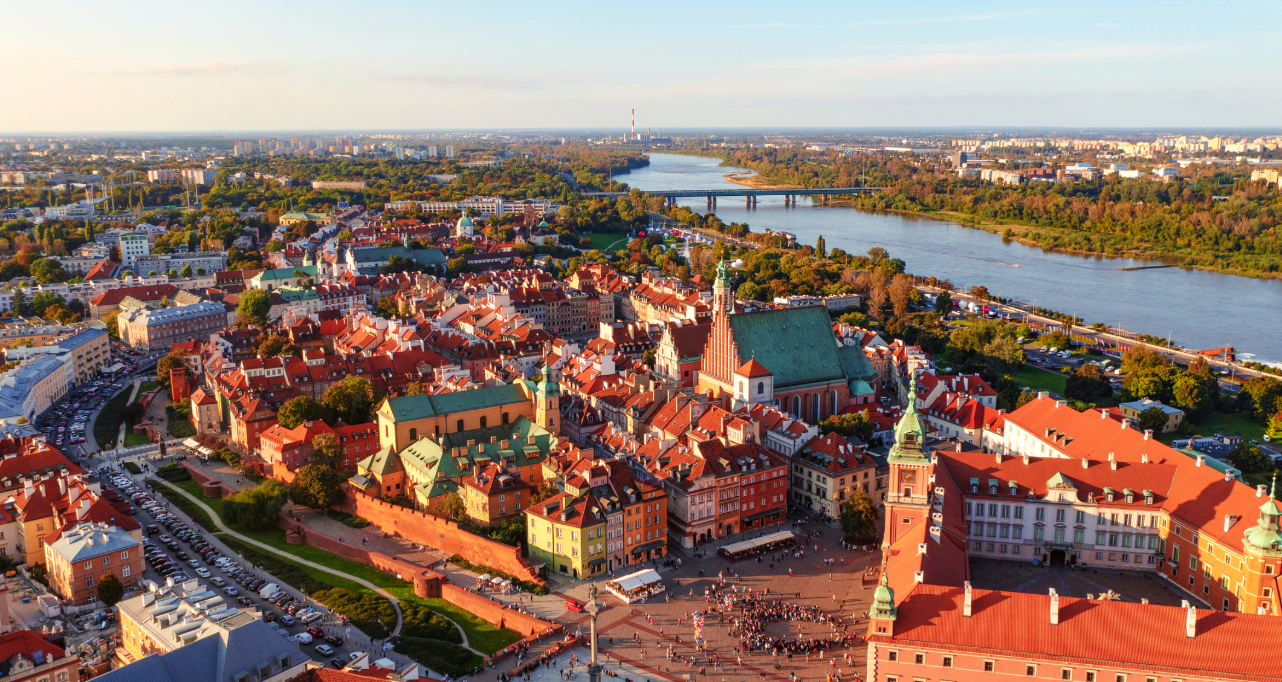
The European Bank for Reconstruction and Development (EBRD) expects Poland’s economy to grow by 3.5 per cent in 2026, before easing to 2.8 per cent in 2027, according to its latest Regional Economic Prospects (REP) report published today.
Following strong expansion of 3.6 per cent in 2025, growth is expected to remain robust, supported by resilient domestic demand and continued investment backed by European Union funds.
Economic activity this year is expected to be supported by peak absorption of Recovery and Resilience Facility (RRF) funds ahead of the end-August deadline, and by rising defence spending, which is projected to reach 4.8 per cent of GDP. Poland also set to benefit from its allocation under the EU Security Action for Europe (SAFE) defence loan instrument, reinforcing investment momentum over the near term.
However, growth momentum slowed in the first quarter of 2026, as higher energy prices linked to the conflict in the Middle East weighed on economic activity.
Rising energy prices, global trade tensions and weaker external demand from key trading partners, particularly Germany, are expected to constrain the outlook. Against this backdrop, the EBRD has downgraded its growth forecasts for 2026 and 2027 by 0.2 percentage point relative to its February 2026 projections.
Further escalation of the Middle East conflict, which could lead to higher energy prices and supply-chain disruptions, as well as weaker-than-expected growth in the euro area, could weigh further on growth.
Poland’s economic outlook is also shaped by its fiscal position. Despite strong growth, the country continues to face fiscal challenges – it has one of the highest general government deficits in the European Union, projected to narrow only modestly to 6.8 per cent in 2026, and public debt levels are expected to rise from 60 per cent to 65 per cent of GDP, keeping the country under the EU’s excessive-deficit procedure.
The outlook for the wider region of central Europe and the Baltic states is similar. The Bank expects regional growth to reach 2.8 per cent in 2026, supported by investment but revised downward due to higher energy prices and external shocks.
The EBRD is a leading institutional investor in Poland, having invested more than €16.7 billion in the country through over 590 projects since 1991, with a strong focus on the private sector, energy security and the green transition.
Video
KumKuma restaurant in Armenia is harnessing solar energy with EBRD and EU support
21 Oct 2026

EBRD President to participate in the Berlin Process Leaders' Summit
21 Oct 2026

Event
Early Visibility of Upcoming Procurement Opportunities: The First EBRD Early Market Engagement in Sub-Saharan Africa
20 Oct 2026