


Video
A modern kitchen, powered by the sun
KumKuma restaurant in Armenia is harnessing solar energy with EBRD and EU support
21 Oct 2026

 Eng
Eng
 Eng
Eng
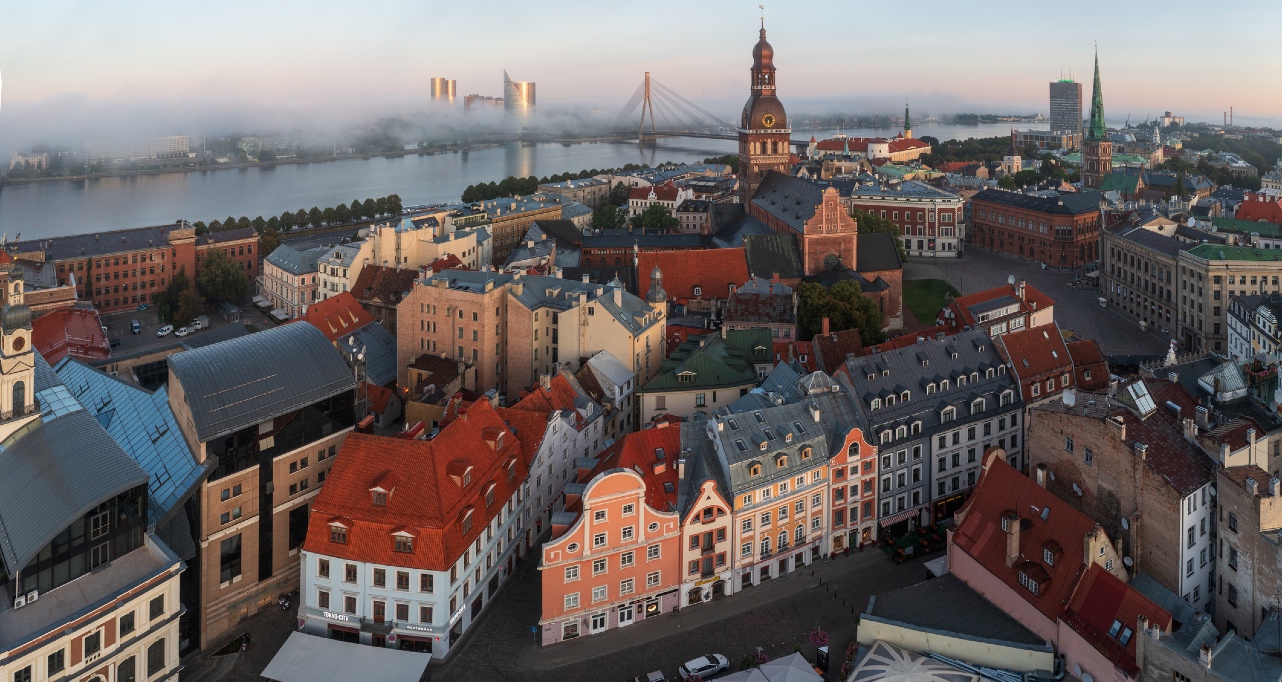
The European Bank for Reconstruction and Development (EBRD) has published its latest gross domestic product (GDP) growth projections for the Baltic states. The Bank expects growth of 2.1 per cent in Estonia, 2.0 per cent in Latvia and 3.0 per cent in Lithuania in 2026.
The forecasts were published in the Bank’s June 2026 Regional Economic Prospects report. Compared with the February 2026 outlook, the EBRD has revised down its 2026 forecast for Estonia by 0.1 percentage point, for Latvia by 0.2 percentage point and for Lithuania by 0.3 percentage point, reflecting the impact of the Middle East-related energy shock, higher inflationary pressures and a weaker external environment. The Bank expects all three Baltic economies to grow by 2.2 to 2.3 per cent in 2027.
The Baltic states outlook remains supported by resilient private consumption, rising defence expenditure and continued public investment, including through European Union (EU) funds and major infrastructure schemes such as Rail Baltica. At the same time, the region faces a more difficult backdrop of higher energy prices, given the conflict in the Middle East, persistent cost pressures and still-subdued demand in key export markets in the euro area and the Nordic region.
In Estonia, the energy shock stemming from the conflict in the Middle East has been muted by Estonia’s participation in the Nordic-Baltic states regional electricity market, where hydro, nuclear and wind generation dominate, giving Estonia substantial protection from higher gas prices. The economy is expected to grow by 2.1 per cent in 2026 and 2.3 per cent in 2027, supported by Rail Baltica construction, stronger public investment and real wage growth. However, a prolonged energy price shock, weaker euro area demand or delays to major projects could weigh on the recovery.
In Latvia, GDP is forecast to grow by 2 per cent in 2026, continuing the economy’s strong growth momentum on the back of investment, recovering consumption and stronger service exports. Similarly to Estonia, Latvia’s participation in the Nordic-Baltic states regional electricity market mitigates the energy shock facing other European markets as a result of the Middle East conflict. The EBRD expects GDP to grow by 2.3 per cent in 2027, with activity supported by EU fund absorption, Rail Baltica construction and rising real wages. Risks include any further delays to large infrastructure works and renewed pressures from higher energy prices.
Lithuania is expected to outperform its Baltic peers, despite being most exposed to the energy shock stemming from the Middle East due to the country’s gas-fired electricity generation. The Bank forecasts growth of 3.0 per cent in 2026, before moderation to 2.2 per cent in 2027, on the back of strong domestic demand, investment and a one-off boost to household spending linked to pension-system changes.
The Bank expects the energy price shock to impact growth in most of the economies where it invests. It forecasts that growth will average 3.1 per cent in 2026 across its regions before picking up to 3.6 per cent in 2027 – a downward revision of 0.5 and 0.1 percentage point respectively on February 2026 projections.
The EBRD is a leading institutional investor in the Baltic states. To date, the Bank has invested more than €2.1 billion in Lithuania, and more than €1.3 billion in both Estonia and Latvia. The Bank’s activities focus on supporting the region’s transition to greener and more resilient economies through investments in renewable energy, capital market development and innovation-driven sectors.