

Video
Supporting agriculture in wartime Ukraine
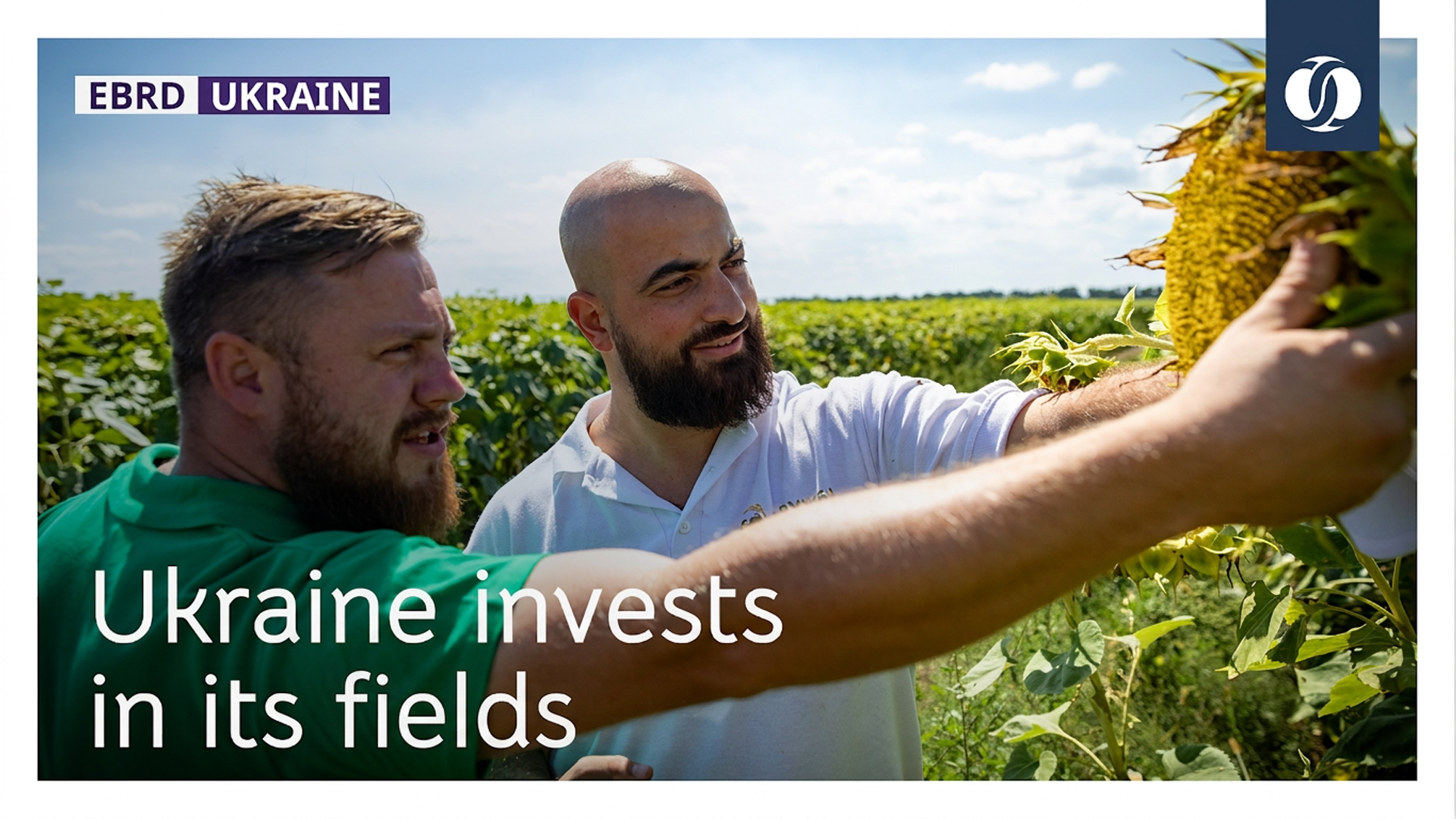
Ukrainian farm is restoring irrigation to protect its crops and cut costs with support from the EBRD and its donors
08 Oct 2026

 Eng
Eng
 Eng
Eng

The European Bank for Reconstruction and Development (EBRD) has launched a conflict response to support investee economies and clients affected by the war in the Middle East, as well as neighbouring countries of operation facing wider spillover impacts.
While the situation remains fluid and highly uncertain, the economic and social impact of the conflict is already being felt across many of the Bank’s economies in the form of disrupted trade routes, energy and commodity shocks, weakened investor confidence and broader costs to the population. The magnitude of the impacts, however, will depend on how the situation evolves in the coming weeks and months.
The Bank’s conflict response will focus on those economies that are directly affected – Iraq, Jordan, Lebanon, and the West Bank and Gaza, as well as a first group of affected neighbouring countries, including Egypt, Türkiye, Armenia and Azerbaijan,
Overall, the EBRD aims to deploy €5 billion in investments in these economies in 2026. The volume of conflict response investment will be demand driven due to the fast-changing nature of the situation.
The EBRD also stands ready to provide support to all other economies where it operates that are affected by the broader economic security issues, as well as emerging macroeconomic impacts.
EBRD President Odile Renaud-Basso said: “We are well placed to provide countercyclical responses. In a time of rising uncertainty, we are stepping up where others may pull back, while maintaining sound banking fundamentals. We are here to support economies, clients and people in our countries of operation in tough times.”
The approach will comprise two phases: providing immediate relief by supporting economic activity, fostering financial sector stabilisation and ensuring the continuity of essential services, and laying the foundations for growth and a sustainable recovery in the affected economies.
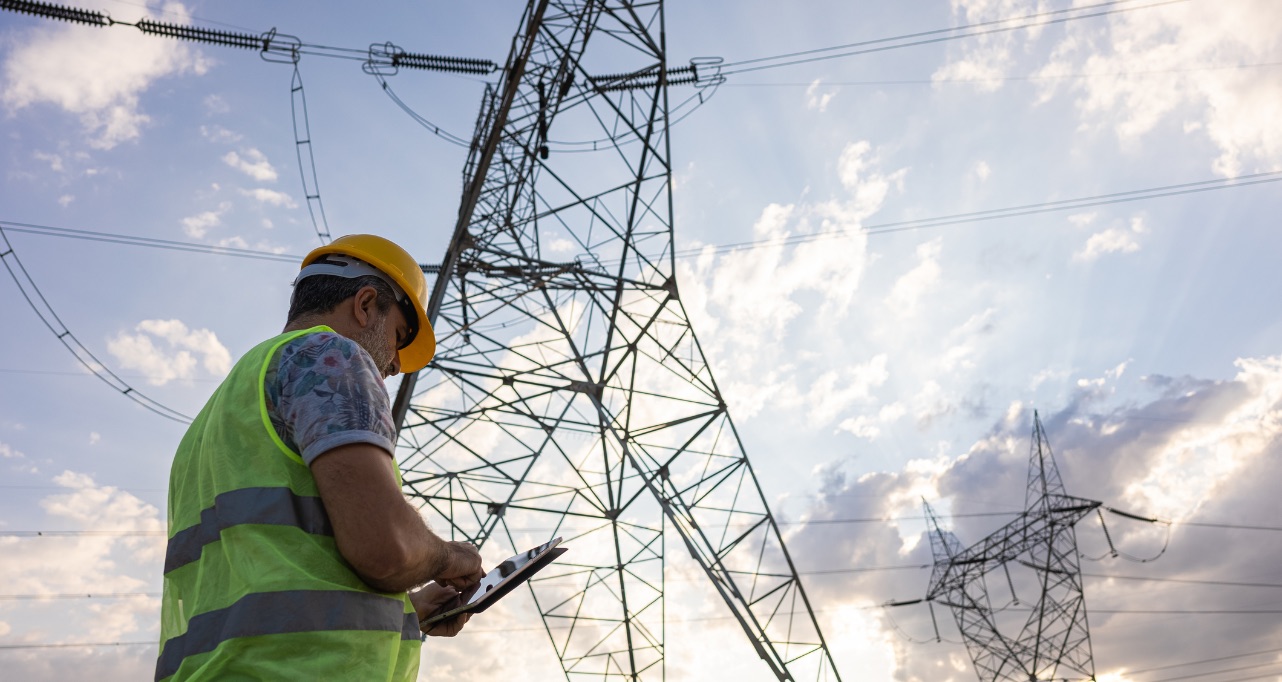
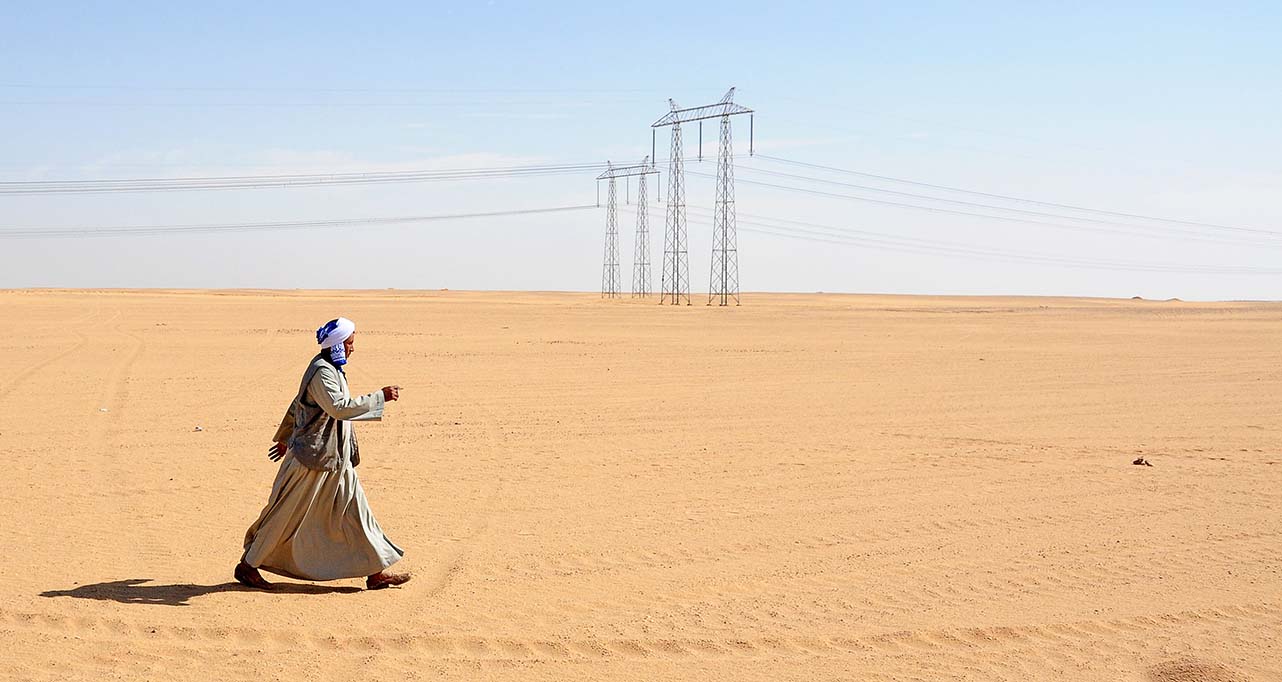
The response will strengthen energy security through targeted liquidity support for energy utilities in the short term and accelerate the transition towards more diversified, resilient and domestically anchored energy systems.
Continued assistance to state owned enterprises will ensure the uninterrupted provision of essential goods and services, amid work on the longer-term reform agenda to strengthen resilience and economic governance.
In the private sector, to address disruptions to energy markets and agrifood value chains, the Bank will provide working capital and liquidity to help firms absorb market volatility and continue operating. Today, for instance, the EBRD Board approved a project to support Lebanon’s leading retail chain. Longer term, the EBRD will support well functioning infrastructure, trade routes and food security, alongside investments in digital solutions that underpin economic connectivity and growth.
In its response, the Bank remains firmly focused on people, supporting human capital resilience by safeguarding access to jobs, finance and essential services, while protecting vulnerable groups.
The Bank’s investment response will be accompanied by robust policy dialogue, targeted technical assistance and advisory support for governments, clients and small and medium-sized enterprises, helping them to adapt, grow and contribute to a more resilient and inclusive economy.
The EBRD will work in close coordination with governments donors, international financial institutions and development finance institutions, and will seek to mobilise donor support to help economies weather shocks and emerge stronger and more resilient.
The Bank will draw on its strong track record in the region. Since starting operations in the southern and eastern Mediterranean in 2012, the EBRD has invested more than €26.5 billion in 489 projects there. In Türkiye, the EBRD is one of the key institutional investors, having committed over €23 billion across the country since 2009, largely in the private sector.