Read our Cookie policy here.
Search
Search
Who we are
Overview: about the EBRDWho we are
Overview: about the EBRD
Learn about the EBRD's journey to investing more than €220 billion in over 7,800 projects.
What we do
Overview: how the EBRD operatesWhat we do
Overview: how the EBRD operates
Across three continents, the EBRD supports the transition to successful market economies.
Work with us
Overview: how you can work with the EBRDWork with us
Overview: how you can work with the EBRD
We draw on three decades of regional knowledge and financial expertise to tailor our products and approaches to each client's needs.

 Eng
Eng
 Eng
Eng
I was fortunate to serve on two external panels tasked with advising the EBRD on its mandate: “Besley I” (with Tim Besley and Mathias Dewatripont) in 2009-10 and “Besley II” (with Tim Besley and Beata Javorcik) in 2015-16.
Besley I produced the Transition and Transition Impact paper that helped to shape the assessment of transition impact and enhance the EBRD’s sustainability agenda in the years that followed. The Besley II report, Transition Impact and the EBRD’s Mandate, eventually led to the development of the new transition concept approved by the EBRD Board in November 2016.
The 2016 transition concept argued that a sustainable market economy – the goal of the EBRD’s countries of operation – should have six desirable qualities: competitive, well governed, inclusive, green, resilient and integrated.
The rationale for this rethinking was clear: while most EBRD countries of operation had moved from being centrally planned to market based, this transition resulted in substantial political backlash and even a reversal of reforms. To be sustainable and have political legitimacy, transition reforms had to promote innovative and competitive (rather than monopolised) markets, maintain equality of economic opportunity and political access, avoid damaging the planet and nature, and protect the economy and society from shocks associated with financial crises, food and energy price spikes, and supply-chain disruptions.
When the new transition concept was introduced, it was welcomed not just by the Board of Directors but also by the EBRD’s Banking teams, who found it easier to understand and to explain to EBRD clients. A couple of years later, our sister institution, the International Finance Corporation, adopted a similar approach; its Anticipated Impact Measuring and Monitoring (AIMM) system was also based on “market outcomes”. The five market outcomes at the time (very similar to the EBRD’s six qualities) have now been merged into three: competitiveness, resilience and sustainability (again, very similar to the Bank’s). Incidentally, in my view, the EBRD may also want to think about merging some of its six qualities, (for example, folding the “integrated” quality into the “competitive” and/or “resilient” quality).
In the last 10 years, the EBRD has faced a number of unprecedented shocks and major changes, including a global pandemic, a full-scale war in Europe and expansion to sub-Saharan Africa.
The 2016 transition concept continues to serve the EBRD well. I am certainly not objective, but I believe that it captures, in a comprehensive and flexible way, everything we need to know about socially and environmentally sustainable market economies. These six qualities are relevant to European, Asian or African countries, whether or not they have had a communist past.
One of the trickiest discussions in 2016 revolved around the use of the word “transition”. In the 1990s, it was clear that “transition” stood for “transition from planned to market”.
As most EBRD countries of operation had already built basic market institutions by 2016, however, talking about transition and transition impact seemed outdated.
Ironically, today, it is no longer a problem, as nobody remembers the “planned to market transition”.
All EBRD countries of operation, with or without a history of central planning, need to transition to a sustainable economy and society. The EBRD’s six qualities are, therefore, relevant for any economy.
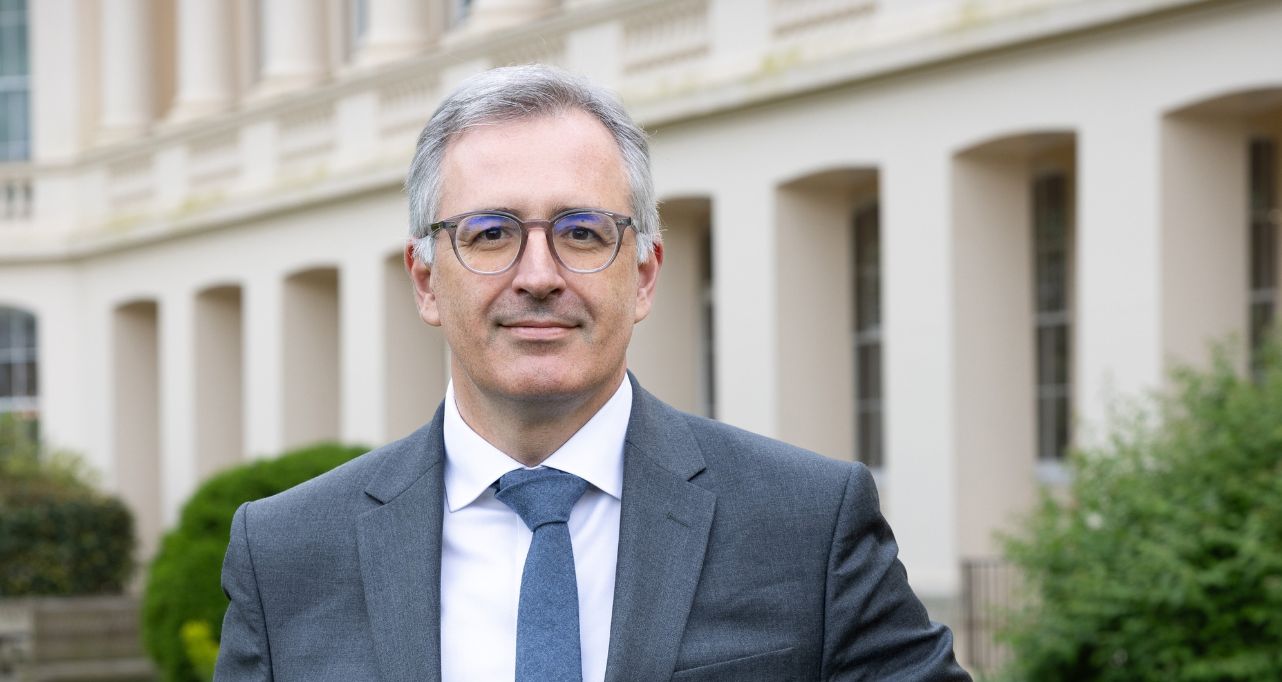
Sergei Guriev
Dean at London Business School | Former EBRD Chief Economist
Cookie consent
Cookies are pieces of code used to track website usage and give audiences the best possible experience. Use the buttons to confirm whether you agree with default cookie settings when using ebrd.com.
Read our Cookie policy here.
These cookies cannot be disabled. They are essential for core functionality in ebrd.com to ensure a seamless and secure experience.
We use Adobe Analytics cookies to measure usage of the website in order to improve it and respond to end user actions. We review anonymised data on how people reach the site, where they click and so forth. Learn more here about specifics of our cookie use.
We use Adobe marketing cookies to enable us to customise ebrd.com to tailor the website and email marketing services based on the interests of each end user.