
Read our Cookie policy here.
Search
Search

 Eng
Eng
 Eng
Eng
2015 was a busy year on the climate action front. Following the disappointment of COP15 in 2009 (see Episode 13), the focus of the following years leading to COP21 in 2015 was to reach an effective climate agreement.
This work was at a global scale and, building on its track record and growing experience, the EBRD was actively contributing in areas such as climate finance. In anticipation of COP21, the Bank worked hard to develop its next climate and environmental strategy. This led to the adoption in September 2015 of the Green Economy Transition approach (code name GET1.0).
With this in hand, the Bank was equipped for a major meeting of Finance Ministers on climate finance, organised in October 2015 in Lima, Peru. Indeed, being well equipped was vital, as this gathering ended up being quite a meeting. Imagine a huge room with over 80 finance ministers around a long conference table, with, on one end, the chair of the meeting (the French Minister of Finance Michel Sapin) and at the other extremity of the table, the full array of MDB Presidents. Quite a sight.
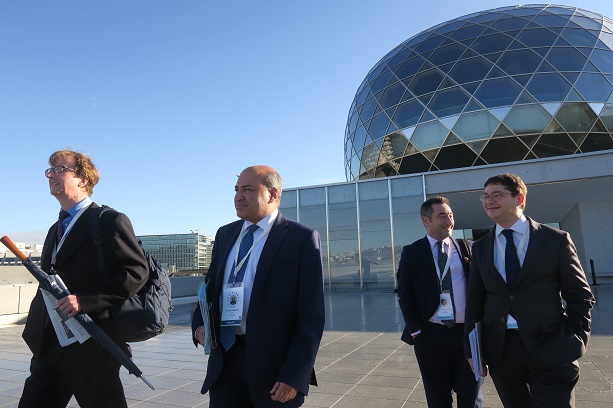
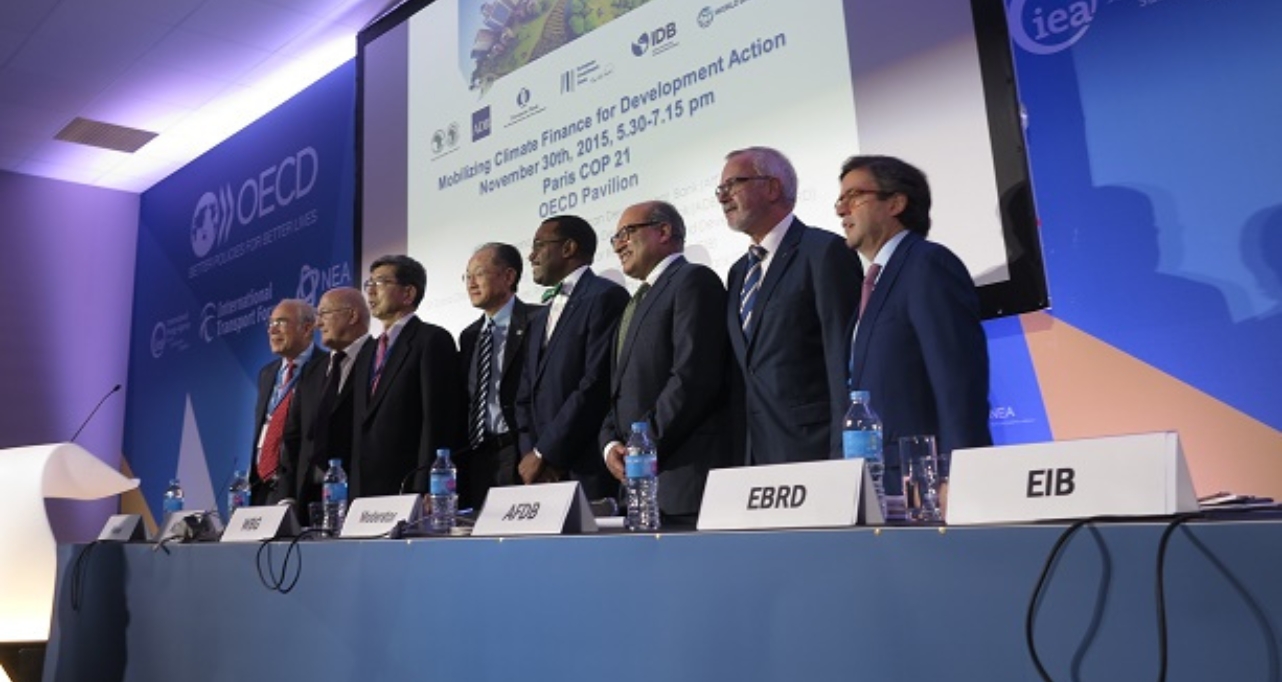
Suma at the meeting of Ministers of Finance on climate finance held during the 2015 Annual Meeting of the IMF and World Bank. On his left, Christiana Figueres, Executive Secretary of the UN Framework Convention on Climate Change, and on his right Werner Hoyer, President of the EIB.
During the meeting, each MDB President was called to announce their climate finance goals and ambition. When our then President Suma Chakrabarti was called, he outlined the main direction of our new GET1.0, highlighting its 40% green finance target ratio by 2020. An approbatory hush went around the room, as this was the highest target share mentioned by any of the MDBs. Sitting next to Suma, Christiana Figueres congratulated the Bank, while other MDB Presidents who were announcing lower targets stayed quiet.
While the external impact of our announcement was very positive, there was quite a concern within the Bank on whether we would be able to reach such targets. In the preceding strategic period, the green share of our finance had reached 25%, so a rise to 40% was a real stretch. Had we gone one step too far?
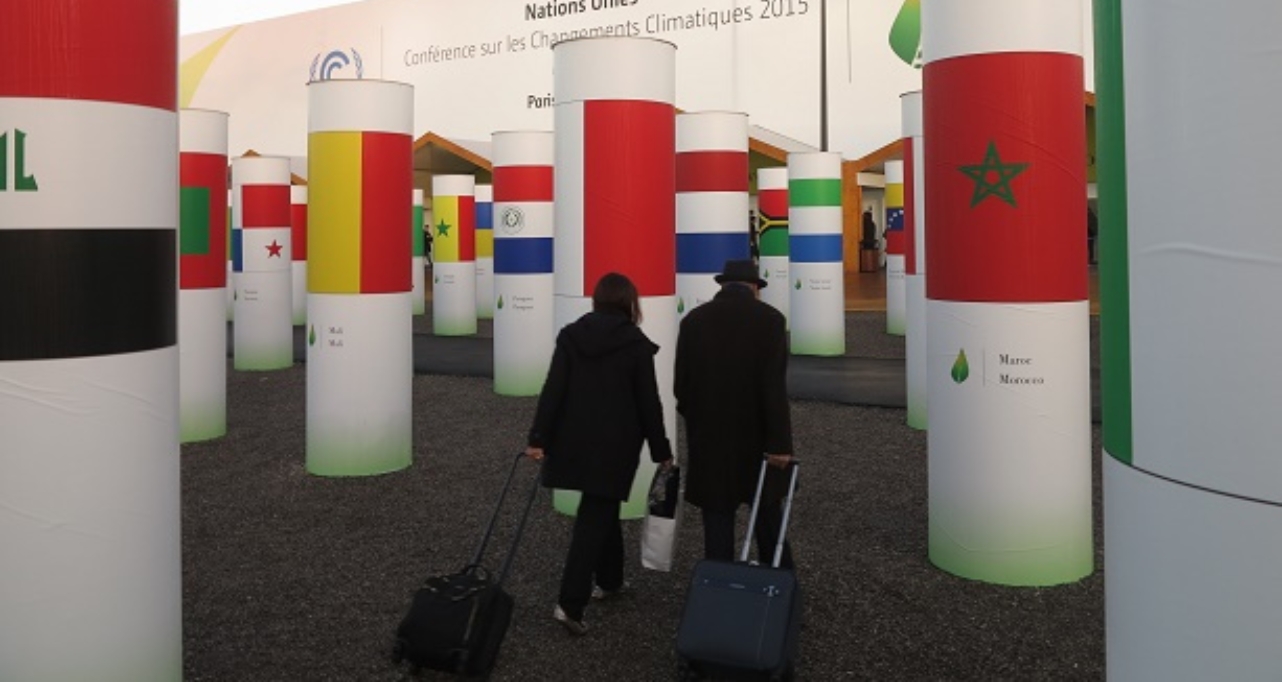
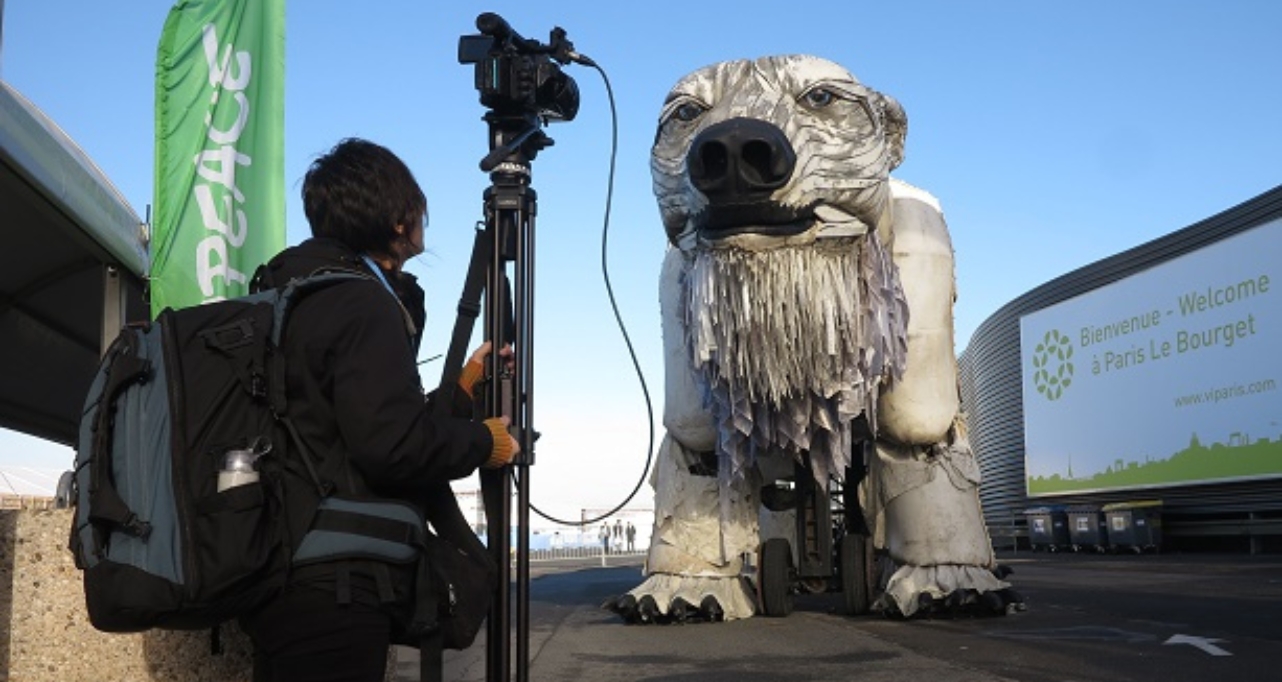
After Lima, the next stop was Paris for COP21 in December 2015. The atmosphere was electric, charged by the expectation of a major climate agreement. There was intense diplomatic action and negotiations went all the way to the end. By complete coincidence, one of my old high school history teachers in Paris was now a senior diplomat with the Quai d’Orsay (the French Ministry of Foreign Affairs). During those final feverish days, he explained to me how each region of the globe was covered by a specific diplomatic team with the objective to bring all countries within their region to support the agreement. In the end, the success was resounding, with world leaders from 195 countries supporting the Paris Agreement.
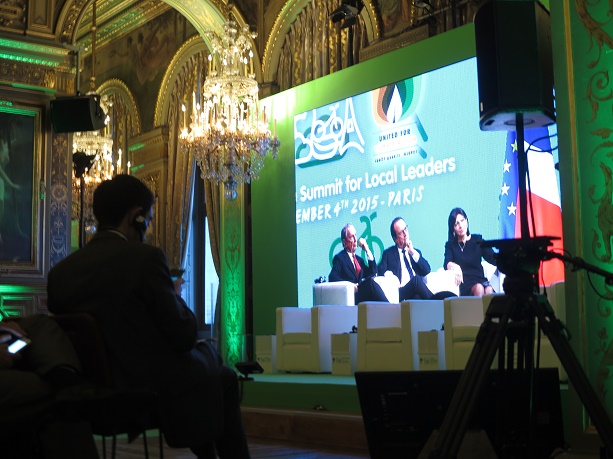
A highlight of the Paris climate conference was the event which gathered over 1,000 mayors from around the world to mobilise cities for climate action. Reflecting the Bank’s track record in financing urban infrastructure with a broad range of finance instruments, we were invited to participate and share our know-how (see Episode 5 on the start of our urban infrastructure finance activity). Now, in addition to the professional dimension, this event also had a very personal resonance. It was held in the Paris City Hall, one block from where I grew up. And I remember as a child walking in front of this imposing building on the way to school and wondering what I would be doing as a grown-up. Well, there I was close to 50 years later.
Beyond this personal resonance, this event had an impact for the Bank. While participating in it, I wondered why the Bank, which had such a track record in this area, was not more well known at a global level. It seemed that while we were excellent on an individual project level, we had a very limited external projection. I also thought that we had very useful experience to accelerate financing to cities. One day, at a traffic light on City Road (a well named street!) on the way to work, the idea came that we should develop a focused programme for cities in our regions of operations with an action planning phase, and our practical result oriented financing approach. The concept for what became the Green Cities framework was born. And look where we are with the Bank’s commitments to this framework reaching €1.9 billion, and the number of active cities reaching 43, from Mongolia in the East to Croatia in the West. Fantastic!
The Paris Agreement set a clear goal to maintain global warming within less than two degrees Celsius. It defined a comprehensive action framework to achieve this goal giving a sense of optimism that the climate challenge could be addressed. Reflecting this optimism, the Bank set out not only to achieve its GET1.0 objectives but to expand its contribution within its countries of operations and beyond. In the context of the One Planet Summit, a major event lead by French President Macron to galvanise action towards the Paris Agreement goals, the Bank developed options to contribute its leading expertise in areas such as energy efficiency and city climate finance at a global level. While there was appreciation for our dynamic and supportive approach, the idea could not overcome the geographic structuring of the MDB system. Nonetheless, the work underpinning this approach did contribute to enhanced knowledge-sharing with countries key to address the climate challenge at scale such as Brazil, China, India and Mexico.
The Bank is an active member of the MDBs climate group, participating in its formation some 13 years ago in response to the call from the G8 to accelerate clean energy financing (see Episode 13). By now, being the veteran of this group, I can say that it has been meaningful to build this alliance, as only an ‘MDB system’ approach can make a real difference considering the scale of the climate challenge. This MDB system approach was reflected in a significant manner at the UN Climate Action Summit in September 2019, when Suma announced on behalf of all MDBs the ambitious climate objectives of the joined MDB system to 2025.
In closing, and remembering the ambition of our GET1.0 target announced in Lima, how did we perform? Well you may know the rest of the story as building on hard work across departments and on the increased mainstreaming of GET activities across sectors and countries of operations, we reached a GET ratio of 43% in 2017, three years ahead of our target, and even 46% in 2019. A great achievement, reflecting what the Bank can do with its pragmatic result-oriented approach and the support of its shareholders both in terms of policy and resources.
Josué Tanaka | Visiting Senior Fellow at the Overseas Development Institute
Former EBRD Managing Director, Energy Efficiency and Climate Change, Operational Strategy
and Planning
Select an image to expand
Select an image to expand