
Read our Cookie policy here.
Search
Search

 Eng
Eng
 Eng
Eng
As the days are getting shorter and darker, this is a good moment to move to sunnier shores with stories about the genesis of the Bank’s activity in SEMED.
After we began operations in Turkey in 2009, Egypt, a founding member of the EBRD, started to think about becoming a country of operations too. The strategic agenda of the Bank was very loaded at the time, including responding to the 2008 financial crisis almost doubling our ABI within two years, and a capital increase (see Episode 8). Following several requests, by the end of 2010 it was agreed that a review responding to Egypt’s request should be made. However, the review had to be carried out on the basis of virtual research with no actual visits to the country itself (sound familiar?). Hans Peter Lankes, who was in charge of corporate strategy at the time, and I started this work on this limited basis.
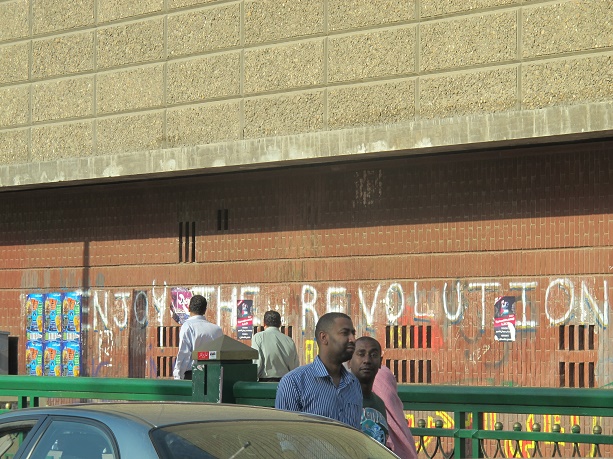
As had happened several times before, history can be ironic in relation to the timing of Bank positions and decisions. Remember how the Soviet Union disappeared a few months after the inauguration of the Bank (see Episode 1)? Well this time it was a matter of weeks before the explosion of the Arab Spring, initially in Tunisia following the death of Mohamed Bouazizi in Sidi Bouzid. From Tunisia, protests spread to a number of countries, including Egypt, where the events in Cairo’s Tahrir Square became emblematic.
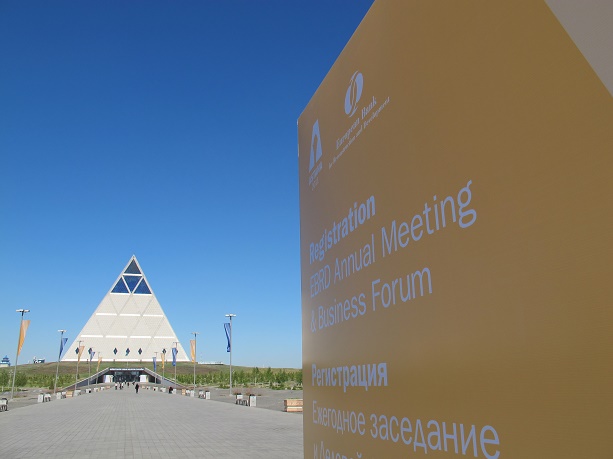
As a result, the direction and the pace of our work changed almost overnight. As mentioned in the G8 Declaration on the Arab Spring, “the changes underway in the Middle East and North Africa are historic and have the potential to open the door to the kind of transformation that occurred in Central and Eastern Europe after the fall of the Berlin Wall.” In this context, the Bank’s potential contribution to the area as a transition-focused organisation was obvious. In addition, our recent capital increase meant that we had the financial capacity to expand our activity to new countries. With this strong political support, the Board of Governors approved the expansion of the region of operations of the EBRD to the Southern and Eastern Mediterranean (SEMED) at the Annual Meeting in May 2011.
Now once this overall decision was taken, there was a complex process which involved both a decision for existing member countries to become countries of operations (this was the case for Egypt and Morocco) and for new countries to become member countries, and subsequently countries of operations (this was the case for Tunisia and Jordan).
As part of this process, President Mirow asked me to go to these countries and identify what the EBRD could offer from a business and financing perspective. This would form part of the proposal presented to the Board to approve Egypt’s status as a country of operations.
The first exploratory trip to Egypt was scheduled for early June 2011, right after the Annual Meeting. An ‘action’ team was formed to cover the Bank’s main activity areas including Harry Boyd-Carpenter, Elisabetta Falcetti, Francis Malige, Katia Miroshnik, Peter Stredder and Walid Fayad. There was much excitement during the preparation of this trip and Tarek el Sherbini played a key role in this phase advising, establishing contacts, identifying opportunities and organising. In 3.5 days, the team held 30 meetings including 12 private corporates, 9 ministries, most major private and state banks in Egypt and 4 IFIs.
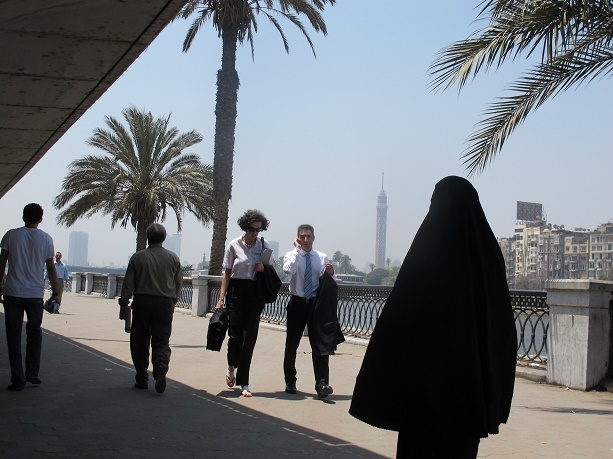
Anyone who has been to Cairo can understand the challenge of having this number of meetings in a traffic grid-locked city. We got a taste for this from the start. The team assembled in the hotel lobby and we got in a taxi to attend our first meeting at the Egyptian Central Bank. As soon as we turned the corner on the Corniche along the Nile, we were stuck in traffic. Time was going by and we were not moving anywhere. So I asked Tarek whether we could walk to the Central Bank and how long it would take. There was just enough time to get there by foot at a brisk pace. So we got out of the taxi, walking at full speed to avoid being late for this first meeting. On the way there, we crossed Tahrir Square and saw that the whole traffic jam was caused by a few demonstrators, who were sitting in the middle of the road, with the police looking at them. It was still early on after the Arab Spring. And we did get to the first meeting almost on time, but pretty hot! >br>
Following the trip to Egypt, another action team including Laurent Chabrier, Tarek, Francis, Jean-Patrick Marquet and Peter Stredder went to Morocco in July 2011. With the support of local authorities and individual team members, the action team had over 60 meetings in 4.5 days across the private and public sectors. This was done on a ‘managed decentralised’ basis meaning that each team member had an individual schedule so that we could maximise coverage within limited time. While this approach worked almost perfectly, there was one inevitable mishap with the Wali (Governor) of the Casablanca region. I suddenly received a call that the Wali was waiting and no EBRD staff member was there due to a confusion in our schedule. So I decided it was better to get there late than to not attend. Clearly, being late was not good from a protocol perspective, and by the time I met the Wali, the discussion ended up being not at all on the potential role of the EBRD but on the EU’s approach to immigration.
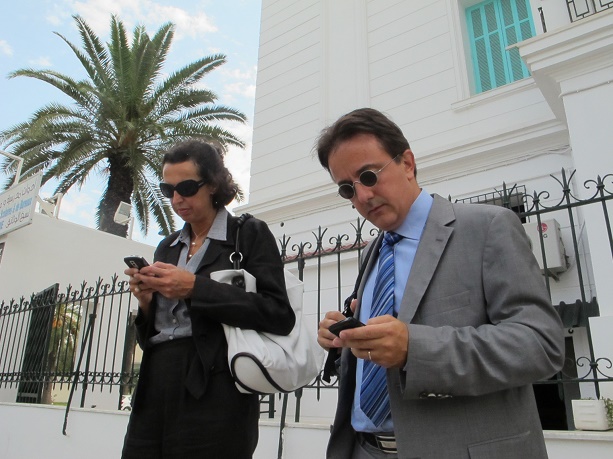
After the summer, it was time to go to the country where it had all started, Tunisia. The action team had expanded, now including Marie-Alexandra Veilleux, Igor Storchak and Caroline van Coppenolle. OCE was also there in force with Elisabetta, Pavel Dvorak, Naima Smaini and Toshi Sakatsume. On this trip, we reached over 70 meetings in 4.5 days. We were getting good at rapid diagnostics and at highlighting the specific role which the EBRD could have in the country, based on our unique mandate and operating model. In particular, I remember a meeting with an SME in the outskirts of Tunis. As I often reply when asked what the difference is between the EBRD and other MDBs, the EBRD is the MDB with dirty shoes. We go to see our clients where they are and we work with them on site. I thought, therefore, that in this first trip to Tunisia we needed to put this principle into practice. On this occasion, we got completely lost as there was no GPS signal, and actually not even a real street by the time we managed to find the company. But our reward was that the owner of this small company concluded our meeting by saying that he could already see that the EBRD was different, because not even the manager of his local bank had ever bothered to come see him on site.
Early each morning, I read the Tunisian newspapers written in French to get a feel for what was happening in the country. I was struck in those days by the incredible hope and yearning for a better society. After being bottled for decades, questions were raised on all aspects of life with strong expectations for systemic change. The strength of hope and the scale of expected changes brought back memories of similar feelings emerging from conversations in Central and Eastern Europe when I first joined the Bank.
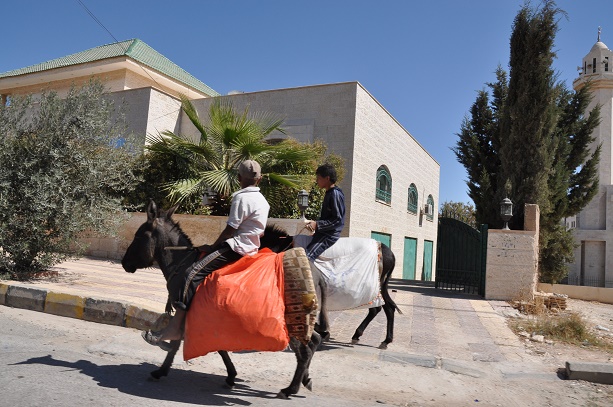
In October 2011, an action team similar to the one in Tunisia went to Jordan with a solid OCE team including Alex Chirmiciu, Tony Doherty, Vanessa Mitchell-Thomson and Agris Preimanis. Building on the Moroccan ‘managed decentralised’ mode, the action team held 64 meetings in 4 working days. As in the other reports, their findings were structured by sector, covering the corporate, financial, energy and infrastructure sectors. Energy and water were identified as two crucial overarching issues, with Jordan importing 97% of its energy requirements at the time, while being the fourth most water stressed country in the world. During the trip, I visited a company which was working on the Disi water conveyance project to build a 325 kilometer pipeline to bring water to Amman. It was quite disturbing to learn in separate meetings that this pipeline would be bringing fossil water (i.e. non-renewable water gathered 30,000 years ago) while around 40% of water reaching Amman was being lost in the network.
The 224 meetings in 16.5 days involved in these four exploratory trips contributed to these countries being welcomed as new countries of operations of the EBRD. And building on the hard work of colleagues across the Bank, we have been able to show the special value of EBRD. Between those trips and the end of the third quarter of this year, our cumulative number of projects in SEMED reached a whopping 277, with EBRD financing close to €13 billion in the region. Impressive and our impact goes well beyond these numbers.
And so it is that the EBRD turned around to leave behind rumours of being a ‘sunset’ bank to become a ‘sunshine’ bank with a bright future ahead. It is good to feel this warmth as the winter lockdown looms ahead of us.
Josué Tanaka | Visiting Senior Fellow at the Overseas Development Institute
Former EBRD Managing Director, Energy Efficiency and Climate Change, Operational Strategy
and Planning
Select an image to expand
Select an image to expand