
Read our Cookie policy here.
Search
Search

 Eng
Eng
 Eng
Eng
This week, we travel further east to Moldova. While it may not be a large country, my work there involved quite a range of activities, as its post-Soviet transformation was filled with intense situations, sights and experiences.
When I first went there in early 1994, Moldova was considered a poster child of transition, particularly in terms of macroeconomic management. There was much hope for the emergence and transformation of this small country wedged between Romania and Ukraine.
Its challenges reflected the difficulties of becoming an independent country breaking away from the integrated centrally planned economic system of the USSR. This system ensured that all republics were mutually dependent, constraining their ability to develop independently. For instance, this meant in practice that a large tractor factory in Moldova relied on components coming from all over the empire. Industries could also be over-dimensioned, built at the scale of the Soviet Union rather than at the scale of an individual republic. This was the case of the Alfa television factory. By the time I paid it a visit, activity had ceased, the factory was shut, and within the abandoned buildings small businesses tried to survive using old equipment to, for example, make bottles or drill holes in buttons.
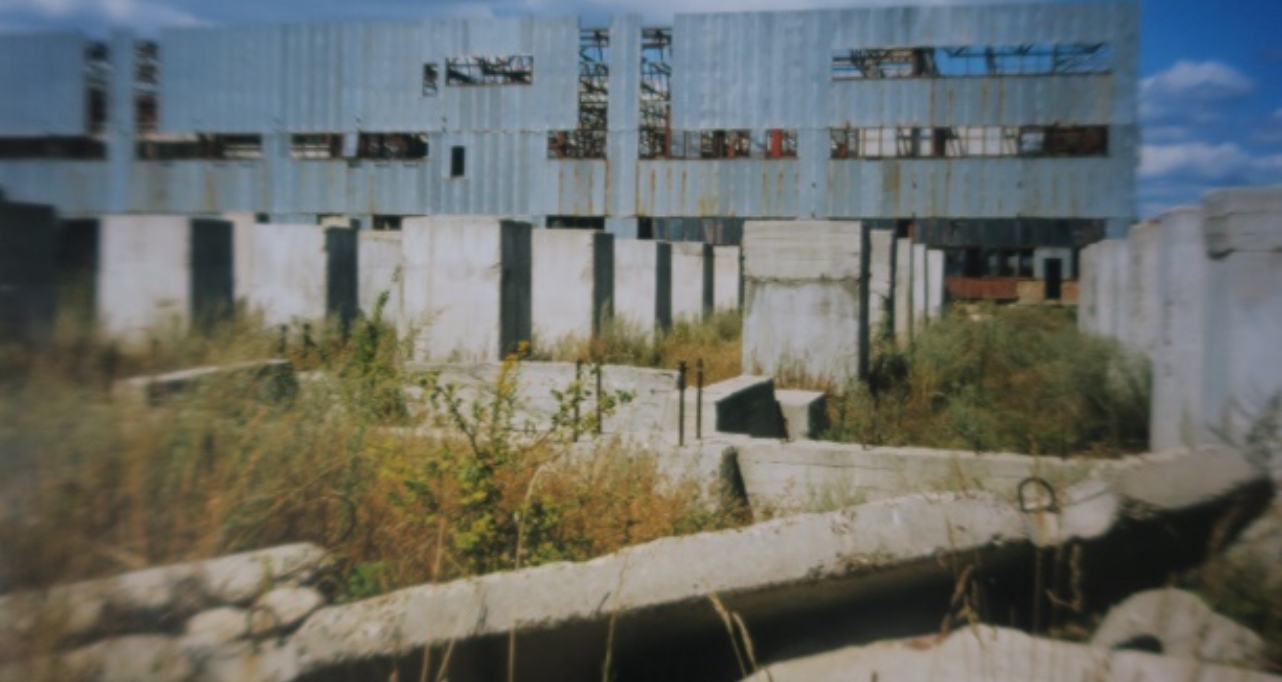
What should have been the Silicon Valley of the USSR was located in the outskirts of Chisinau, the capital of Moldova. Looking at the West, the soviet leadership during perestroika observed the growth of personal computers and decided to build its own Silicon Valley, Gosplan style. This meant building massive infrastructure with buildings and underground tunnels several hundred metres long, independent energy production and its own railway facilities. Pharaonic. Unfortunately, the Soviet Union collapsed before the completion of the plan, and by the time I arrived on the site the main activity was the dismantling of the roofs for scrap metal.
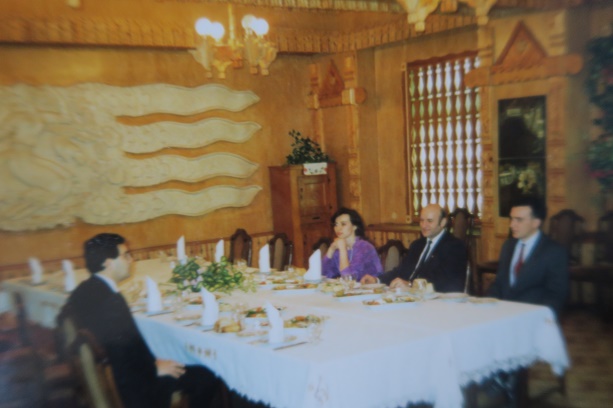
The transition of the financial sector in Moldova started from scratch. All the banks were state owned. In line with our Bank’s mandate, and our determined approach to develop the private sector, I had another difficult introductory meeting with a potential client seeking to develop a new bank in Moldova. In those days, there was not much in terms of restaurants in Chisinau. So I was invited to a private flat in a grey apartment block. Like the Governor of the Central Bank, my host mentioned that this was the last lunch he was offering to the EBRD, as previous lunches had not been followed by any practical work. This time around, the lunch was followed by action, with the Bank supporting the birth of the first private bank in Moldova, Victoria Bank. This was the start of a long relationship between Henry Russell and VB. Challenges arose early on as, on a later trip, I met the CEO all bandaged up. When the time came for VB to ask for their loans to be repaid, some of their clients did not appreciate and had the CEO beaten up. Furthermore, thugs visited him in the hospital mentioning that next time he insisted on repayments he would be defenestrated. Lending was no joke in those days.
I also confronted one of my ‘hottest’ situations in Moldova, reflecting some of the challenges which bankers can face on the ground. It started in a cold and dark building with a meeting with the minister of transport. As we gradually froze, the minister suggested that we pursue the meeting in a sauna. I am not a great fan but ‘duty calls’ so off we went. I ended up in a much warmer and smaller room, alone in the sauna with the minister. After some sweating, he approached me and started asking for over one million dollars to fund a technical study. This was clearly not the way to develop an operational activity, and even less so the right place. As I did not respond positively while trying to dodge the question, the minister bent forward to pour water over the hot coals. Each time he did this, I could see the needle of the thermometer inching up until I jumped to the door and left. Needless to say no technical study was funded and no photograph of the event is available.
On another trip, once the good reputation of the Bank had been established, I arrived in the late afternoon in Chisinau airport to find out that I was being welcomed by two groups. On the left was the minister of economy in a long black leather coat and chapka. On the right, was a potential private sector client in black suit, purple shirt and golden teeth. Both wanted me to go in their car. What to do? Remembering the Articles of Agreement of the Bank and the 60/40 portfolio ratio, I decided that my body would go with the private sector and my suitcase would go with the public sector. Salomonic solution EBRD style.
The arrival was followed by a very long dinner. Too much food, too many speeches and worst of all too much cognac. Indeed, for me, one of the major challenges of working in the region was the quantity of spirits which had to be consumed. Special ways had to be found to pretend one was drinking and I had litres of water in the hotel room to be able to function early the next day. Around midnight, the entrepreneur decided he wanted me to visit the buildings he had just purchased at a privatisation auction. Off we went in the middle of a dark Moldovan winter night with his driver, his armed bodyguard and a violinist. We arrived in front of this huge dark building and my host asked me to walk with him through the building with his car following, illuminating us and creating huge shadows in front of us while the violinist played local tunes in the dark. A more powerful cinematography than ‘Reservoir Dogs’.
And a personal anecdote as one of the tunes played by the violinist was one that my grandfather used to hum when he was in good mood. My Eastern European origins were very helpful for a ‘multi country’ director as the town where my mother’s family came from was successively Austro-Hungarian, Romanian, Soviet and now Ukrainian within less than a century and my great-grandfather was buried in Moldova. So all these countries considered that I was one of them, which is not obvious with Tanaka as a family name.
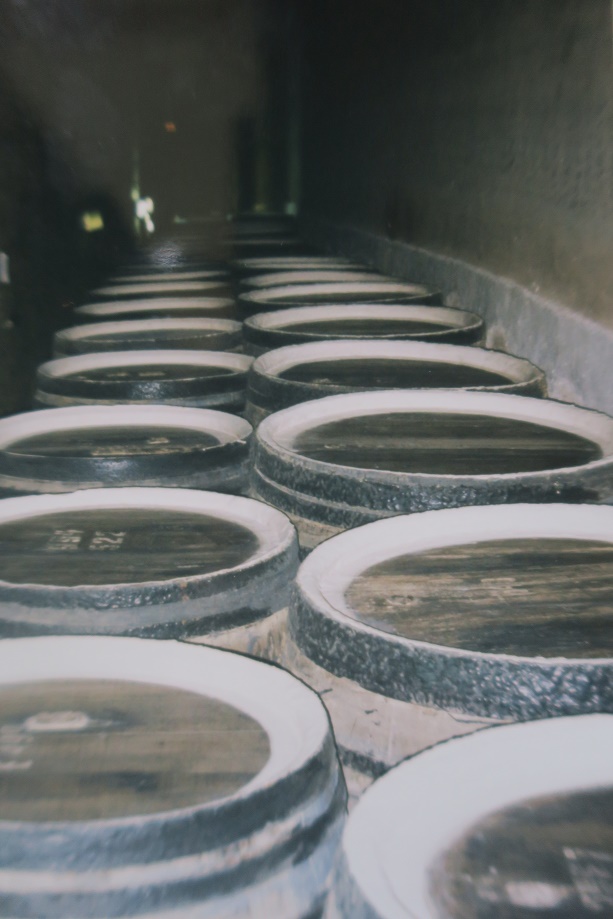
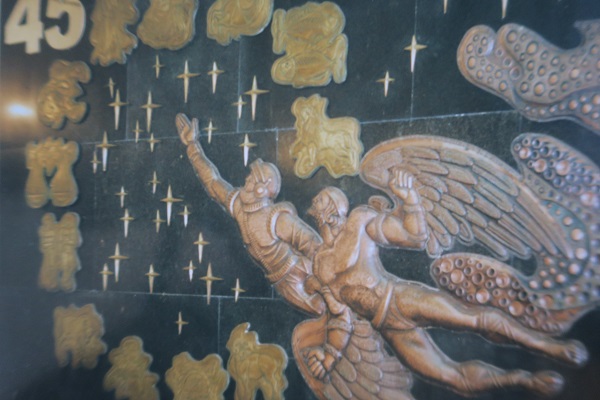
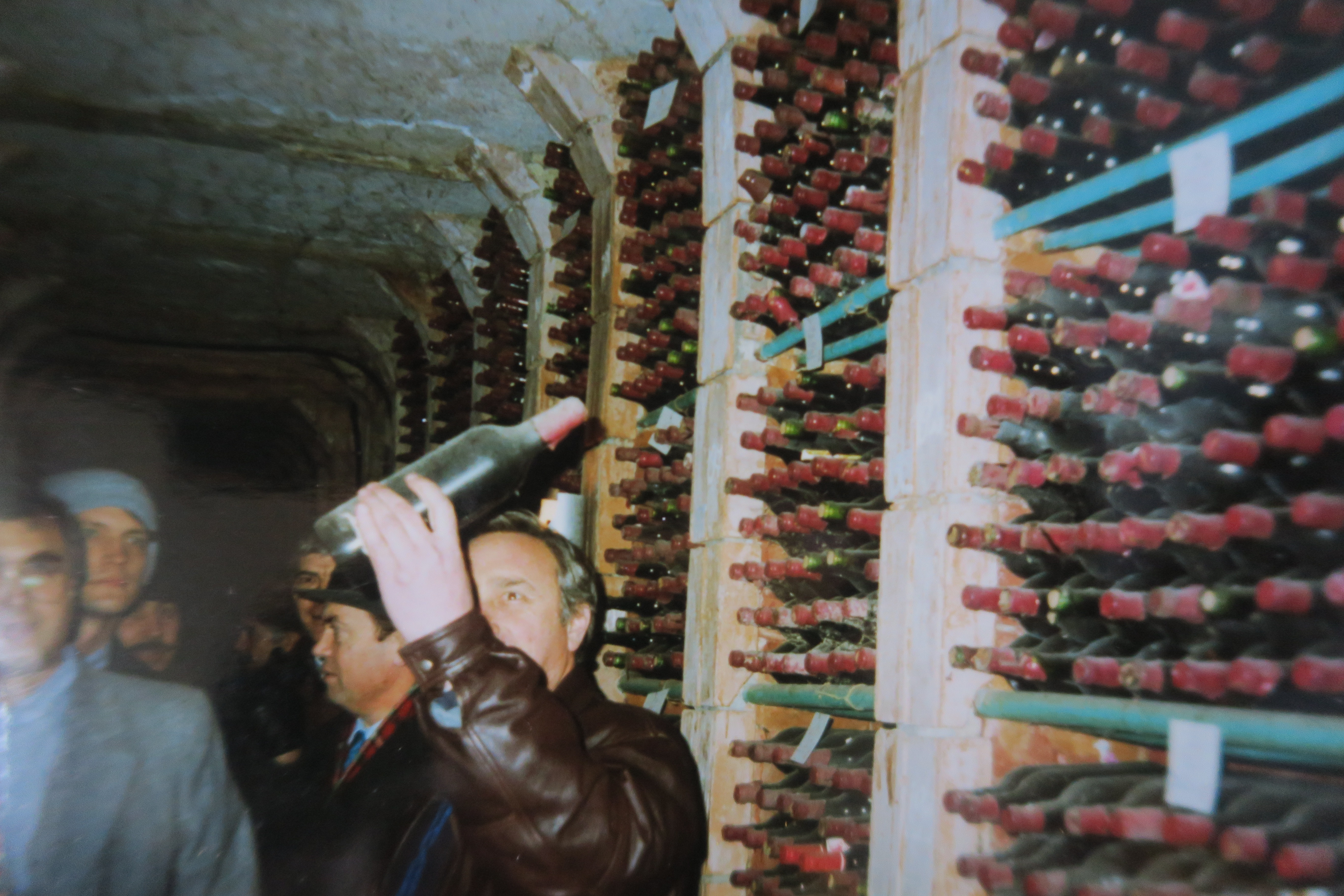
Speaking of drinks, an obligation for any high level official visit was a dinner in the Cricova caves. This had been an old underground quarry transformed in a huge wine cellar with underground streets named after grape varieties and lined up with large wine barrels. Way into this underground maze, was a series of large rooms carved in the rock including a room with the portrait of each astronaut who had visited upon their return to earth. Following wine tasting sessions with ministers, one could visit the ‘Goering collection’. When the Soviet army entered Berlin, they found the collection of quality bottles which Goering had plundered in France, and this was transferred to be stored in Cricova. The collection included a bottle of cognac from the Napoleonic times.
It is relevant to mention that the Bank sought to support the wine industry of Moldova, which following the collapse of the Soviet Union had a difficult time competing with wines from across the world, and particularly from the European Union. One technical problem which we had to address early on was that bottles for their sparkling wine had a tendency to crack open by themselves. Not very practical.
In the list of uncomfortable EBRD business trips, the business development trip to Transnistria ranks high up. This region which calls itself the Pridnestrovian Moldavian Soviet Socialist Republic unilaterally proclaimed itself as a Soviet Republic separate from Moldova. Besides the tense situation in the country, what made the trip uncomfortable was that in addition to all the paperwork to get into the Republic, once inside we discovered that we also had to procure an exit visa including payment at the local Sberbank branch. We did eventually manage to get out.
To close these Moldovan anecdotes, I recall meeting outside Chisinau with a grain trader who seemed to have made it big in his business, perhaps too big looking at the fancy armoured cars in the courtyard and his size, which required two of his scarred bodyguards to lift him from his chair. In discussing the opportunities and challenges of his activity, he replied that this was a very ‘tasty period for business’ comparing himself to the robber Barons during America’s Gilded Age in the 19th century. And in a powerful image, his headquarters were topped by an earth globe which illuminated the night while the surrounding town was plunged into darkness due to long periods with no electric power.
Josué Tanaka | Visiting Senior Fellow at the Overseas Development Institute
Former EBRD Managing Director, Energy Efficiency and Climate Change, Operational Strategy and Planning
Select an image to expand
Select an image to expand