
Read our Cookie policy here.
Search
Search

 Eng
Eng
 Eng
Eng
By now we have travelled together to many countries, confronted serious, light and embarrassing situations, and witnessed many important moments for the Bank. This episode is about a fundamental aspect of my years at the Bank, something fundamental to us all: our teams.
Without good teams, the Bank would not be what it is today. And without good teams, there is little I could have told you of significance about my past 30 years at the EBRD. Teams are the fundamental working unit. They bring us together so that what we contribute as a team is more than the sum of what we bring individually. Teams are also our family outside the home, a place where we work but also where one gets to know, respect and learn from colleagues, where we appreciate the gift of diversity, and where we can create the power to achieve common, stretching and meaningful goals.
In this episode I want to tell my story through the teams I have had the privilege to build and lead over the years. More importantly, I want to thank every member of these teams for all they have contributed over the years. And beyond my own trajectory, I want to acknowledge the contributions which all our teams have made over time to position the Bank where it is today, as it gets set to implement the new SCF.
At the beginning in 1991, everything had to be created and formed from scratch. Organisational units were defined on paper in org charts and these needed to be given life by building teams up in reality. This involved looking for knowledge and talent at full speed. As founding members, we were painfully aware that the rapid build-up of effective teams was a core condition to get the EBRD off the ground operationally and financially.
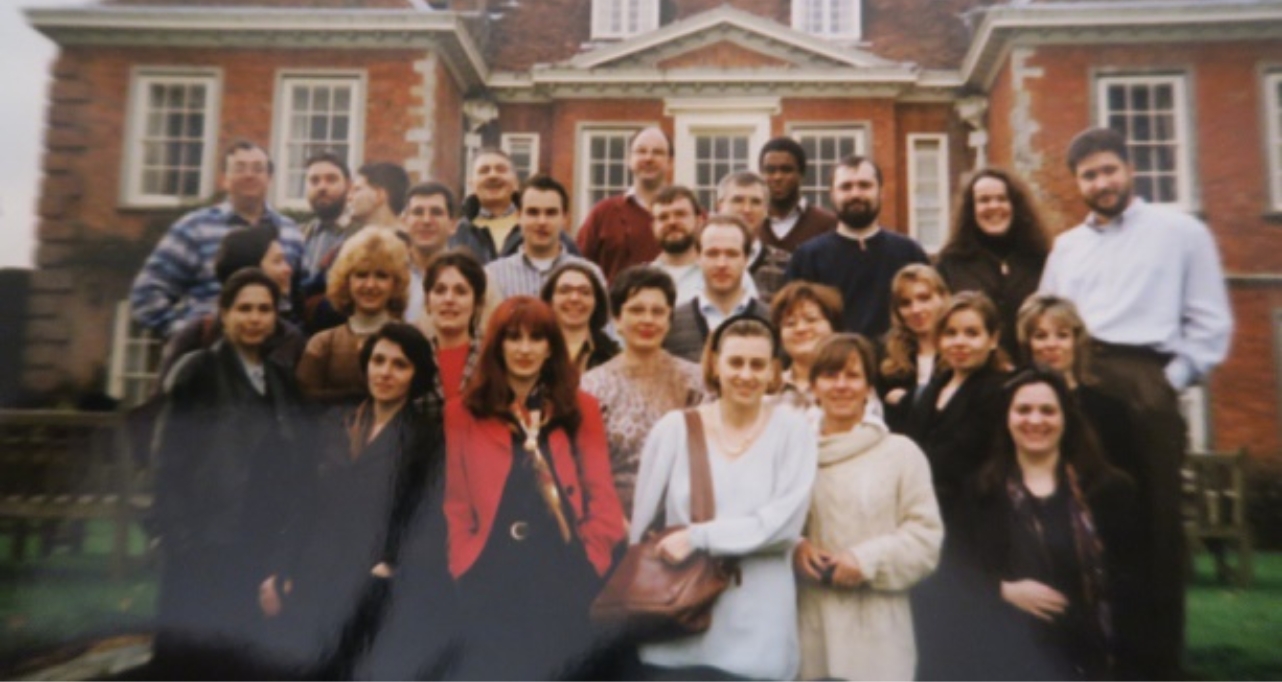
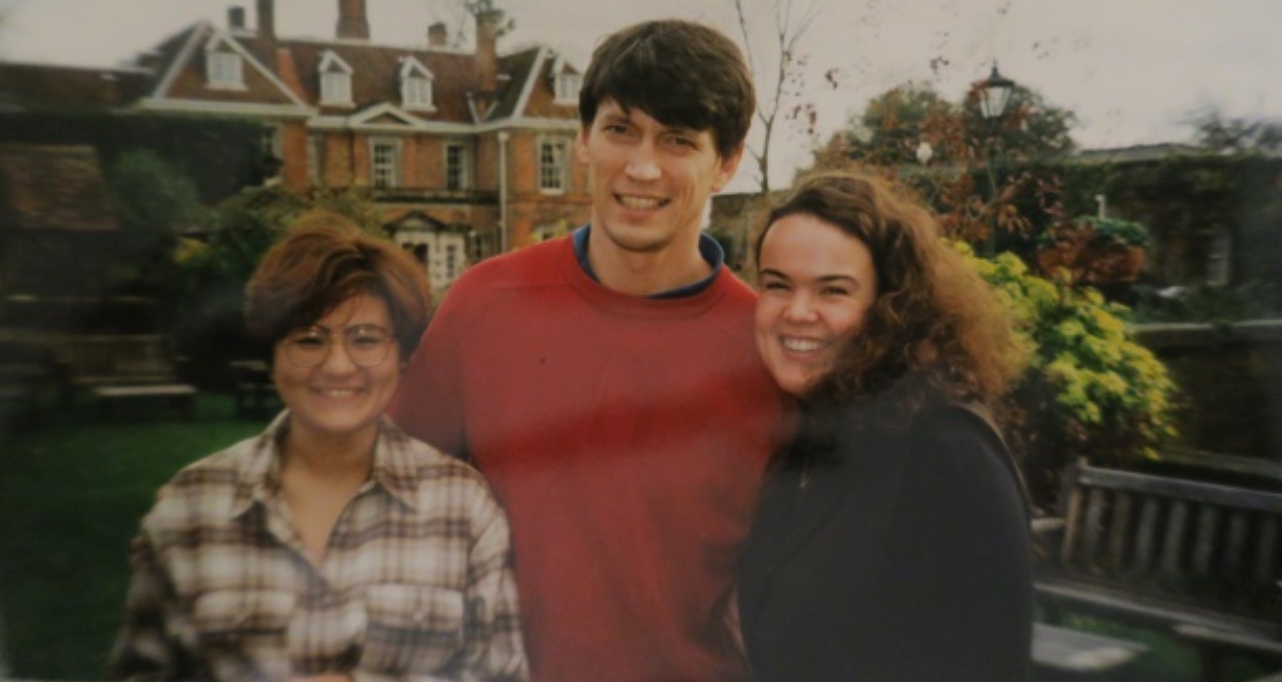
In my case, the first team to be established was the Local and Regional Development Group (code name LRDG), part of the Infrastructure and Energy Department. As mentioned in Episode 5, this team started the municipal and environmental infrastructure activity of the Bank, worked on agribusiness transactions and even on specialised credit lines. Colleagues in this seminal team came from Denmark, Finland, France, Germany, Greece, the Netherlands, Spain and the UK. And many of the colleagues from this early LRDG team stayed on for the full EBRD experience including Sue (Barrett), Frederic (Lucenet), Jean-Marc (Peterschmitt) and Alain (Pilloux). Others such as Thomas (Maier) or Gilles (Mettetal) also stayed for a long but shorter haul, building up their own teams over the years.
LRDG was an entrepreneurial team of pioneers. We all came from different backgrounds, in a new organisation operating within a context of rapid change in our countries of operations. Everything was being worked out at the same time: what to do? Where to do it? How to do it? Our working hours did not favour the life element of a work-life balance, and each team member was given lots of room to develop their activity because there was so much to do by so few.
As described in Episode 6, my second team started as the Romania, Moldova and Croatia country team (code name RMC). Following the late 1993 reorganisation, this was the first formation of what later became the current country business groups. Colleagues came from a range of teams straddling the original divide between Development and Merchant Banking. This earliest form of the country teams led transactions across a range of sectors in its countries of operations. This meant that we had a broad range of skills within the team to work on a range of transactions, from private corporate to sovereign infrastructure loans. The build-up of this team also included the expansion of our RO network with, for example, Henry (Russell) playing a key role in the development of the Bucharest RO.
The RMC team then grew into the RMCB team with the addition of Bosnia-Herzegovina and then to an impossibly long acronym with the addition of Ukraine and eventually Belarus (code name: URMCBB!). Given its country focus, a very positive factor was the rising share of colleagues from our countries of operations both at HQ and in the growing ROs. Colleagues such as Mariana Gheorghe (see Episode 10), Marina (Petrov) who built our first resident office in Moldova and Irina (Kravchenko) played a key role in deepening the Bank’s knowledge of our countries of operations and strengthening the dialogue between the Bank and its clients in both the public and private sectors. The team also nurtured a close internal exchange of experience mixing sectoral competence with local knowledge. In those early days, the team already included within itself what has become a fundamental feature of the Bank as a whole, that is the effective combination of sectoral expertise with local knowledge.
In 1998, Steven Kaempfer, our then CFO, invited me to lead the strategic, corporate planning and budgeting function of the Bank. This involved moving from the heart of dialogue and transactions in our countries of operations to the technocratic core of the Bank. The team which became known over time under the SCPB acronym included staff with a range of deep functional skills. Colleagues in corporate planning kept the finger on the pulse of the Bank, tracking our commitments and disbursements, building systems to provide accurate and consistent (not so obvious at the start!) information across all operational parameters and assessing on a regular basis the strengths and weaknesses of our pipeline.
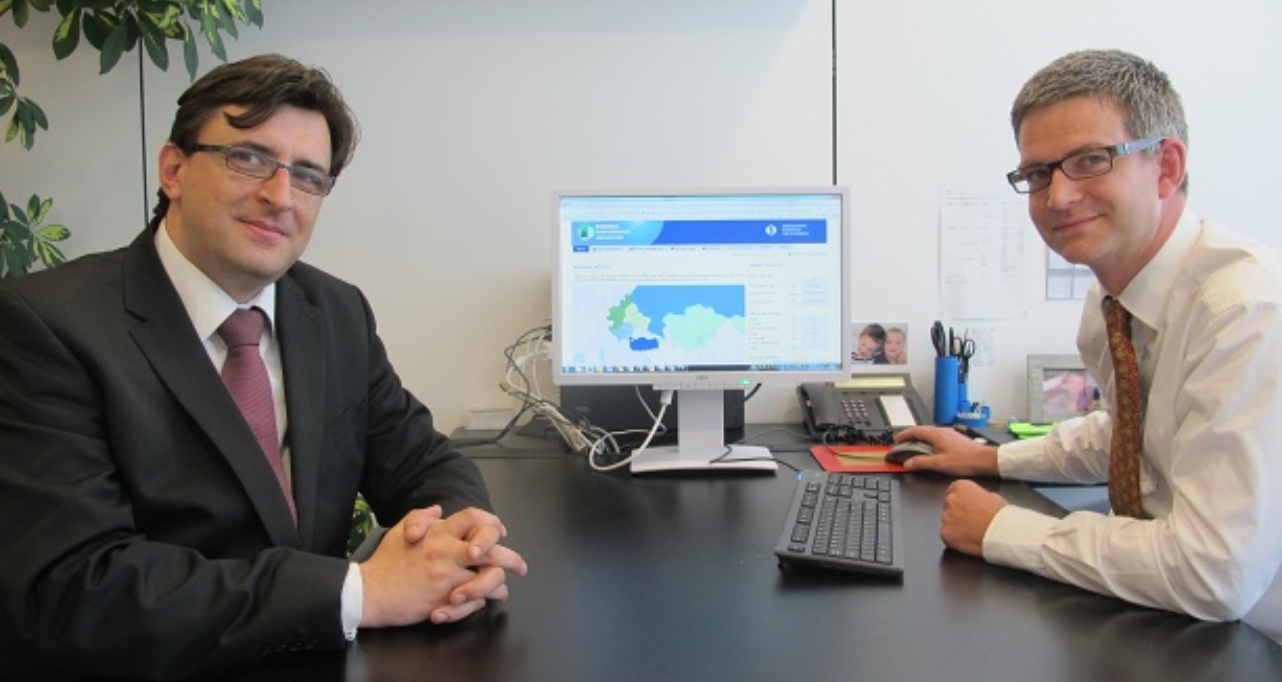
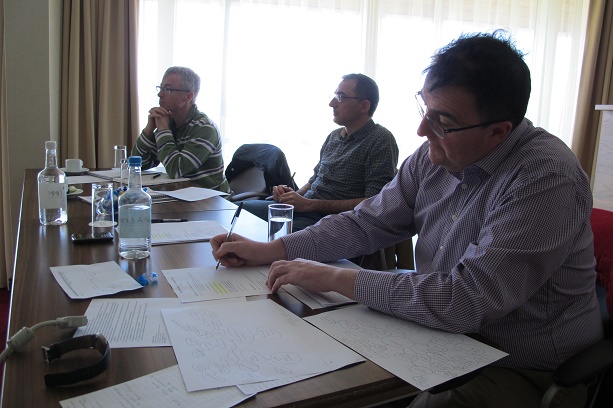
Several colleagues from the early days are still with us, including Dan (Green) and Stéphane (Jucobin) with a number of colleagues from those days in their own teams and beyond. Those in the financial planning and budgeting function kept an eye on our capital position, tracked and projected our financials, and had the tough job of managing the Bank’s budget, including several years of zero real, and even zero nominal, budgets. Not a great context to make friends in. David (Brooks) played a major role over many years in this difficult task while Jasna (Pehar) continues to keep an eye on our current and future capital position. As SCPB transformed into OSP (the codename for Operational Strategy and Planning), this small high powered team carries forward playing its key role in the planning and tracking functions in direct support of our Banking operations.
In 2006, following my light bulb moment described in Episode 13, came the opportunity to transform the then Energy Efficiency team into the Energy Efficiency and Climate Change team (code name E2C2). Reflecting the range of its functions, this is the ultimate matrix team working with just about all teams and functions in the Bank. It is also a team with a very broad range of expertise. Have any questions on energy efficiency, carbon markets, country carbon emissions, green city action plans, industrial decarbonisation, Paris alignment, GET share and more? Just ring your friendly E2C2 expert colleague! E2C2 is also about diversity. A fantastic combination of backgrounds covering dozens of countries from Armenia to New Zealand, from Korea and Uzbekistan to Croatia and Czech Republic, and from England to Wales. It even includes two Brazilians which does not make it easy when the football World Cup comes around.
Now, what unites this incredibly diverse team is a very strong sense of purpose. All are aware, and sometimes too aware, of the crisis climate and its implications. All are engaged in working with colleagues across the Bank to ensure that it can make the most significant contribution possible to address the environmental challenges in our countries of operations. And all are united in bringing their specific expertise to achieve common environmental improvement goals. It has been both a privilege and a deeply meaningful experience to work with the E2C2 team, as every day I learn from my colleagues developing together the Bank’s ambition and track record in climate and environmental action.
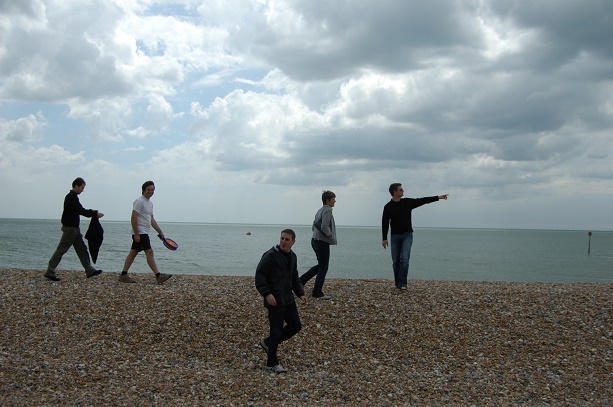
Beyond their work, teams have emotions which become our emotions. Happiness and joy when colleagues get married, when babies are born and when birthdays come by. I remember my fortieth birthday when the team entered my office with a big birthday cake and smoking candles which triggered the Bank’s fire alarm. Concern when disease affects a member of the team and deep sadness when colleagues or former colleagues pass away. We remember George Toregas, Emmanuel Forestier, Soren Albers and Magda Powolna who contributed so much and left us much too early.
Teams and their members are the vibrant heart of the Bank. They hold us together, they are home away from home. In this period of pandemic, lockdowns and social isolation, I feel even more deeply how important the life of our teams is to us. While we manage with Zoom, WebEx and Microsoft Teams (no pun intended), I miss that personal informal contact throughout the day; that conversation in the corridor or in the garage; that good morning at the start of day with that minute or two of personal connection.
It will come back. But, sadly, I will be gone by then.
Josué Tanaka | Visiting Senior Fellow at the Overseas Development Institute
Former EBRD Managing Director, Energy Efficiency and Climate Change, Operational Strategy and Planning
Select an image to expand
Select an image to expand