
Read our Cookie policy here.
Search
Search

 Eng
Eng
 Eng
Eng
In an organisation like the EBRD, the reward for a ‘job done’ is often a brand new challenge. Let me explain. Following the complex yet successful start of EBRD activity in Bosnia and Herzegovina (see Episodes 6 and 7), I was asked to include Ukraine in the activities of the Romania, Moldova, Croatia and Bosnia-Herzegovina country team. By the end of 1996, Ukraine’s ABI and pipeline had reached very low levels, and with the upcoming Annual Meeting in Kiev planned for 1998, there was a rising concern about ensuring that the Bank had a sufficiently positive track record by the time of this high visibility event.
Upon assuming this additional responsibility, my first step was to go to Ukraine. To get a feel for the country ahead of the official meetings, I started the trip on a week- end. This would allow me to go around Kiev, take the subway and buses, explore the back streets and neighbourhoods, and try to get a proper taste of the city. On Saturday morning, I was told that a car and a ‘minder’ would be sent to take me around. The proposed official programme included visits to a monastery, museums and the main sights of the city. Not at all the backstreet view I had in mind. I mentioned that this had to be a working week-end, and that I would only accept the proposed programme once EBRD activity in Ukraine was booming. Accordingly, I stated that I needed to go to the end of a subway line, to see some Stalin and Khrushchev era apartment blocks, and to a solid waste disposal site. After some hurried telephone calls, we set out for my programme.
It was a bitterly cold winter day and by mid-afternoon my frozen ‘minder’ pleaded for us to stop for a cup of tea. While we warmed up, I asked him what he worked as before his current job, and the answer was that he had been an information officer in Soviet nuclear submarines. Needless to say, the ministers I met during the week were perfectly informed about my week-end programme.
My initial meetings with the Ukrainian officials were very difficult. Each minister had been sharply briefed about the Bank’s low level of activity in the country and took their time to express their concern in no uncertain terms. The challenge was clear, and this meant that the focus had to be placed immediately on active business development. The private sector, at least the one we could work with, was still l weak with clients with limited track records. With the government there was lots of talk about restructuring state-owned enterprises, supporting the development of their new activities and in certain cases to examine partial privatisation opportunities. A few examples of such enterprises are provided below to give you a feeling of the opportunities presented, and of the related difficulties.
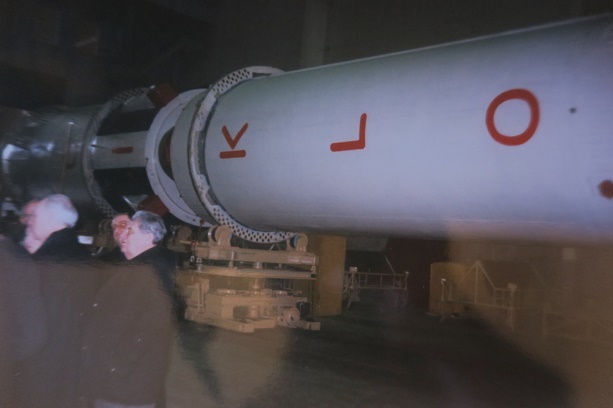
Let’s start with a really big one. The President of Ukraine at the time was Leonid Kuchma, previously the head of Yuzhmash, the Southern Machine-Building Production Union, or ‘Plant 586’ in the Soviet Union. At its peak, Yuzhmash had over 40,000 employees producing up to 120 intercontinental ballistic missiles (ICBMs) a year, including the R-16 SS-7 ‘Saddler’, the MR-UR-100 Sotka SS-17 ‘Spanker’ and the R-36M SS-18 ‘Satan’. The latter was 32 meters long, weighed 209 tons and carried a nuclear warhead up to 20 Mt, over 1,300 times the power of the Hiroshima nuclear device if my calculations are correct.
By the time I reached Yuzhmash, the assembly of ICBMs had stopped. At the welcome lunch, and as part of the traditional Ukrainian toasting sequence, the head of the plant lifted his glass saying that history had been harsh on his company but that it was ‘probably’ good for peace and our children. At the end of the visit, I received a special coin called a ‘disarmament hryvnia’ (the currency of Ukraine) made out of the melted metal from disassembled ICBMs.
The plant was seeking to find alternative production activities. These included, for example, the production of trolleybuses. There was also an attempt to keep the production of rockets for civilian launches. One of the most ‘exotic’ projects presented to me was the Sea Launch project which involved a consortium of companies from Norway, Russia, Ukraine and the US with the management of Boeing. The idea was to launch rockets from ocean platforms positioned near the Equator where rockets need less energy to get their load into orbit. The launch command centre would be in a specialised ship operating at a safe distance from the platform.
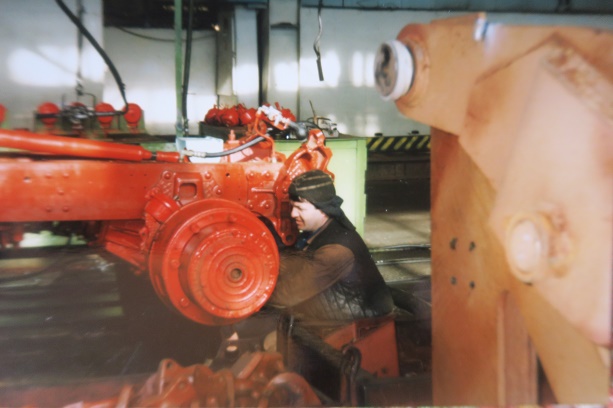
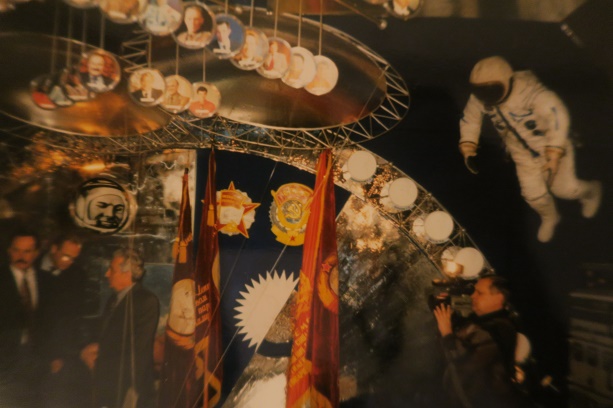
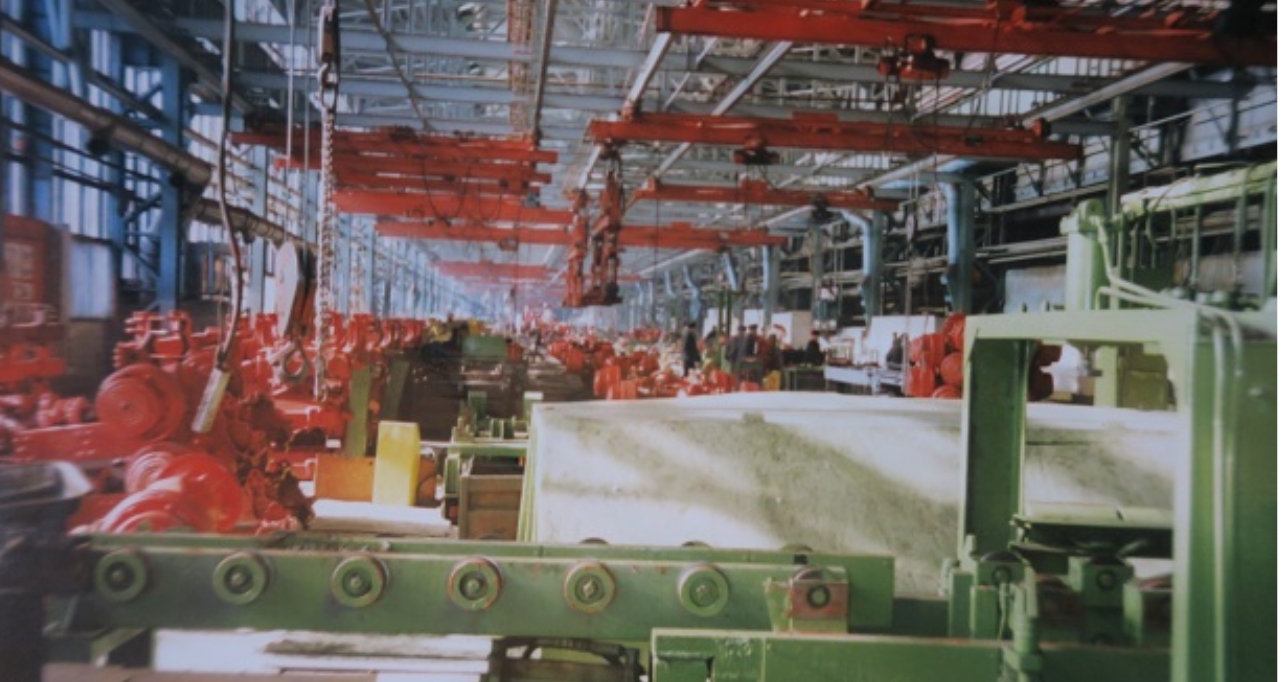
The Bank’s business development activities took me to places and facilities which could not have been seen even by 007 during Soviet times, due to the security surrounding their activities. This included Khartron, which manufactured the guidance systems for Soviet ICBMs and rocket flights, and the control systems for Ukrainian nuclear plants. Another visit was to witness the flight of the Antonov An-74 which was searching for commercial prospects on the international market for a short take off airplane. It also included visits to companies with even more limited potential for their products in a competitive market, such as the Production Association Kommunar (named after the Paris Commune of 1870) which made both automated control systems and household electronics such as televisions and radios. Or the huge Kharkhiv Tractor Plant, built as one of the ‘giants of the first five-year plan’ with 10,000 workers, 2,000 horses, 90 million bricks and 160,000 tons of steel.
Going from 14 projects and €121 million in 1995, the number of projects signed in Ukraine during 1996 had collapsed to 1 by the time I started to work on the country. While meetings with the above companies did not lead to transactions, the hard work from teams across the Bank drove the growth of activity and investment in Ukraine, with EBRD financing jumping to €229 million by 1997. With this result, we were ready for a positive and successful Annual Meeting in Kiev in 1998. Mission accomplished.
Josué Tanaka | Visiting Senior Fellow at the Overseas Development Institute
Former EBRD Managing Director, Energy Efficiency and Climate Change, Operational Strategy and Planning
Select an image to expand

Select an image to expand