
Read our Cookie policy here.
Search
Search

 Eng
Eng
 Eng
Eng
After taking you through a cascade of anecdotes, bombs, transition challenges and work in difficult contexts, this episode is about some of the lighter aspects of banking at EBRD.
The signing of loan agreements are generally pleasant occasions following months of due diligence, deal structuring and negotiations. Speeches are made, the mood is positive and good wishes are exchanged with a celebratory glass. However, the actual impact of the Bank’s work does not occur at signing itself, but when projects are implemented and their benefits arise in practice. This is where ‘changing lives’ takes its real meaning.
Accordingly, visiting our countries of operations to inaugurate a recently implemented project which will improve the lives of many has real meaning and significance. In addition, they are often joyous events providing opportunities to meet a broad range of people involved in the project and to discover new places in our countries of operations.
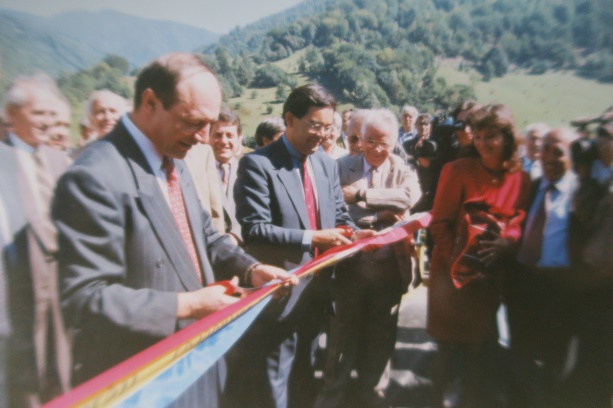
One such inauguration involved the opening of a new road segment between Bucharest and Sibiu (today’s E81). The meeting was early on a sunny morning. A cohort of cars was forming in front of the Ministry of Transport, including both officials and press. I travelled in the lead car with the minister, his driver and the director of the Romanian road infrastructure department talking about Romania, its transport sector and the project. The cohort moved through an increasingly rural landscape arriving at the inauguration site located in a beautiful valley surrounded by green hills.
The Minister of Transport at the time was Traian Basescu, who went on to become the President of Romania between 2004 and 2014. He was a larger than life character with strong opinions, a sharp sense of humour and original ideas. For example, one of these ideas was to hold the regular meetings with his top officials in his ministry aboard a VLCC super tanker. Indeed, he was a licensed captain for these huge ships and thought that it would be great to combine his ministerial duties with his VLCC qualifications. When we arrived on site, a colourful assembly was there including officials and some of the locals dressed in traditional costumes. A crowd formed, I was given a pair of scissors, and in a large procession we moved to a ribbon across the road to open this newly modernised segment. The inauguration involved a number of short speeches, conversations with local officials on their region and economies, and television interviews where I had to know all the numbers off the top of my head regarding EBRD financing and our activities in Romania.
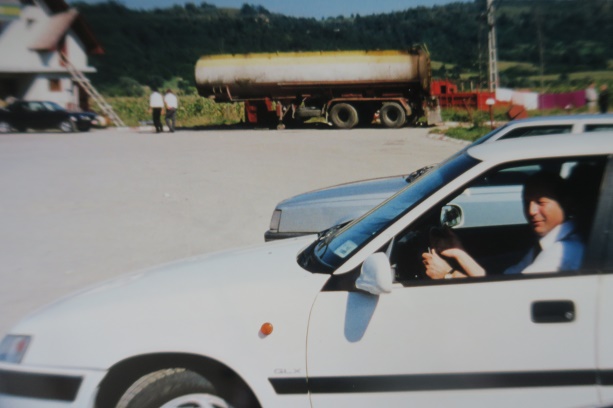
Once we had cut the ribbon and the applause ceased, I heard the Minister declare ‘and now I am personally going to drive domnul (Mr in Romanian) Tanaka on our new road’. I sat next to him and off we went close to the maximum speed of our car, zooming through the valley, taking turns Formula 1 style, with the Minister talking in a lively manner about the exciting parts of his portfolio. At full speed, we eventually got to a broad plain with the motorcade trying to keep up with the minister. Suddenly, he opened his window and said hello with his hand to an oncoming car saying this was a friend of his. What followed was a big ‘fender bender’ with cars behind screeching as all thought the minister was ordering an immediate stop. Luckily no fatalities or wounds were suffered, but there were a few bumps and scratches on the cars involved. A scene worthy of being featured on ‘Top Gear’.
In the early days, country teams lead the processing of a broad range of projects. In the case of the growing Romania, Moldova and Croatia team, this involved projects in both the private and public sectors in industry, pharmaceuticals, hotels, credit lines with banks and infrastructure. The banking matrix could be found within a single team, with colleagues working on projects across these sectors. For instance, Lindsay Forbes and Thomas Maier worked on M%26S projects, Frédéric Lucenet on MEI projects or Sylvia Gansser-Potts on hotel projects.
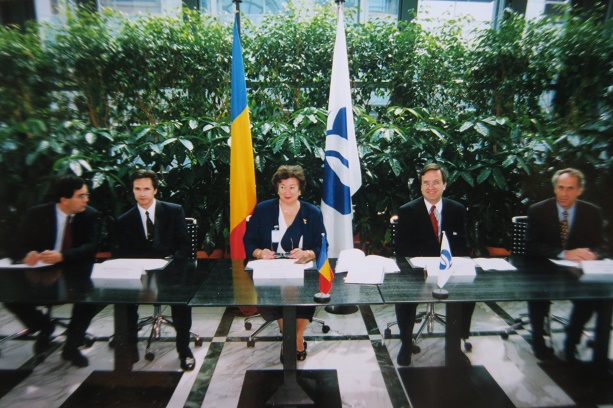
One colleague who was particularly instrumental in the team, not only at the project level (she participated in the above road opening) but also in terms of her contribution to building a strong relationship between the Bank and Romania was Mariana Gheorghe. And I mention her because beyond the general transition mandate of the Bank, her path reflects a most meaningful personal transition.
Mariana was involved with the Bank from the very beginning being in the international department of the Ministry of Finance at the time the EBRD was inaugurated. So we met very early on. She then joined the Bank, and building on her hard work she became increasingly involved in a range of important activities. This included the privatisation of the Romanian energy company Petrom which took many years to be developed, eventually resulting in its privatisation and acquisition by a foreign strategic investor. Mariana became a member of the Board of the privatised company and reflecting the quality of her work and contribution, she was offered the CEO position of OMV Petrom SA becoming the first woman in this post and successfully heading the company for 12 years. A beautiful and impressive transition story.
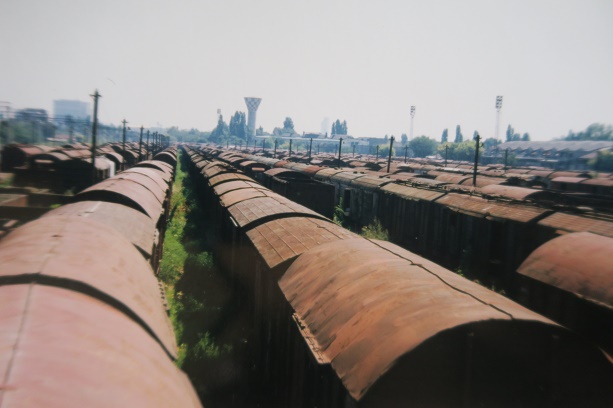
Another inauguration involved the upgrading of the maintenance facilities for the Romanian railway company. Railways played a huge role in centrally planned economies, as industrial production relied on a very high levels of freight traffic transporting raw materials, intermediate and finished goods at the rhythm imposed by the targets in Romania’s five year plans. But with the collapse of the system, demand for freight transport decreased sharply, resulting in significant restructuring and modernisation challenges to underpin the transformation of this sector within a newly emerging market economy.
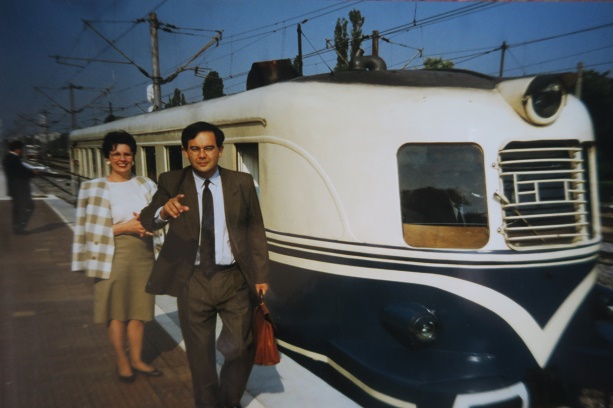
For the inauguration of the new maintenance facility, the meeting was at the railway station where the trip was to be made on a special train used for special occasions. The train slowly ambled through the countryside, and while conversing in the railcar, I noted that at each railway crossing, the barrier guards had their caps on with their threadbare railway jackets, saluting the train as it went by. Visions of another era.
And to keep up with the levity of this episode, let me conclude it with an embarrassing anecdote. With a professional life which took me to many countries, I knew that it is good to try whenever possible to speak the local language, even if only few words of it. It is a way to connect with the people you meet, to show that we care and that we want to try to create a local bond. One rainy afternoon, I was in the Ministry of Finance in Bucharest across from the gigantic former House of the People (see Episode 2). The meeting on a potential guarantee fund was going absolutely nowhere. In an attempt to relax the atmosphere I decided to try out my limited Romanian language skills. Within a minute, the minister and his staff were laughing their heads off while our resident office colleague and the translator were looking at me with a panicked expression. In certain languages, two seemingly similar words can have a completely different meaning if the accent moves from one syllable to the other. I learnt this at my own expense on that occasion, as instead of arguing for a financial guarantee fund, I had by accident shifted to talking about the guarantee of my bottom. It did relax the atmosphere, but the fund did not go ahead. I wonder why.
Josué Tanaka | Visiting Senior Fellow at the Overseas Development Institute
Former EBRD Managing Director, Energy Efficiency and Climate Change, Operational Strategy and Planning
Select an image to expand
Select an image to expand