
Read our Cookie policy here.
Search
Search

 Eng
Eng
 Eng
Eng

Serbia began the 2010s facing gaps in critical infrastructure and municipal services. It recognised the need for cost-effective and sustainable modernisation, in line with EU regulatory and environmental standards, but its own fragmented legislation, limited institutional capacity and governance gaps in state-owned enterprises (SOEs) were compromising its ability to advance such projects.
Public-private partnerships (PPPs) offered a solution, enabling Serbia to finance and deliver major projects without overburdening the state budget. With the country’s rules for PPPs still evolving, international financial institutions (IFIs) such as the EBRD were needed to help facilitate these arrangements, providing crucial assistance with structuring bankable projects and setting credible standards that would allow projects to attract private investment.
The EBRD’s work supporting infrastructure development combines financing, advisory support and policy dialogue to bridge partnerships between the private and public sector. To help mobilise private finance and secure equity, the Bank acts mostly as an anchor lender, arranging syndicated debt with other IFIs and commercial banks. It also helps to structure projects so that they are capable of securing strong private sponsors, and provides advisory support aimed at improving project preparation and procurement transparency, while ensuring that the risks are allocated in a manner acceptable to international investors.
The EBRD has helped to provide pre-tender support and finance in landmark PPPs in Serbia such as for Belgrade Airport and the Vinča waste-to-energy project.
The two projects have become regional benchmarks and established replicable models for future PPPs in Serbia and the broader Western Balkans. By delivering significant transition impact through high environmental and service standards, and by attracting reputable sponsors and commercial lenders, they have shown that complex PPPs structured on non-recourse terms – where loan repayments are tied to project profitability – can be effectively implemented within Serbia’s institutional framework.
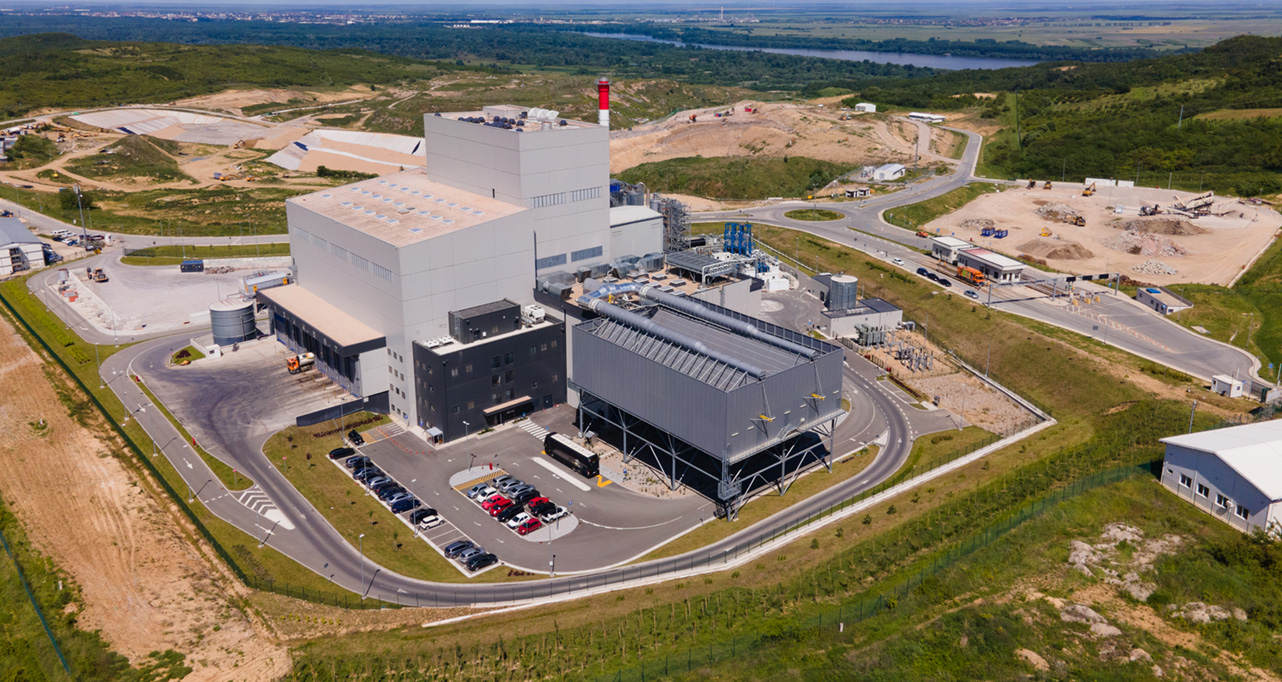
The Vinča waste-to-energy project is reducing pollution, diverting waste from landfill and generating renewable energy in line with EU sustainability standards
Beyond individual transactions, the EBRD has supported Serbia in developing a more mature and predictable PPP ecosystem by providing technical assistance, policy engagement and capacity building.
Key achievements have included supporting the harmonisation of Serbia’s PPP and concessions legislation with the EU directive on concession contracts. Involving a comprehensive review of procurement, tax, land-use and sectoral laws, these reforms have resulted in clearer rules for risk allocation, transparent procurement and contract enforcement – all of which are essential for attracting private capital into long-term infrastructure projects.
The Bank has also supported broader governance and public-sector reforms, including stronger SOE corporate governance, more stringent corporate oversight, the digitalisation of public administration, and improvements to procurement and inspection systems. This has improved transparency, accountability, and environmental and social standards in PPP processes, enhancing both bankability and public trust.
The EBRD’s assistance in building Serbia’s institutional capacity has included advising on the division of roles among ministries, agencies and municipalities, and providing targeted training for public officials in project structuring, financial modelling and risk management. The Bank has also produced PPP implementation manuals for the country’s institutions, outlining each stage of the project cycle from identification to monitoring. The adoption of standardised procedures and model documentation has enhanced transparency, reduced transactional uncertainty and strengthened investor confidence in Serbian PPPs.
By introducing novel PPP models such as non-recourse, performance-based concessions in infrastructure and waste management, the EBRD has showcased new standards of transparency, risk allocation and sustainability, setting benchmarks that can be replicated across sectors. The entry of reputable international sponsors and financiers into projects structured around these models has shifted competitive dynamics and attracted foreign direct investment, raising the overall quality and accountability of PPP projects.
Serbia has been gradually building a framework that can further support PPP development, with early steps helping to clarify procedures and expand institutional understanding of the model. While the appetite for long-term solutions has been cautious, initial experiences have contributed to increasing awareness of the benefits and requirements of well-designed PPPs, offering a useful starting point and indicating opportunities for further strengthening of the environment to attract suitable investment in future.
The EBRD has adapted elements of this PPP approach for use in Montenegro, where it provided early‑stage advisory support for a planned airport concession. While the Bank’s role has been strictly advisory, the engagement illustrates how PPP concepts applied in Serbia are helping to shape PPP development in neighbouring markets, supporting the gradual replication and broader uptake of such approaches across the Western Balkans.
In addition, knowledge disseminated through EBRD capacity-building programmes – including PPP manuals and targeted training – is spreading to other firms and projects, broadening the adoption of best practices in project structuring, financial modelling and risk management.
Furthermore, policy dialogue and technical assistance have led to reforms in Serbia’s PPP and concessions laws, as well as improved regulatory clarity. They have also supported the creation of dedicated institutions, reducing market uncertainty and creating new regulatory models for others to follow.
Together, these interactions have created the conditions for Serbia’s PPP sector to evolve into a more competitive, transparent and internationally aligned framework, offering potential for sustainable and scalable infrastructure development that supports the country’s wider objectives of economic growth, green transition and EU integration.
Key drivers of success included the EBRD’s ability to blend financial, policy and advisory support, the Bank’s innovative approach to structuring complex, non-recourse PPPs, and the strong ownership demonstrated by the Serbian authorities and local governments. Capacity-building initiatives such as the development of PPP manuals and targeted training for officials helped raise the quality of project preparation and management. The Bank’s sustained engagement and adaptability to local challenges further amplified its impact.
Strategic partnerships were also essential, involving close coordination with the Serbian government, the City of Belgrade, line ministries and other IFIs (such as the International Finance Corporation and Austrian Development Bank), as well as climate-finance providers and private-sector sponsors. These partnerships created a platform for combining technical expertise, regulatory support and financing instruments. They enabled the blending of commercial and concessional resources, facilitated more balanced risk-sharing arrangements and ensured that project structures were aligned with EU standards and best practices. This collaborative approach also strengthened policy coherence, accelerated decision-making and helped build a more stable environment for long-term private investment in the country’s emerging PPP market.