Read our Cookie policy here.
Search
Search
Who we are
Overview: about the EBRDWho we are
Overview: about the EBRD
Learn about the EBRD's journey to investing more than €220 billion in over 7,800 projects.
What we do
Overview: how the EBRD operatesWhat we do
Overview: how the EBRD operates
Across three continents, the EBRD supports the transition to successful market economies.
Work with us
Overview: how you can work with the EBRDWork with us
Overview: how you can work with the EBRD
We draw on three decades of regional knowledge and financial expertise to tailor our products and approaches to each client's needs.

 Eng
Eng
 Eng
Eng
Despite some progress, many of the EBRD’s investee economies continue to have legal frameworks that constrain women’s equal access to employment and pay. Many still have labour laws prohibiting women from working in certain occupations or lack laws on equal pay for equal value. Moreover, more than 25 per cent of women across south-eastern Europe, eastern Europe and the Caucasus, central Europe and the Baltic states, central Asia and Türkiye, and nearly 40 per cent of women in the southern and eastern Mediterranean, have experienced gender-based violence and harassment (GBVH). Biased gender social norms are widespread worldwide: studies show one in three men would prefer their wife to stay at home and take care of the family rather than be in paid work, with more than half of men in North Africa having this preference. Forty-three per cent of the world's population think that men make better business executives than women.
The EBRD is committed to addressing and preventing GBVH by supporting clients with the development and implementation of policies, programmes and mechanisms that mitigate these risks. This is captured in our Strategy for the Promotion of Gender Equality, which integrates a special focus on women’s voice and agency, including freedom from GBVH, recognising that freedom from gender-based violence is a precondition for women to participate equally in the economy and public life. Our work supports activities that augment impact and additionality, aiming to promote safe and secure workplaces for all. For example, we work with our clients across sectors to develop gender-responsive HR policies and practices that establish clear processes around GBVH prevention and response. In the infrastructure sector, we support clients in introducing measures to eliminate the risk of GBVH during the construction of assets as well as during operations.
Tbilisi, the capital of Georgia, was among the first cities to join the EBRD’s Green Cities family. The Bank and the City of Tbilisi, with funding from Czechia, joined forces to develop a Green City Action Plan and identify the city’s environmental priorities.

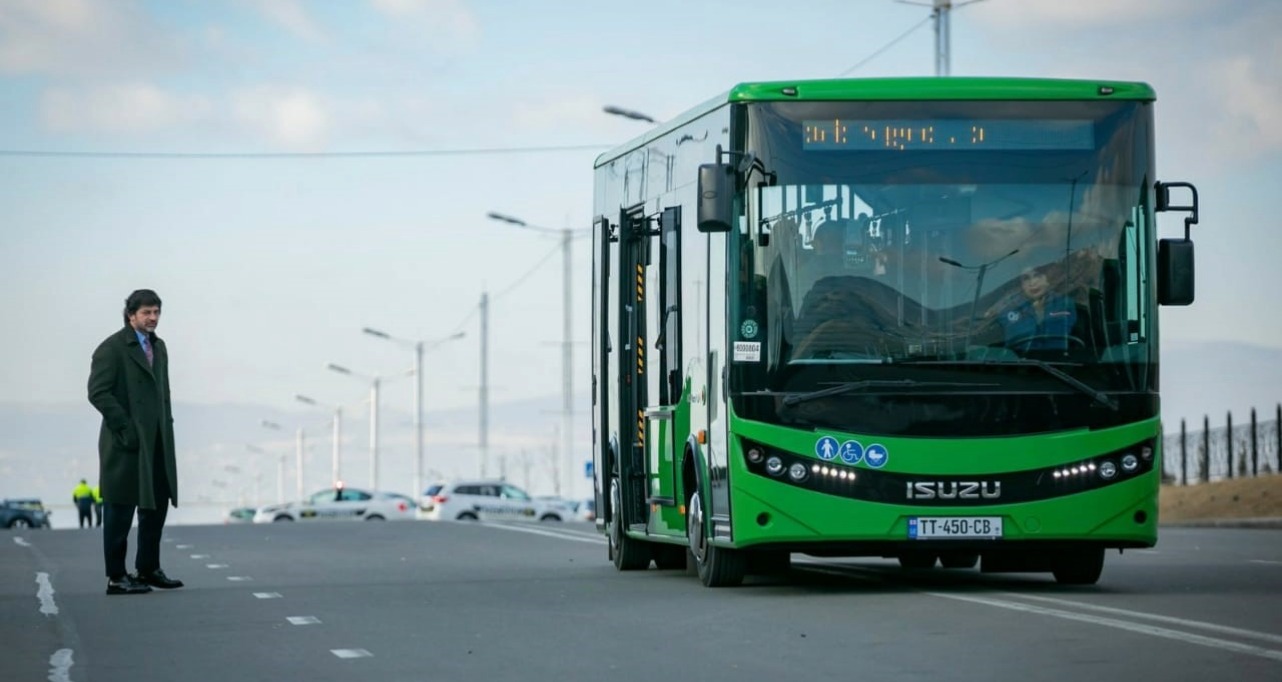
A flagship project under the EBRD Green Cities programme was replacing the city’s old, yellow, polluting buses with 144 new, blue, modern and environmentally friendly ones. The blue buses have brought significant service improvements benefiting more than 1.2 million inhabitants, with increases in both the safety and efficiency of public transport. The buses' low floors have also helped to make Tbilisi’s public transport more inclusive, by accommodating passengers with limited movement and those with disabilities. The metro and bus projects not only provide commuters with a comfortable and environmentally friendly means of transport, but also promote safety for all thanks to an incident-tracking system.
A bus extension project is providing training with a view to recruiting women drivers and promoting women’s employment in the transport sector, while at the same time building the Tbilisi Transport Company's capacity to prevent GBVH in the workplace. The Bank is also supporting Tbilisi in the preparation of an Inclusive Transport Strategy, aimed at delivering and designing more inclusive, safer public transportation free from GBVH.
Cookie consent
Cookies are pieces of code used to track website usage and give audiences the best possible experience. Use the buttons to confirm whether you agree with default cookie settings when using ebrd.com.
Read our Cookie policy here.
These cookies cannot be disabled. They are essential for core functionality in ebrd.com to ensure a seamless and secure experience.
We use Adobe Analytics cookies to measure usage of the website in order to improve it and respond to end user actions. We review anonymised data on how people reach the site, where they click and so forth. Learn more here about specifics of our cookie use.
We use Adobe marketing cookies to enable us to customise ebrd.com to tailor the website and email marketing services based on the interests of each end user.