
Read our Cookie policy here.
Search
Search

 Eng
Eng
 Eng
Eng
Asymmetries in access to and ownership of resources – including land, biodiversity, water, energy, transport and food – risk limiting women’s ability to contribute to and benefit from the transition to a green economy. In terms of rights to own, inherit and manage land, women represent less than 15 per cent of total agricultural landholders. This unequal access to resources is worsening systemic barriers, such as women’s unpaid care burden, mobility constraints and unequal access to educational opportunities.
The transition to a low-carbon economy is expected to create at least 2 million green jobs in areas such as organic agriculture, biofuels and forest conservation. Across the EBRD regions for which data are available, women make up a greater proportion of employment in the informal agricultural sector than men. Differences in access to technical skills and formal employment can also restrict women’s ability to contribute to and benefit from the transition to a green economy.
Women are also under-represented in green energy sectors and in climate leadership, making up only around 32 per cent of the renewable energy workforce. Barriers to entry and job retention in the sector include perceptions of gender roles, inequitable hiring practices and a lack of flexible working conditions.
In 2018, less than 30 per cent of government delegations negotiating climate change decisions were led by women. The absence of a mainstreamed focus on gender equality in green financing instruments can exacerbate gender inequality in the green transition. This is a significant issue, given that green finance has the potential to address socio-political imbalances that reduce the climate change resistance of communities and address gender disparities within them.
To address these issues, the EBRD works to mainstream gender into green finance and the energy transition, focusing on awareness-raising and capacity-building activities to help client companies progress towards more gender-responsive operations.
Morocco experiences chronic water scarcity and the country is expected to enter a situation of extreme water stress in 2030-50. This situation has significant economic and social consequences because of the impact on agricultural production, which is central to Morocco’s economy. In addition, there are large gender disparities in Morocco’s agricultural sector, increasing the likelihood of women not being able to seize potential economic opportunities due to a lack of formal education and social barriers to economic participation, especially in the country's disadvantaged Oriental region.
The EBRD is providing a €150 million sovereign loan to Morocco to co-finance: (i) the construction of key components of the Saïss water transfer network; and (ii) the rehabilitation and modernisation of the water distribution network. The project will enable a switch away from unsustainable groundwater abstraction from the Sebou-Saïss basin to the use of more sustainable and climate-resilient surface water resources from the M'Dez dam.
The project promotes the economic inclusion of women and local farmers in commercial agriculture in both the regions that it covers. It will also raise awareness of women's role, needs, expectations and integration by applying a gender-responsive approach, helping increase women’s access to economic opportunities. The inclusion impact is supported by technical and business management training for at least 200 local farmers and entrepreneurs, including at least 100 women farmers or entrepreneurs.
The programme will focus on:
This project also marks the EBRD’s first policy dialogue on gender and agriculture/rural inclusion. In cooperation with Morocco's Ministry of Agriculture, the Bank is promoting gender equality and addressing policy barriers to women’s economic inclusion in agriculture and rural areas under Plan Maroc Vert (Green Morocco Plan) and Morocco’s Green Generation Strategy. This technical cooperation is generously supported by the Green Climate Fund.
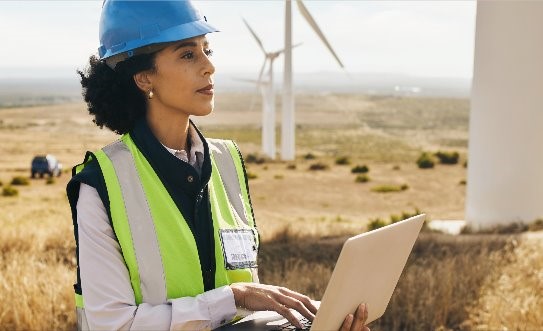
The energy pillar of Egypt’s Nexus of Water, Food and Energy (NWFE) programme will support the country in ensuring a socially responsible green transition. It will enable the country to decommission 12 fossil fuel power plants and introduce a workforce-redeployment programme for more than 6,000 staff in partnership with training providers and employment agencies. This will include: