Read our Cookie policy here.
Search
Search
Who we are
Overview: about the EBRDWho we are
Overview: about the EBRD
Learn about the EBRD's journey to investing more than €220 billion in over 7,800 projects.
What we do
Overview: how the EBRD operatesWhat we do
Overview: how the EBRD operates
Across three continents, the EBRD supports the transition to successful market economies.
Work with us
Overview: how you can work with the EBRDWork with us
Overview: how you can work with the EBRD
We draw on three decades of regional knowledge and financial expertise to tailor our products and approaches to each client's needs.

 Eng
Eng
 Eng
Eng
Digitalisation can offer numerous opportunities for growth and the EBRD is working towards narrowing digital gaps and disparities in the use of technology in its countries of operation. However in many EBRD economies, significant digital gaps remain in areas such as accessibility, adoption, connectivity quality and responsible use of the internet and digital services, impacting women in particular. In low- and middle-income countries, women are 19 per cent less likely to use mobile internet and 7 per cent less likely to own a mobile phone than men, according to GSMA. Enabling women’s access to digitalisation would support them in responding to economic distress, climate change and other ongoing global crises. Overall, ensuring that women benefit from the digital economy can improve their economic and social outcomes. There is a significant opportunity to increase women’s access to learning, knowledge and employment prospects, and to strengthen financial inclusion.
To adapt to these challenges and opportunities, the EBRD seeks to mainstream gender considerations into existing and new digital products through capacity building and awareness raising that will help build digital skills and knowledge for women in key sectors such as infrastructure. The Bank also works with partner financial institutions to expand credit lines that promote digital adaptation within women-led small and medium-sized enterprises through investment incentives.
The EBRD is financing microlender HUMO with loans of over €10 million and technical collaborations under the Bank's Women in Business and Youth in Business programmes, as well as through the Green Economy Financing Facility and Financial Intermediaries Framework. These comprehensive programmes are helping to narrow the large gap in access to finance facing women in Tajikistan, and to facilitate a gender-responsive and inclusive digital and green transition.
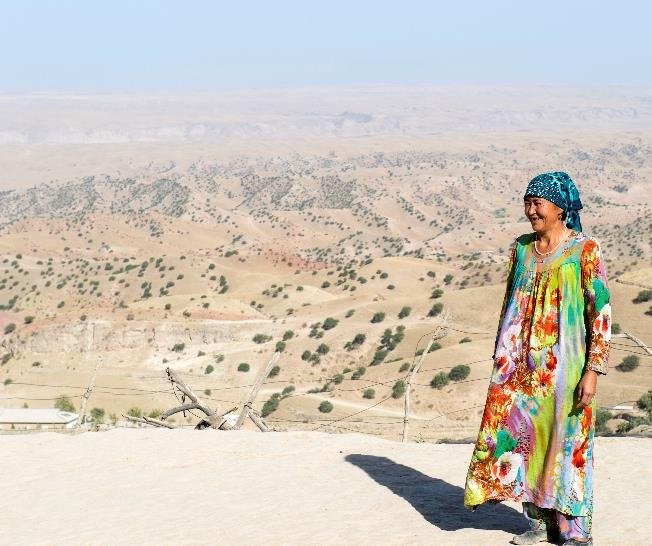
With EBRD support, HUMO is emerging as a progressive and innovative digital financial institution in Tajikistan. It has created a digital lab, HUMO Lab, that has led to the successful development of digital products and services now accessible through mobile phones, enabling the company to reach segments of the population that have been underserved financially. As a result, HUMO today serves young sub-borrowers (42 per cent under the age of 35 years) and women (44 per cent), primarily based in rural areas (73 per cent). As part of HUMO Lab, the company has also introduced the HUMO Digital Academy, which aims to train more than 200 young people in digital skills to support business growth. In addition, HUMO is successfully reaching low-income rural households and smallholder farmers who are vulnerable to the effects of climate change.
Cookie consent
Cookies are pieces of code used to track website usage and give audiences the best possible experience. Use the buttons to confirm whether you agree with default cookie settings when using ebrd.com.
Read our Cookie policy here.
These cookies cannot be disabled. They are essential for core functionality in ebrd.com to ensure a seamless and secure experience.
We use Adobe Analytics cookies to measure usage of the website in order to improve it and respond to end user actions. We review anonymised data on how people reach the site, where they click and so forth. Learn more here about specifics of our cookie use.
We use Adobe marketing cookies to enable us to customise ebrd.com to tailor the website and email marketing services based on the interests of each end user.