Read our Cookie policy here.
Search
Search
Who we are
Overview: about the EBRDWho we are
Overview: about the EBRD
Learn about the EBRD's journey to investing more than €220 billion in over 7,800 projects.
What we do
Overview: how the EBRD operatesWhat we do
Overview: how the EBRD operates
Across three continents, the EBRD supports the transition to successful market economies.
Work with us
Overview: how you can work with the EBRDWork with us
Overview: how you can work with the EBRD
We draw on three decades of regional knowledge and financial expertise to tailor our products and approaches to each client's needs.

 Eng
Eng
 Eng
Eng
Conflict, natural disasters and economic shocks can have profound effects on people’s access to livelihoods, employment opportunities, financing and essential services.
These events often exacerbate existing inequalities and create new barriers to economic opportunity, particularly for women, young people, displaced populations and other marginalised groups. They can impede labour markets, disrupt networks and weaken human capital development.
The EBRD applies a human capital lens to crisis response and recovery, helping clients and communities to maintain livelihoods and services, boost workforce resilience and build back better.

Our support includes:
The Bank's work in Ukraine has shaped a broader approach to preserving human capital during and after crises. This includes support for workforce resilience, business continuity, the reintegration of veterans, and access to essential infrastructure, finance and services. The strategy identifies crisis response and human capital resilience as a major area of focus for the future as the Bank deepens its engagement in Ukraine and other fragile and conflict-affected places.

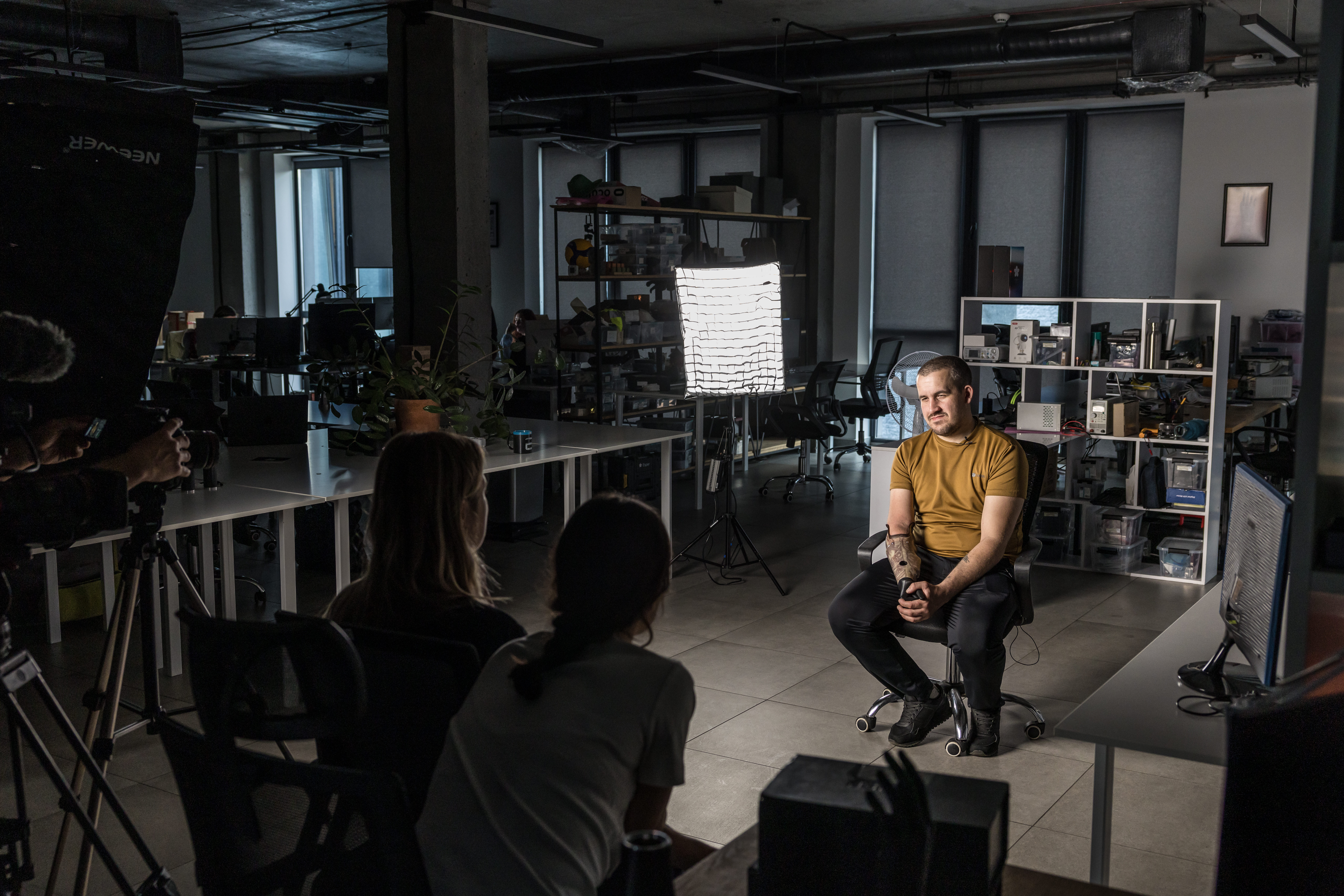
The EBRD’s US$ 1.25 million (approx €1.07 million) equity investment in Esper Bionics shows how crisis response can support human capital, innovation and inclusion simultaneously. Esper Bionics is a technology company founded in Ukraine that designs and manufactures bionic upper-limb prosthetics, with research and development and production facilities centred in Ukraine.
The EBRD’s investment has supported the expansion of Esper’s production capacity and product development, helping it to supply affordable, high-quality bionic prosthetics to veterans and other people who have lost their limbs. By helping to restore their users’ physical capabilities, these prosthetics enable people to return to work, pursue education and engage in daily activities, directly supporting economic reintegration and resilience in a country where millions have been displaced or lost their jobs due to the war.
This project was explicitly designed with women’s economic inclusion in mind. Esper’s prosthetics are lighter and more adjustable than many alternatives, addressing a previous shortcoming when it came to female amputees, who account for a significant share of total users but are often excluded by devices that are too large or too heavy. In addition, the EBRD’s ongoing technical support for the company is helping to upgrade training for prosthetists and rehabilitation specialists across Ukraine, building long-term local capacity in order to deliver more advanced care and reach more of the people who need it. In this way, the EBRD’s investment is advancing its mandate to preserve human capital and gender equality in settings marked by conflict and fragility, turning crisis response into a platform for inclusive recovery and sustainable livelihoods.
Cookie consent
Cookies are pieces of code used to track website usage and give audiences the best possible experience. Use the buttons to confirm whether you agree with default cookie settings when using ebrd.com.
Read our Cookie policy here.
These cookies cannot be disabled. They are essential for core functionality in ebrd.com to ensure a seamless and secure experience.
We use Adobe Analytics cookies to measure usage of the website in order to improve it and respond to end user actions. We review anonymised data on how people reach the site, where they click and so forth. Learn more here about specifics of our cookie use.
We use Adobe marketing cookies to enable us to customise ebrd.com to tailor the website and email marketing services based on the interests of each end user.