Search
Search
Who we are
Overview: about the EBRDWho we are
Overview: about the EBRD
Explore the EBRD’s journey over the decades, investing in businesses, supporting economies and driving lasting change across its regions.
What we do
Overview: how the EBRD operatesWhat we do
Overview: how the EBRD operates
Across three continents, the EBRD supports the transition to successful market economies.
Work with us
Overview: how you can work with the EBRDWork with us
Overview: how you can work with the EBRD
We draw on three decades of regional knowledge and financial expertise to tailor our products and approaches to each client's needs.

 Eng
 Eng
June 2023
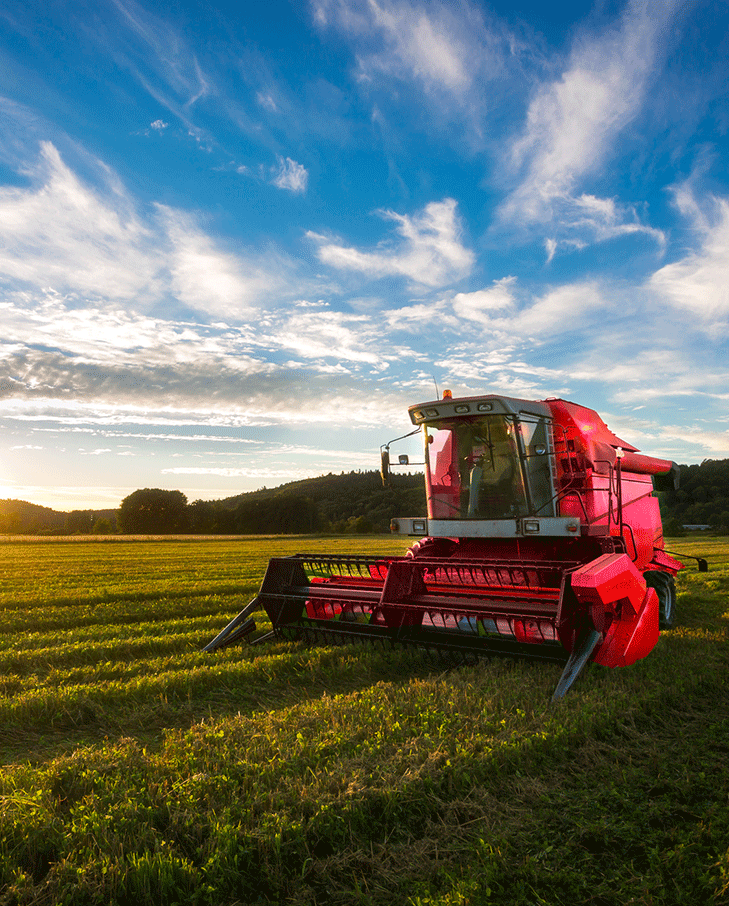
This interim evaluation covers the first three years of implementation of the Agribusiness Strategy, with a primary objective to identify issues useful to inform a future strategy.
The main methods used included a portfolio and document review, as well as client interviews. The evaluation samples include 23 projects and 13 policy dialogue activities.
An EBRD Strategy was of good quality but had limited bearing on the portfolio’s structure.
The strategy’s quality of design was good, thanks to solid diagnostics and intensive consultations, but it had some gaps. The diagnostics could have been more comprehensive, and better frame potential linkages to the Green Economy Transition. Some priorities needed better definitions for clearer and more strategic implementation. Finally, the Performance Monitoring Framework had little utility.
The strategy had limited bearing on operations, demonstrated by a difficulty in shifting to “new” priorities related to Green and Inclusive TQs on a larger scale. Competitive dominates the primary TQs as it has done in the past.
But the strategy appears to have led to some evolution. There was a shift among secondary TQs, with the proportion of Green and Inclusive TQs growing substantially during the Evaluation Period, indicating the Bank’s attempt to promote them through the projects’ smaller components.Most results were achieved despite the challenging context, but some priorities were missed, and resources were strained.
The Bank has made an important contribution during the last three years to the agribusiness sector in several COOs, particularly Ukraine, Türkiye, and those in Central Asia and made progress mostly on Competitive, Integrated, and Well governed TQs.
Many of the projects evaluated have struggled with achieving the desired TI at the scale initially planned or have not managed to deliver against secondary TI objectives, which were not core to their business model (e.g., Inclusive).
The Risk Sharing Facility proved to be an excellent tool and enabled many high TI projects with SMEs, particularly in Central Asia.The Bank has often demonstrated added value for the sector beyond investments, but untapped potential remains, especially on the innovation front.
The additionality of agribusiness projects has been generally strong although dependent on context, with some working capital loans being less additional.
Non-financial additionality was particularly strong, with the Bank’s Advice for Small Businesses, other TCs, with grants and policy dialogue playing a critical role and being highly appreciated by clients.
Although singled out in the strategy as an important cross-cutting area, support to innovative agribusiness techniques was limited.