Read our Cookie policy here.
Search
Search
Who we are
Overview: about the EBRDWho we are
Overview: about the EBRD
Explore the EBRD’s journey over the decades, investing in businesses, supporting economies and driving lasting change across its regions.
What we do
Overview: how the EBRD operatesWhat we do
Overview: how the EBRD operates
Across three continents, the EBRD supports the transition to successful market economies.
Work with us
Overview: how you can work with the EBRDWork with us
Overview: how you can work with the EBRD
We draw on three decades of regional knowledge and financial expertise to tailor our products and approaches to each client's needs.

 Eng
Eng
 Eng
Eng
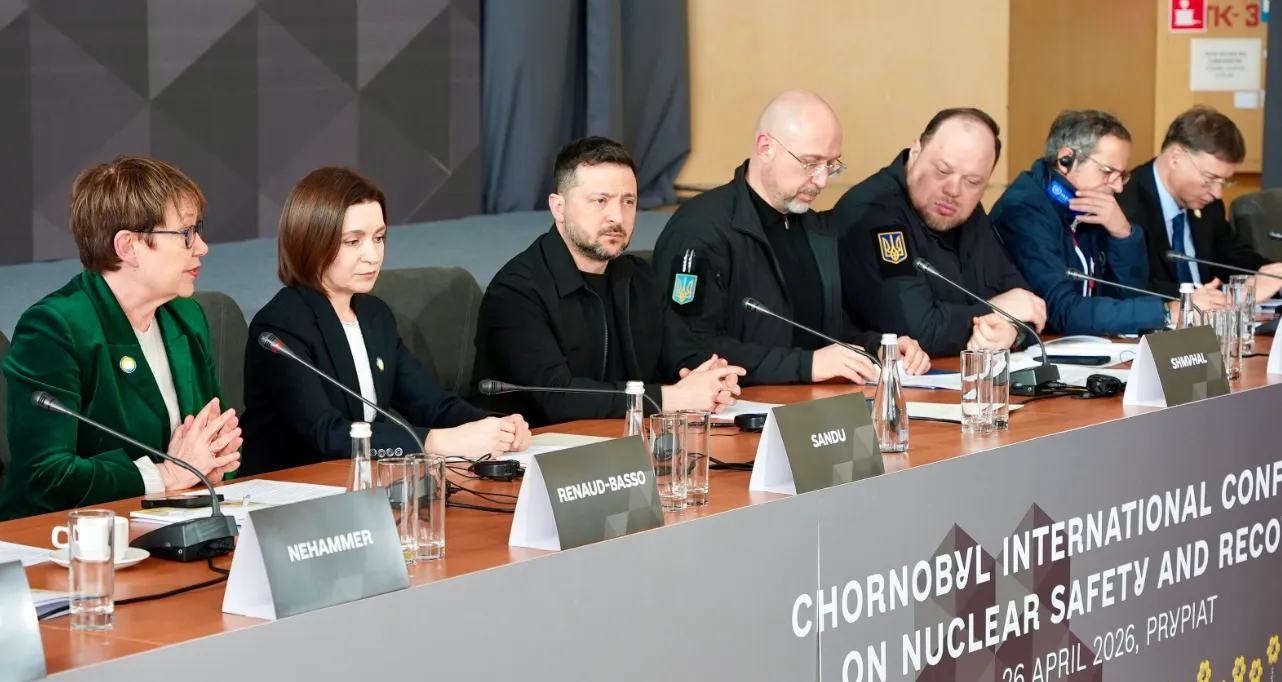
Delivered by: EBRD President Odile Renaud-Basso
Venue: Chornobyl Nuclear Power Plant
Event: Chornobyl conference “Restoring Nuclear Safety”
Good afternoon, Your Excellency, ladies and gentlemen.
It is a privilege to address you today at this important conference, dedicated to restoring security and safety at the Chornobyl Nuclear Power Plant.
It is also deeply moving to participate in the ceremony marking the 40th anniversary of the Chornobyl catastrophe, and to remember and pay tribute to the brave men and women who led the immediate response to the disaster.
The immense personal sacrifice and heroism of those individuals cannot be overstated. Many put their own lives at grave risk, and countless others paid a lasting price to protect communities far beyond the reactor site. Their courage, resilience and sense of duty in the face of unimaginable danger continue to command our respect and gratitude, reminding us of both the human cost of disaster and the extraordinary capacity for selflessness in times of crisis.
Chornobyl is a site woven into the DNA of the European Bank for Reconstruction and Development. The completion of the New Safe Confinement in 2019, following nearly two decades of international partnership, was one of our proudest moments and remains one of our most iconic and enduring legacies.
For nearly two decades, we have led the world’s largest international collaboration on nuclear safety. That effort epitomises what can be achieved when nations come together with a shared dedication, and it lies at the heart of the EBRD’s approach. The completion of the New Safe Confinement allowed Ukraine, for the first time since the accident, to look to the future with confidence that it had the infrastructure and expertise to manage Chornobyl’s uniquely complex legacy safely and securely.
Today we recognise, with frustration, regret and, I admit, a measure of anger, that this confidence has been shattered.
The Russian drone attack on the New Safe Confinement has placed nearly two decades of patient international collaboration in jeopardy. As we will hear today, the attack has severely compromised the Arch’s two core functions: confinement and a possibility for the safe deconstruction of the old sarcophagus and destroyed reactor unit. The damage is extensive, the path to recovery uncertain, and the clock is ticking.
At the EBRD, working in partnership with our Ukrainian colleagues and in close cooperation with the International Atomic Energy Agency, we are determined to support the restoration of the NSC’s functionality. Immediately after the attack, we commissioned a detailed damage assessment with the support of the French Novarka Consortium that constructed the Arch.
Preliminary technical assessments indicate that corrosion affecting the steel structure could jeopardise the Arch’s long term safety.
The programme now under way will establish a robust technical and decision making basis before any final commitment to full construction works. Donors such as EU, France and the UK have approved an allocation of €30 million to fund this essential preparatory phase.
However, we must be frank: the resources currently available are not sufficient. Our assessments indicate that repair works required to restore the NSC to full functionality by 2030 could cost at least €500 million. We welcome substantial additional pledges in 2026 to move beyond emergency measures and preparatory work to full implementation.
In closing, Chornobyl reminds us not only of the consequences of catastrophe, but also of what is possible when the international community acts with unity, determination and long term purpose.
The New Safe Confinement was never merely an engineering achievement; it was a statement of shared responsibility, of solidarity with Ukraine, and of our collective commitment to nuclear safety beyond national borders.
I am confident that together, we can once more protect this site, restore its vital functions and ensure that Chornobyl remains secure for future generations.
Thank you.
Cookie consent
Cookies are pieces of code used to track website usage and give audiences the best possible experience. Use the buttons to confirm whether you agree with default cookie settings when using ebrd.com.
Read our Cookie policy here.
These cookies cannot be disabled. They are essential for core functionality in ebrd.com to ensure a seamless and secure experience.
We use Adobe Analytics cookies to measure usage of the website in order to improve it and respond to end user actions. We review anonymised data on how people reach the site, where they click and so forth. Learn more here about specifics of our cookie use.
We use Adobe marketing cookies to enable us to customise ebrd.com to tailor the website and email marketing services based on the interests of each end user.