Search
Search
Who we are
Overview: about the EBRDWho we are
Overview: about the EBRD
Learn about the EBRD's journey to investing more than €220 billion in over 7,800 projects.
What we do
Overview: how the EBRD operatesWhat we do
Overview: how the EBRD operates
Across three continents, the EBRD supports the transition to successful market economies.
Work with us
Overview: how you can work with the EBRDWork with us
Overview: how you can work with the EBRD
We draw on three decades of regional knowledge and financial expertise to tailor our products and approaches to each client's needs.

 Eng
Eng
 Eng
Eng
Author: Bojana Vlajcic
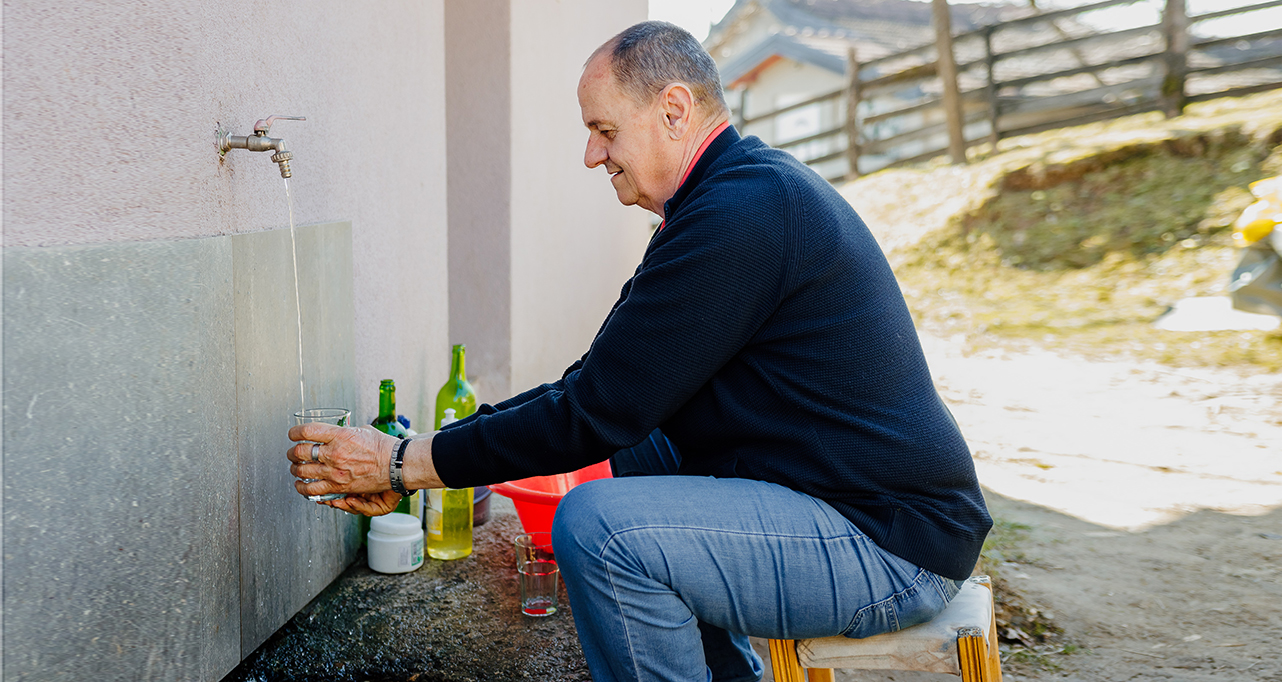
Dragan Bošnjak, a farmer and convenience store owner in Slavićka, a village near Banja Luka, Bosnia and Herzegovina, has waited decades for a proper water supply. Until recently, the community relied on unofficial water supply systems, including water tanks and wells, which couldn’t guarantee a stable water supply, let alone proper water quality checks and controls.
The situation is now changing, thanks to investment in water infrastructure supported by the European Bank for Reconstruction and Development (EBRD) and the European Union (EU). A €10 million loan from the EBRD and a €4 million grant from the EU have financed an extension of Banja Luka’s water supply network, which will bring safe drinking water to thousands of the city’s households.
The EBRD project to improve Banja Luka’s water supply was launched in 2019 and is now in its final stage. Over the course of three project phases, the city has laid 65 km of new water pipes and built a dozen new pumping stations. The goal is clear: to ensure that more people – especially those in rural areas – have access to safe, reliable water. This will not only improve sanitation but also reduce the risk of water-borne diseases.
For Dragan and his neighbours in Slavićka, this project is transforming lives. Most of them are farmers, growing vegetables and raising livestock. Having a proper, stable water supply will make their daily tasks and routines much easier.
“We’ve felt isolated for so long because we haven’t had a proper water supply. Having a proper water connection is about more than just household chores – it impacts everything, from taking care of the animals to our farming work. We’re incredibly grateful for this investment.”
Dragan is one of 17,000 new users who are due to be connected to Banja Luka’s upgraded water system. By the time the project is fully completed, the city’s water network will serve 95 per cent of its residents – up from around 80 per cent before the work began.
In addition to expanding access to water, the project will also help Banja Luka’s water utility company to reduce water losses, improve operational efficiency and provide higher-quality services to customers. This initiative forms part of the city’s broader long-term strategy to strengthen its water and wastewater infrastructure, improving access to clean drinking water while also addressing Banja Luka’s waste management challenges.
The EBRD’s investment in Banja Luka is part of a wider effort to improve water infrastructure across Bosnia and Herzegovina, with the city joining Sarajevo, Gradačac and Brčko in benefiting from the Bank’s commitment to addressing urgent water supply and quality issues.
The majority of these investments are part of the donor-supported EBRD Green Cities initiative, a strategic framework that addresses environmental and sustainability concerns through a combination of investment in municipal infrastructure, and energy and policy measures.
“The EBRD has supported cities across Bosnia and Herzegovina in improving their municipal services, from transport and water and wastewater networks to district heating,” says Stela Melnic, the EBRD’s Head of Bosnia and Herzegovina. “These projects are not only improving the daily lives of residents – as users of those municipal services – but also having a significant positive impact on the environment, and that’s why we remain committed to supporting them.”
As water flows into homes across Banja Luka, the project is bringing more than just access to clean drinking water. For residents like Dragan, it’s the start of a new chapter – one where health improves, daily tasks become easier, and economic opportunities grow.
“This investment has given us hope that things can get better,” Dragan says.
With its successful implementation, this project is not only transforming Banja Luka, but also serving as a model for other cities across Bosnia and Herzegovina, showing that with the right support, a brighter, healthier future is within reach.