
Search
Search

 Eng
Eng
 Eng
Eng
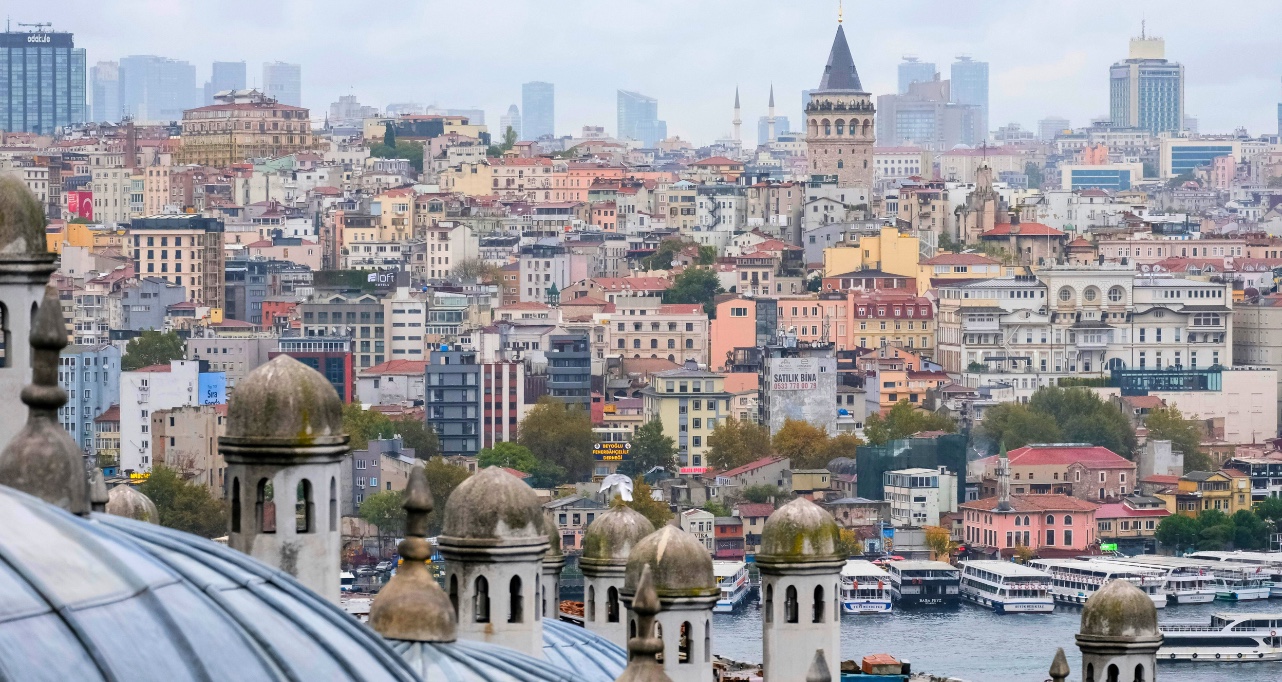
The European Bank for Reconstruction and Development (EBRD) invested a record €2.7 billion in Türkiye in 2025, making it the Bank’s largest country of operation once again in terms of the annual volume of investment.
The Bank invested in 54 projects in Türkiye in 2025, with 91 per cent of all investment going to the private sector.
The Bank had also delivered a record impact in the country in 2024, investing €2.6 billion.
Elisabetta Falcetti, the EBRD’s Managing Director of Türkiye and the Caucasus, said: “In 2025, our work in Türkiye reflected both the scale of the country’s investment needs and its long-term potential. From landmark private-sector transactions to targeted support for decarbonisation, digitalisation and human capital, the EBRD continues to mobilise international financing where it matters most. At the same time, our sustained earthquake response underscores our commitment to helping communities rebuild critical infrastructure, restore livelihoods and strengthen resilience for the future. Türkiye remains a strategic priority for the Bank, and we will continue to support its economic growth.”
The €315 million syndicated loan to Fraport TAV Antalya was a landmark transaction for the Bank in 2025. Provided to refinance a short-term bridge loan, this transaction was the EBRD’s largest syndicated deal of the year in the country, involving a large group of international financial institutions alongside existing lenders.
The EBRD’s response to the earthquakes of February 2023 in south-eastern Türkiye remained a major focus in 2025, representing one of the Bank’s largest ongoing commitments. This support spanned a wide range of activities, including reconstruction, finance for small and medium-sized enterprises (SMEs) and investment in critical infrastructure.
The Bank has now surpassed its initial pledge to the earthquake-affected regions, with total investment of €1.6 billion over the last three years.
As part of this response, the EBRD provided €195 million for two key infrastructure projects in the earthquake-affected cities of Adıyaman and Hatay in 2025: €95 million to finance the construction of wastewater and stormwater networks and facilities in Adıyaman; and €100 million to support the construction of the Arsuz sewerage network and the Üçgüllük wastewater treatment plant in Hatay.
In addition, the Bank provided financing for Enerjisa Enerji to support the reconstruction and modernisation of the electricity distribution network in the earthquake-affected Toroslar region, as well as the development and construction of solar power plants.
Reflecting a broader understanding of the earthquake’s impact, the EBRD also engaged with cities indirectly affected by the disaster, where public services had come under pressure owing to inflows of displaced people. In this context, the Bank provided €45 million to the municipality of Mersin to finance the construction of new wastewater facilities.
In 2025, 66 per cent of all investment supported the country’s transition to a green economy, with a particular focus on decarbonisation and renewables, and 61 per cent of EBRD total investment supported equal opportunities for women.
The EBRD invested in a range of green transition projects to boost the resilience and competitiveness of Turkish businesses, including a US$ 200 million loan to Enerjisa Enerji Üretim to support the construction of 250 MW of wind power plants in Muğla. The project was a landmark effort to promote the Just Transition agenda, as the company has committed to create a nationally accredited training programme to reskill coal-sector workers for roles in renewables, agriculture and tourism, creating further job opportunities in the country.
Elsewhere, after allocating €280 million to partner banks under its Türkiye Green Economy Financing Facility (GEFF) I and II in 2025, the Bank launched a third GEFF, totalling €1 billion.
The Bank also focused on the decarbonisation of hard-to-abate sectors, providing a €50 million loan to Çimsa to support investment under the company’s decarbonisation programme, and investing US$ 50 million in a Eurobond issued by Çimko Cimento ve Beton Sanayi, a joint stock company incorporated in Türkiye.
Human capital development also remained a priority in 2025, with the Bank supporting youth- and women-led businesses and rolling out its Youth in Business programme in Türkiye. This initiative is expected to mobilise up to €250 million of financing for young entrepreneurs. Complementing this effort, the EBRD provided a €75 million loan to Türkiye Sınai Kalkınma Bankası (TSKB) to improve access to finance for women and young people.
Finally, the Bank continued to uphold its commitment to SMEs in Türkiye, partnering with Akbank to provide US$ 130 million in support of inclusive growth and digital investment by SMEs; extending a €25 million loan to DenizBank under the Digital Transformation Financing Facility (DTFF) with the aim of helping manufacturing SMEs to improve their productivity by digitalising their operations; and providing a risk-sharing facility under Akbank’s Supply Chain Finance Programme for the benefit of DeFacto’s suppliers.
The EBRD is one of Türkiye’s key investors, with more than €23 billion committed in the country since 2009, largely in the private sector.