
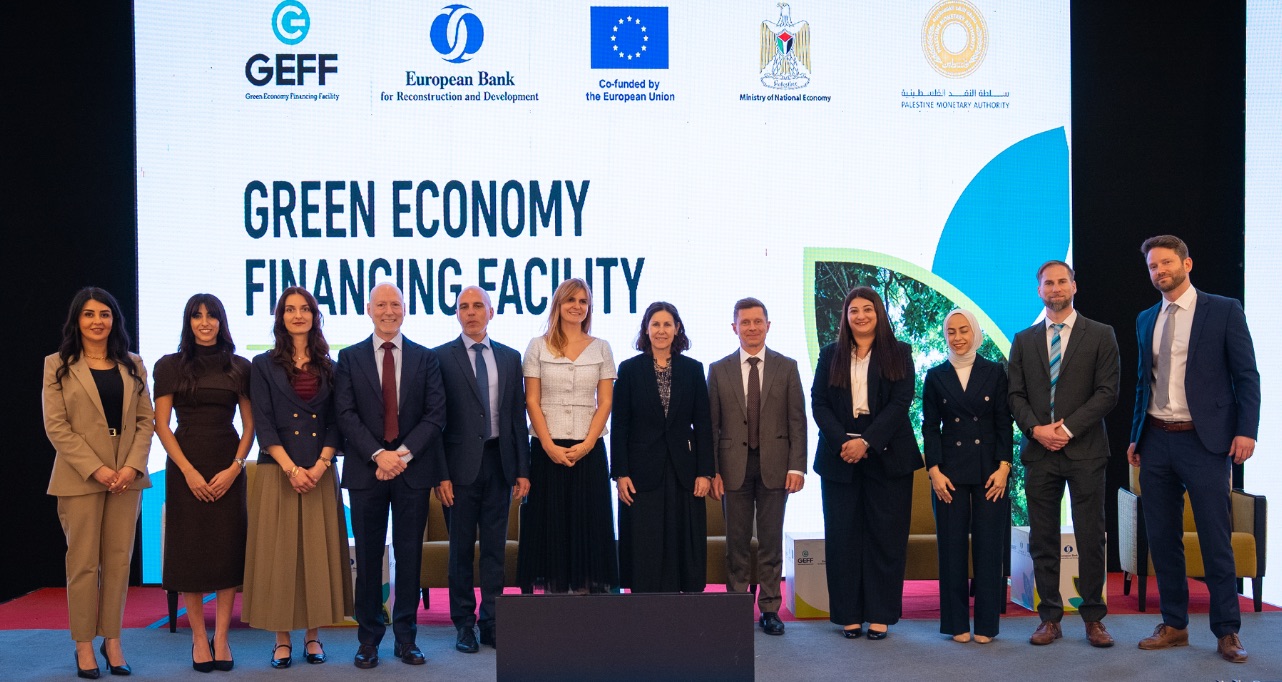
EBRD and EU launch Green Economy Financing Facility to support the Palestinian economy
€25.9 million programme to support green investments by businesses and households
22 Oct 2026
Who we are
Overview: about the EBRDWho we are
Overview: about the EBRD
Explore the EBRD’s journey over the decades, investing in businesses, supporting economies and driving lasting change across its regions.
What we do
Overview: how the EBRD operatesWhat we do
Overview: how the EBRD operates
Across three continents, the EBRD supports the transition to successful market economies.
Work with us
Overview: how you can work with the EBRDWork with us
Overview: how you can work with the EBRD
We draw on three decades of regional knowledge and financial expertise to tailor our products and approaches to each client's needs.

 Eng
Eng
 Eng
Eng
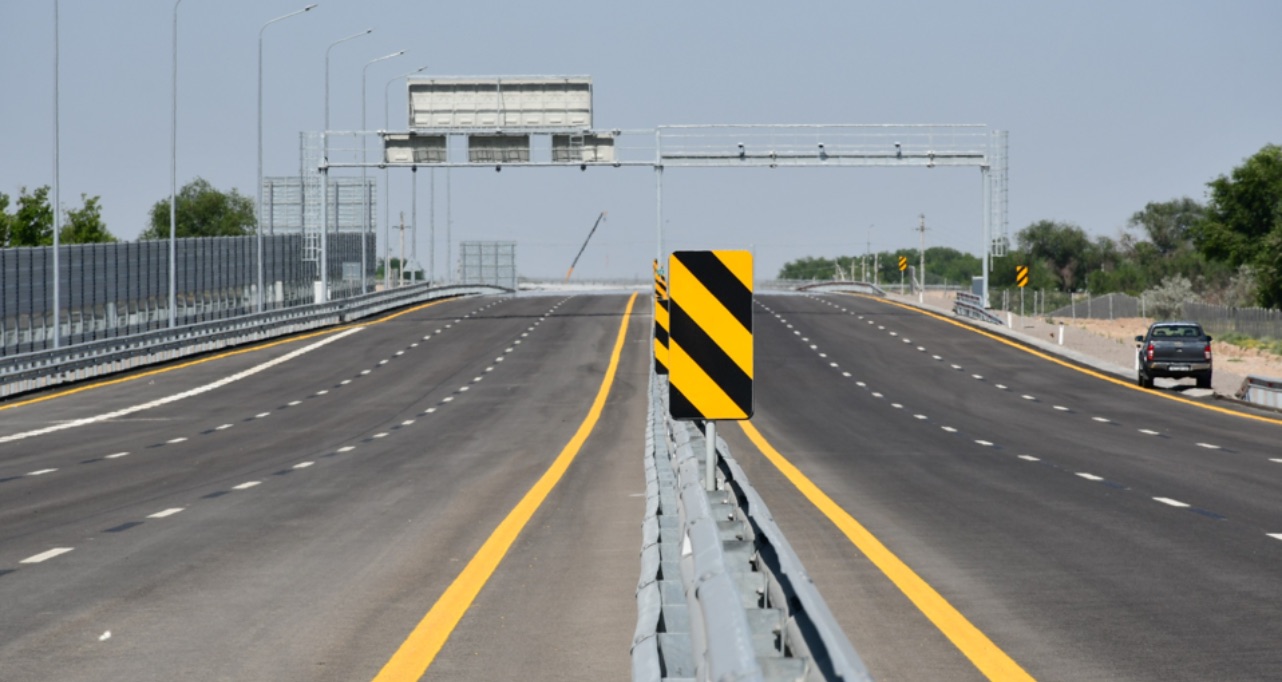
The European Bank for Reconstruction and Development (EBRD) is facilitating more fluid cargo and passenger traffic flows along the Trans-Caspian Corridor and supporting the establishment of sustainable transport connections in Central Asia by helping to finance the completion of upgrades to a key transport route in western Kazakhstan.
The EBRD is providing a loan of up to €230 million in Japanese yen equivalent to help Kazakhstan’s state-owned national road operator QazAvtoZhol to finish the modernisation of a 234 km section of road between the cities of Aktobe and Ulgaisyn. This is the second part of the Bank’s financing package for QazAvtoZhol (the first part having been provided in 2025), with co-financing provided by the Asian Infrastructure Investment Bank (AIIB).
This work will transform the existing single-carriageway category II road into a dual-carriageway category I road, improving a stretch of strategically important motorway that forms part of the Western Europe-Western China Corridor, Central Asia Regional Economic Cooperation (CAREC) Corridor 1 and European Route E38. The new road will help to establish Kazakhstan as a reliable gateway between Europe and Asia.
By financing this project, the EBRD and the AIIB are contributing to Kazakhstan’s national road programme, which is also supported by the World Bank, the Asian Development Bank and the Islamic Development Bank.
The construction and maintenance of the road are expected to be delivered through “design, build and maintain” (DBM) contracts. Unlike the engineering, procurement and construction contracts that are typically used for such projects, DBM contracts introduce a lifecycle-based approach to road infrastructure planning.
The road will also be equipped with intelligent transport systems such as e-tolling, weigh-in-motion sensors and weather-forecasting equipment to enhance road safety and improve traffic management.
In the context of this long-term strategic cooperation, Kazakhstan’s Ministry of Transport and the EBRD have agreed to further promote the digitalisation of the country’s road sector. As envisaged by a memorandum of understanding to be signed at the EU Connectivity Agenda Platform launch event in Brussels on 23 June 2026, the parties will advance Kazakhstan’s single digital platform for road asset management, E-Joldar, and introduce intelligent road control solutions.
The EBRD has invested almost US$ 12.8 billion (€11 billion) in Kazakhstan to date through 354 projects, making the country the largest and longest‑running recipient of EBRD investment in Central Asia.
€25.9 million programme to support green investments by businesses and households
22 Oct 2026

Video
KumKuma restaurant in Armenia is harnessing solar energy with EBRD and EU support
21 Oct 2026
EBRD President to participate in the Berlin Process Leaders' Summit
21 Oct 2026