Search
Search
Who we are
Overview: about the EBRDWho we are
Overview: about the EBRD
Learn about the EBRD's journey to investing more than €220 billion in over 7,800 projects.
What we do
Overview: how the EBRD operatesWhat we do
Overview: how the EBRD operates
Across three continents, the EBRD supports the transition to successful market economies.
Work with us
Overview: how you can work with the EBRDWork with us
Overview: how you can work with the EBRD
We draw on three decades of regional knowledge and financial expertise to tailor our products and approaches to each client's needs.

 Eng
Eng
 Eng
Eng
Author: Altynai Nanaeva
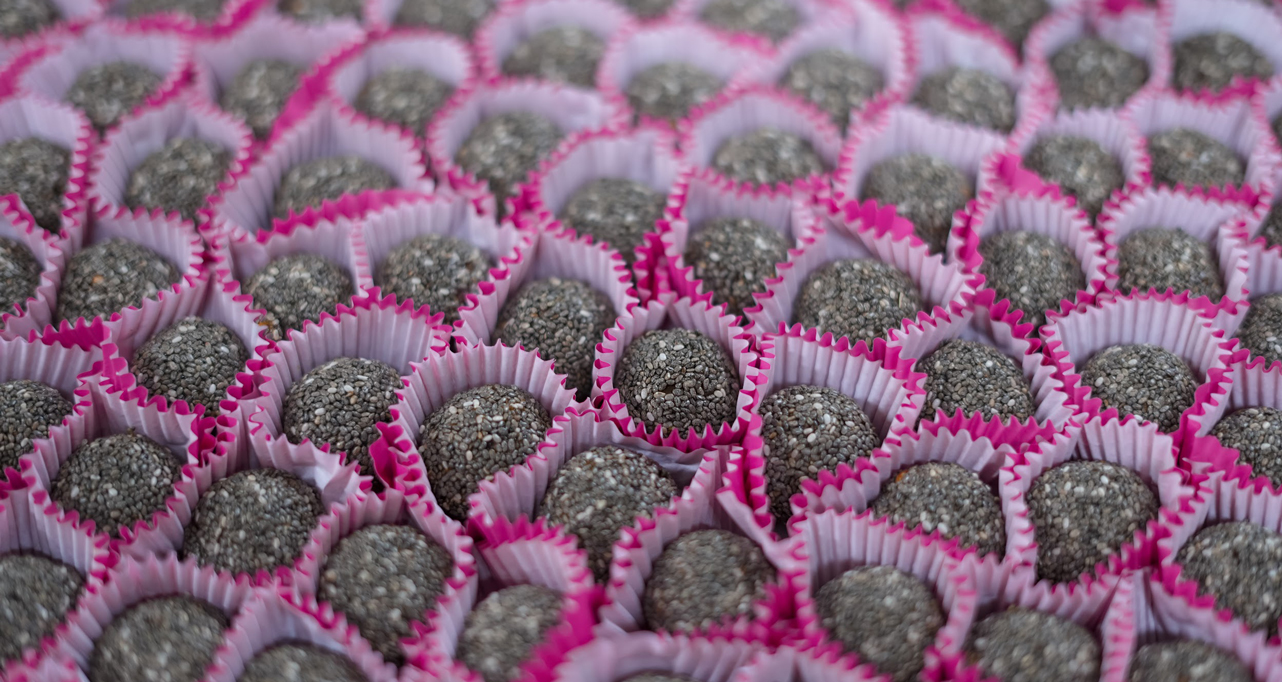
Eliza Choibekova’s business Tunuk began with a problem. Her daughter, Aizhamal, developed an allergy to regular sweets. With everything sold in the shops suddenly off-limits and her daughter left unable to indulge her sweet tooth on special occasions, Eliza felt she had to act.
Enter body text here.“I remembered how my grandmother used to make homemade treats from dried fruits and nuts,” Eliza says. “I decided to try something similar.”
What started in her home kitchen soon grew into something bigger. The sweets were healthy, tasty and offered an alternative for families, including those with diabetes. A breakthrough moment came at one of the city’s most famous confectionery shops. Eliza offered samples and within two hours everything was sold out. This success opened doors to supermarkets across the city.
Healthy eating had always been important for Eliza’s family. She avoided heavily processed flour and encouraged her five children to enjoy more vegetables, and this philosophy naturally carried through to her brand.
“All our products are preservative‑free and developed with guidance from a nutritionist,” she says.
Today, Tunuk’s offering includes fruit‑and‑nut sweets, cold‑pressed oils such as apricot kernel and pistachio, natural flours and powders, and herbal teas.
Eliza’s work to build the brand benefited from involvement with the EBRD’s Advice for Small Business programme, which in Central Asia is supported by the Women Entrepreneurs Finance Initiative (We-Fi). Before working with the programme, her products were sold under different names and lacked a cohesive identity, making it difficult for customers to recognise the brand. The support she received from the EBRD helped her move the brand and the company forwards.
With the help of a local consultant, all product lines were brought together under one brand, Tunuk, a word meaning purity and transparency in Kyrgyz. The team also learned proper accounting, budgeting and production planning, and developed a long‑term growth strategy.
As Tunuk’s packaging and recipes improved, the company gained the confidence to enter retail chains and exhibitions. Its turnover has since increased by 30 per cent.
Today, Eliza employs 11 people and is preparing to launch a full production workshop that meets the highest standards for food production. Demand for Tunuk’s cold‑pressed oils continues to rise and the brand is strengthening both domestically and abroad.
Eliza also participated in the EBRD Mentorship Programme. Her mentor, Zuhra Babadjanova, represents Kainar Ice Cream, part of the wider Kainar Group, one of the leading restaurant, coffee shop and grocery chains in the Kyrgyz Republic.
Zuhra helped Eliza to understand how to scale up operations, encouraged her to visit trade shows and inspired her to think bigger. For Eliza, this mentorship played a personal and professional role, giving her the chance to see her business as something that could truly grow.
“Although a culture of healthy eating is still new for many families in the Kyrgyz Republic, demand continues to grow,” she says proudly. “Now we’re going to focus more on cultivating healthy food habits among children. We’re planning to produce more varieties of child-friendly snacks and packaging, all based on fruits and nuts. We’re also launching our new workshop soon.”