
Search
Search

 Eng
Eng
 Eng
Eng
At the age of 28, Endri Hoxha faces a choice that many young people in the Western Balkans know well: stay or leave.
Thousands of people across the region look abroad for opportunity, often drawn by the promise of a future in the European Union (EU). But Endri, a professional kayaker from the Albanian city of Berat, wants something different. Despite holding a Master’s degree in economics, he does not dream of starting over somewhere else. He wants to build something at home.
One day, he hopes to create a business bringing together the things that matter most to him: kayaking, nature and Berat – the city where he was born and where he wants to remain, close to his friends and family.
“There are many tourists visiting Berat and there is great potential to develop additional services and experiences for visitors,” he says. “I would like to do something in this area, while staying in my hometown.”
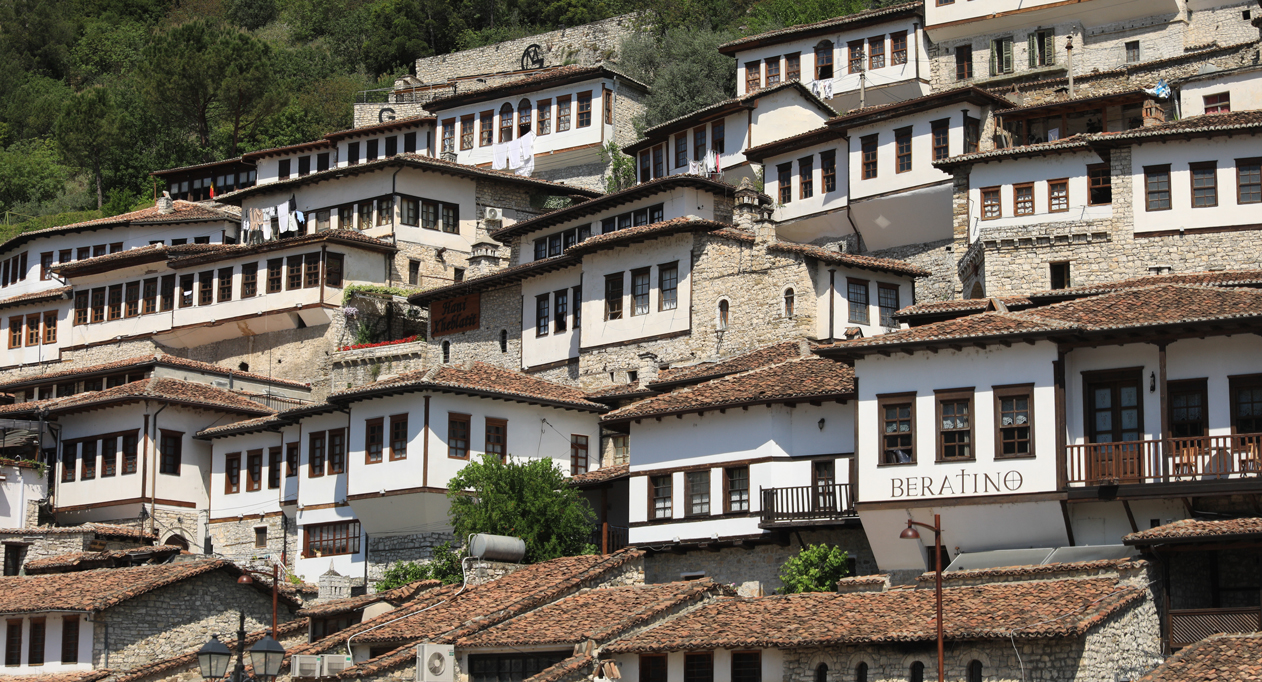
It is not hard to see what he means. The growing volume of visitors has brought opportunity with it. Restaurants are full, small shops are busy, tour operators are expanding and family-run wineries are welcoming more and more guests. But for tourism to grow, Berat also needs the infrastructure to support it.
In recent years, the city has benefited from investments under the Albania Infrastructure and Tourism-Enabling Programme, supported by the European Bank for Reconstruction and Development (EBRD) and the EU. Designed to support tourism development across Albania, the programme combines infrastructure improvements with support for tourism-related businesses and skills, helping places such as Berat build on their cultural and natural assets.
“Last year, a new bridge over the Osum River was opened, connecting previously isolated settlements with central Berat,” says Marius Qytyku, Head of the Projects Unit at the Municipality of Berat. “What used to take 50 minutes now takes less than 10.”
The bridge is one example of how the programme is helping improve access, connectivity and the overall visitor experience, while also supporting local economic development.
Elsewhere in and around Berat, new roads are changing how people move through the area. One now leads to the Tomorri National Park, while another that is under construction will improve access to the city’s historic fortress. Together, these investments are expected to make Berat’s main attractions easier to reach, while also making everyday life simpler for local residents.
The effects can already be felt beyond the city centre.
About 12 kilometres from Berat lies Alpeta, a family-owned winery that has grown from a traditional wine producer into a wider agritourism business, offering accommodation, food and guided visits to nearby Tomorri. Like many businesses in the area, it has benefited from the city’s rising profile and improved access.
With support from the EBRD’s Advice for Small Businesses and the EU, Alpeta has also received certification in four areas – health and safety, food safety, environmental management and quality standards – helping it strengthen its offering and build recognition as a high-quality destination.
“We have visitors every day and we are seeing the number of tourists increasing every year,” says the owner.
A similar story is unfolding at Pupa Winery. For Admir Pupa, the business is rooted in family history. “This business was started by my father in 1993 with the first vineyards,” he says. “In 2020, we began restoration work, building the hotel, the restaurant and the tasting hall, and in 2025 we added another 20 hectares of vineyards.”
With support from the EBRD and the EU, Pupa Winery has clarified its organizational structure and improved financial and operational processes. For a growing family-run winery, this support has been an important part of building the skills and productivity needed to welcome more visitors and broaden its reach.
“As a result of our cooperation with the EBRD, we now welcome more visitors to our winery,” says Admir.
For Endri Hoxha, stories like this offer something more tangible than optimism. They show what becomes possible when investment in infrastructure is matched by support for local businesses and skills. In Berat, tourism is creating more than new services and stronger visitor numbers. It is helping create the conditions for people like Endri to build a future at home while also helping the country expand as a tourism destination.