
EBRD and EU launch Green Economy Financing Facility to support the Palestinian economy
€25.9 million programme to support green investments by businesses and households
22 Oct 2026
Who we are
Overview: about the EBRDWho we are
Overview: about the EBRD
Explore the EBRD’s journey over the decades, investing in businesses, supporting economies and driving lasting change across its regions.
What we do
Overview: how the EBRD operatesWhat we do
Overview: how the EBRD operates
Across three continents, the EBRD supports the transition to successful market economies.
Work with us
Overview: how you can work with the EBRDWork with us
Overview: how you can work with the EBRD
We draw on three decades of regional knowledge and financial expertise to tailor our products and approaches to each client's needs.

 Eng
Eng
 Eng
Eng
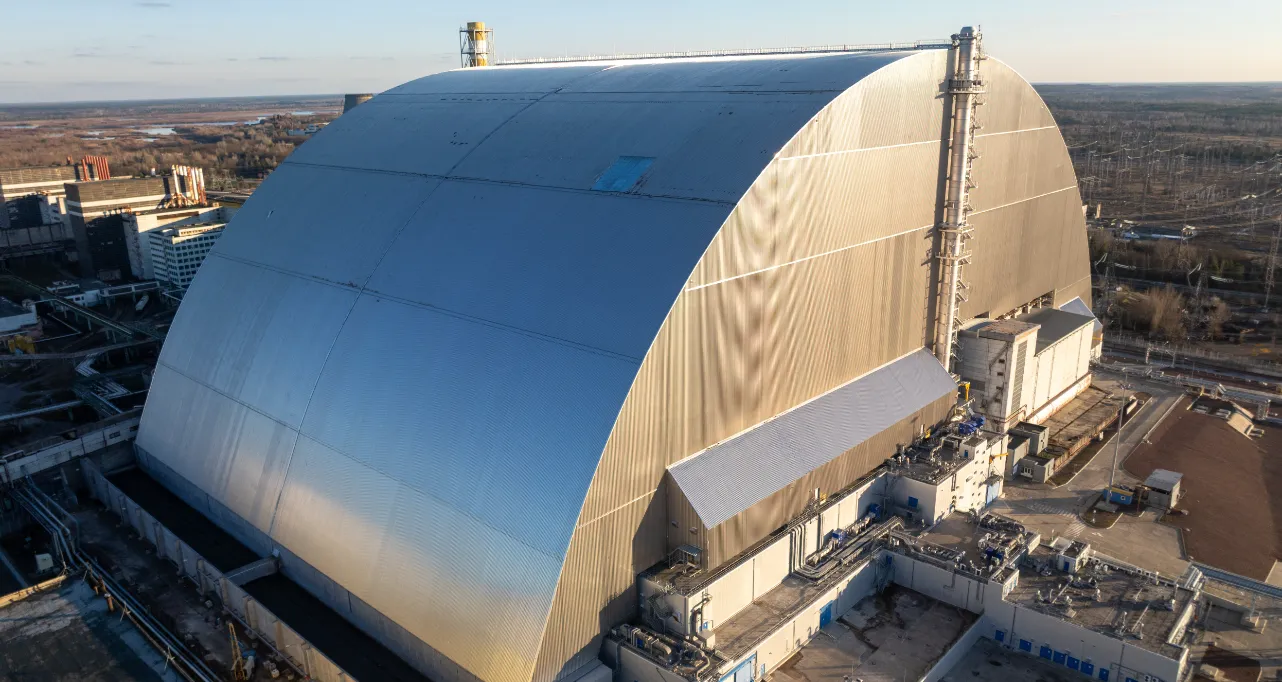
Odile Renaud-Basso, President of the European Bank for Reconstruction and Development (EBRD), has highlighted the need to repair at least €500 million of damage caused last year to the Chornobyl New Safe Confinement by a Russian drone attack. Her intervention came on the eve of Sunday’s 40th anniversary of the Chornobyl nuclear accident in 1986 in the former Soviet Union.
“I take the opportunity to call on the international community to step up and help restore nuclear safety to the levels preceding this reckless attack,” President Renaud-Basso said.
She added: “The challenge before us is significant, but so too are our experience, our knowledge, and our capacity to act together. If we respond with the same spirit of cooperation that united us in the past, Chornobyl can again stand as a testament not to tragedy alone, but to responsibility, resilience, and hope.”
Chornobyl is part of the EBRD’s very identity. The Bank has led global efforts to stabilise and manage risks at Chornobyl since 1995, mobilising over €2.5 billion in international contributions – much of it from the Group of Seven (G7) leading industrial nations - and providing more than €700 million of its own resources for nuclear safety and decommissioning projects linked to the site.
That success was jeopardised in February 2025, however. The Russian drone caused a fire inside the huge shield over the destroyed reactor, the New Safe Confinement (NSC), which had been slid over the old sacrophagus.
The drone strike severely affected the NSC’s two primary functions: containing radiological hazards and supporting long-term decommissioning.
Key systems designed to ensure the NSC’s 100-year lifespan have been rendered non-operational, with a significant risk of further deterioration and corrosion of the main steel structure in the absence of repairs. Formal pledging events to raise money for repairs will be expected closer to autumn.
The EBRD now administers the International Chernobyl Cooperation Account (ICCA), created in 2021, a follow-on fund supporting hazard reduction at the site. It supports dismantling, stabilisation, safety upgrades, monitoring and urgent response measures. ICCA currently has funding of €70 million, including contributions last year from France, the United Kingdom and the European Union.
The EBRD has deployed more than €9.7 billion in Ukraine since the Russian invasion of 2022.
€25.9 million programme to support green investments by businesses and households
22 Oct 2026
Video
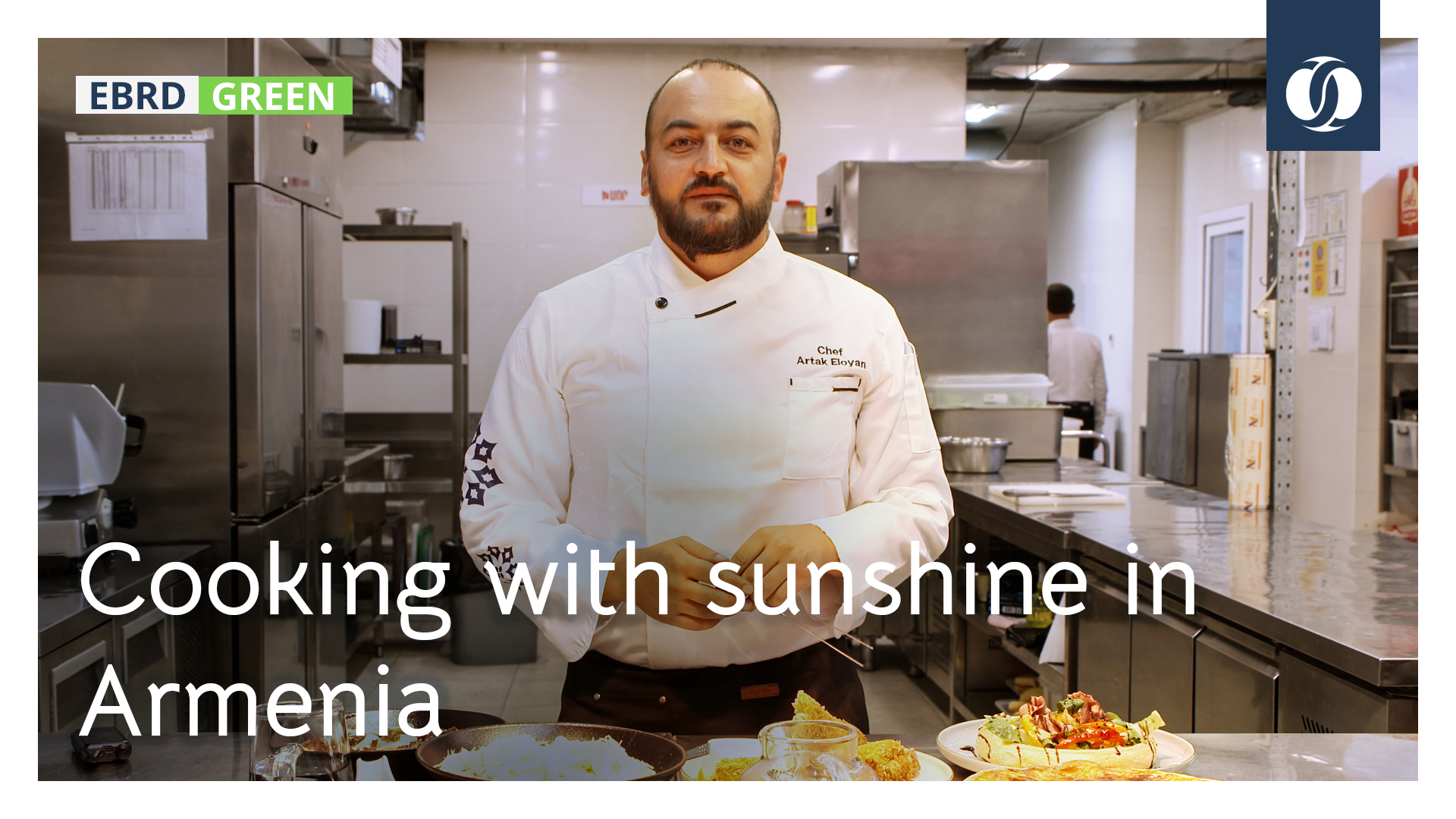
KumKuma restaurant in Armenia is harnessing solar energy with EBRD and EU support
21 Oct 2026
EBRD President to participate in the Berlin Process Leaders' Summit
21 Oct 2026