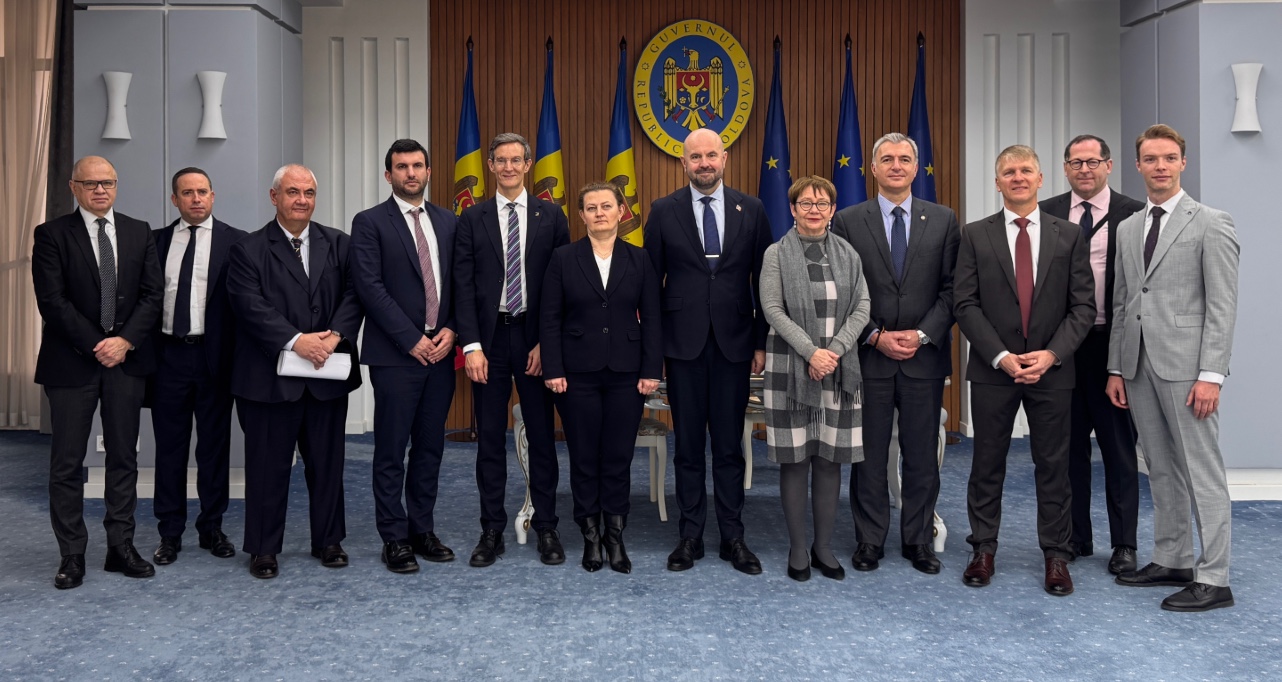
- EBRD lends further €150 million to Moldova to rehabilitate key roads
- Investment to improve connectivity with EU candidate Moldova’s European neighbours
- Reconstruction in neighbouring Ukraine is expected to increase EU-Ukraine traffic
The EBRD is lending a further €150 million to
Moldova, adding to €150 million lent in 2024, to finance the rehabilitation of key roads in Moldova and around its capital, Chisinau. Together with a €40 million signed in June for an earlier roads project, the latest signing brings the EBRD’s total signed funding for the sector this year to €190 million.
The increased loan will allow the government to upgrade and widen the M2 Chisinau ring road, upgrade the M1 Chisinau to Leuseni section running to the Romanian border in the
EU, and purchase specialised equipment and software for a Road Asset Management System.
The two roads are part of the Trans-European Transport Network (TEN-T), which makes Moldova the gateway between the European Union (EU) to its west and countries to its east, including Ukraine. Traffic between the EU and Ukraine is expected to increase sharply once post-war reconstruction begins.
The EBRD’s investment will support the Moldovan government’s efforts to ensure key road links are maintained to standards that will enable economic growth, regional integration and trade. Improving these two roads, both part of Moldova’s transport link to Romania, will allow for better connection between Moldova and its neighbours Ukraine and Romania, in line with the EU Solidarity Lanes initiative.
The investment is part of a large-scale road rehabilitation programme financed by the EBRD. The Bank has now agreed to invest a total of €692 million in Moldovan road upgrades.
As part of the project, the EBRD is also helping the government develop a national e-mobility strategy that promotes the deployment of electric fleets and vehicle charging infrastructure in the country.
In November 2023 the European Commission recommended that the Council begin accession negotiations with Moldova, which was granted EU candidate status in June 2022. To secure sustained economic growth despite
Russia’s war on Ukraine, it is vital that the country’s road sector provides improved access to EU markets, as well as maintaining access to its traditional markets to the east.
Although the war and the sanctions imposed by the EU on Russia have severed these traditional trade links, Moldova’s strategic position ensures transport and continued trade flows are possible from Ukraine to Romania, to the Danube River via Moldova’s Giurgiulesti port, and to other EU countries. Safe, well-maintained and modern road networks complying with international standards are vital.
The EBRD is Moldova’s biggest institutional investor. Since the start of Russia’s full-scale invasion on neighbouring Ukraine, the Bank has provided €1.7 billion to Moldova to help mitigate the economic consequences of the war on the country’s economy.
Overall, the Bank has invested almost €2.9 billion in 195 projects to date in the country, with 64 per cent of its portfolio in sustainable infrastructure.


 Eng
Eng