Search
Search
Who we are
Overview: about the EBRDWho we are
Overview: about the EBRD
Explore the EBRD’s journey over the decades, investing in businesses, supporting economies and driving lasting change across its regions.
What we do
Overview: how the EBRD operatesWhat we do
Overview: how the EBRD operates
Across three continents, the EBRD supports the transition to successful market economies.
Work with us
Overview: how you can work with the EBRDWork with us
Overview: how you can work with the EBRD
We draw on three decades of regional knowledge and financial expertise to tailor our products and approaches to each client's needs.

 Eng
Eng
 Eng
Eng
Author: Jelena Pajic
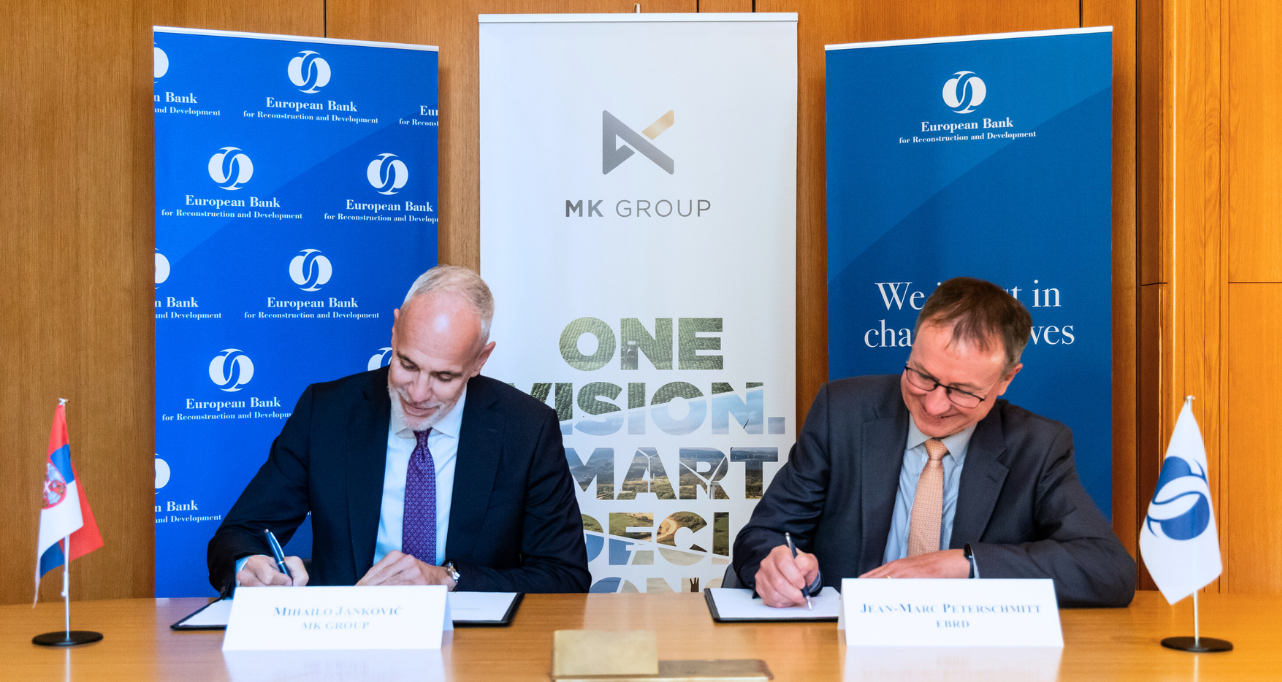
The European Bank for Reconstruction and Development (EBRD) and MK Group, a valued long-standing client with whom the EBRD has been cooperating for almost 20 years, have signed a €40 million sustainability-linked loan at the EBRD Consumer Rules Summit in Montenegro, highlighting an important milestone in their cooperation and their mutual commitment to sustainable development.
The EBRD loan is the first sustainability-linked loan for MK Group and will help the company to diversify its operations by entering the ethanol production market, catering to the needs of the food and other industries, and expanding its winery business in Serbia. The loan structure, which entails sustainability objectives, underlines MK Group’s decarbonisation efforts.
The project will bring environmental and digital improvements, with the Group expecting to cut its greenhouse gas emissions by 30 per cent by 2032 and enhance its cybersecurity and digital infrastructure through targeted technical support from the EBRD – all aimed at boosting sustainability, resilience and competitiveness.
MK Group is one of the leading companies in Southeast Europe, operating in Serbia, Montenegro, Croatia, and Slovenia, with operations in food and agribusiness, tourism, real estate, and renewable energy industries.
The EBRD is a leading institutional investor in Serbia and has invested more than €10 billion through 390 projects, most of which have supported the private sector. In Serbia, the Bank’s priorities include enhancing private-sector competitiveness, productivity and access to finance.