
Search
Search

 Eng
Eng
 Eng
Eng
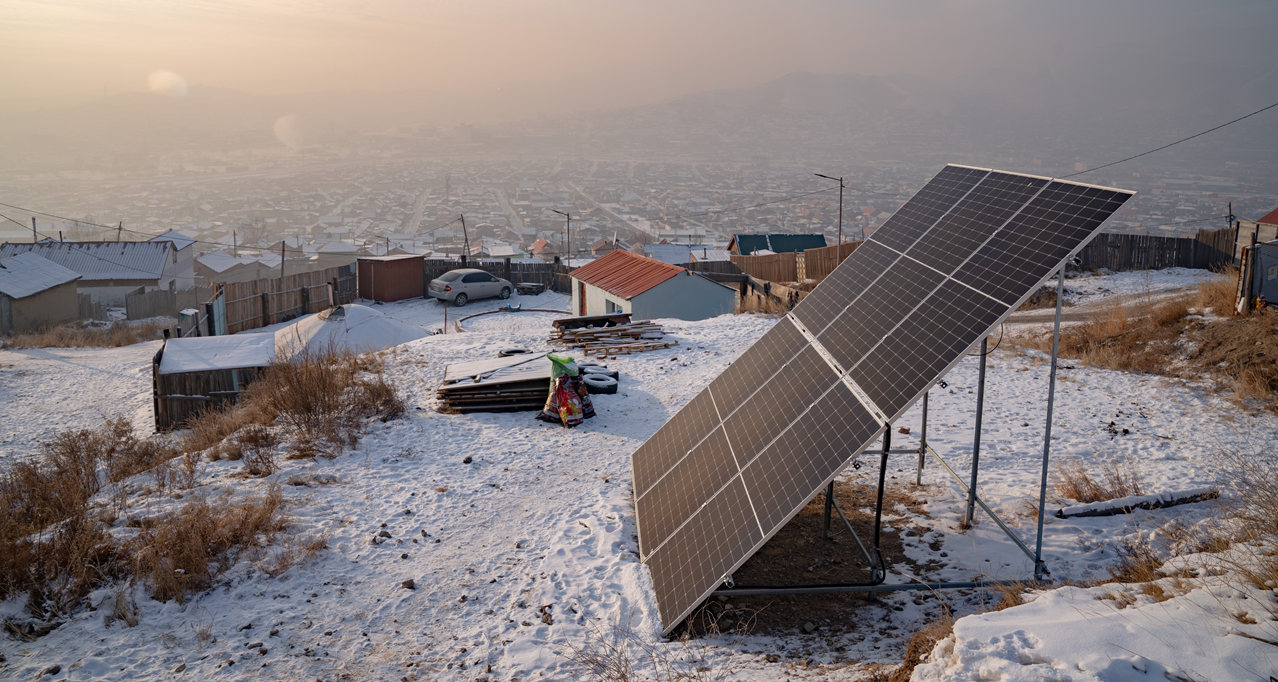
In Ulaanbaatar, Mongolia, families who live in ‘gers’ (Mongolian yurts central to the nomadic way of life) wake throughout the night in winter to feed their stoves coal: at 01.00, 03.00, and again before dawn, just to survive freezing temperatures. The very fuel that keeps them warm also makes the city one of the most polluted capitals in the world, with each household on average responsible for 12 to 13 tonnes of carbon emissions.
URECA is a climate tech startup whose pilot Coal-to-Solar Initiative project pairs technology with carbon finance to direct capital into scalable, high-impact climate solutions while supporting low-income households to transition to clean energy and tackling severe air pollution.
They propose a new technology designed to restore trust and credibility in climate finance, making it more accessible to communities. With help from the EBRD’s Star Venture programme, URECA is now better positioned to scale its climate solution.
Carbon markets – systems for trading carbon credits and offsetting greenhouse gas emissions – have often been criticised for their inefficiencies, driven by lack of information, transparency and other structural flaws.
“Getting carbon emission verified is notoriously bureaucratic. It's extremely costly and usually requires external experts flying in to monitor a project’s success. I was involved in a project that took us about US$ 100,000 (EUR 84.072,00) to get certified under the VERRA standard. So it's about a year's worth of work that needs to happen,” recalls Orchlon.
There are nearly 1 million families living in the more traditional and lower-income ger districts, burning coal in the winter. Beyond pollution, coal presents a more immediate danger to families: every month, carbon monoxide poisoning from improperly lit stoves causes overnight deaths. In this instance, negligence can prove fatal.
“The question that we posed ourselves was: ‘If other large-scale renewables are able to generate carbon credits on the premise that they’re reducing emissions and then sell those credits and get additional revenue, how does someone living in a traditional Mongolian yurt and transitioning away from coal energy towards solar achieve the same thing?’” says Orchlon.
Back when the EBRD was first introduced to URECA through the Bank’s Star Venture programme, the founders were developing a tech platform to connect local grassroots greenhouse-gas-reducing projects with investors, while making carbon credits more accessible and credible. Since then, their focus has shifted to helping households transition to clean energy through the Coal to Solar project, delivering tangible benefits for both families and the environment.
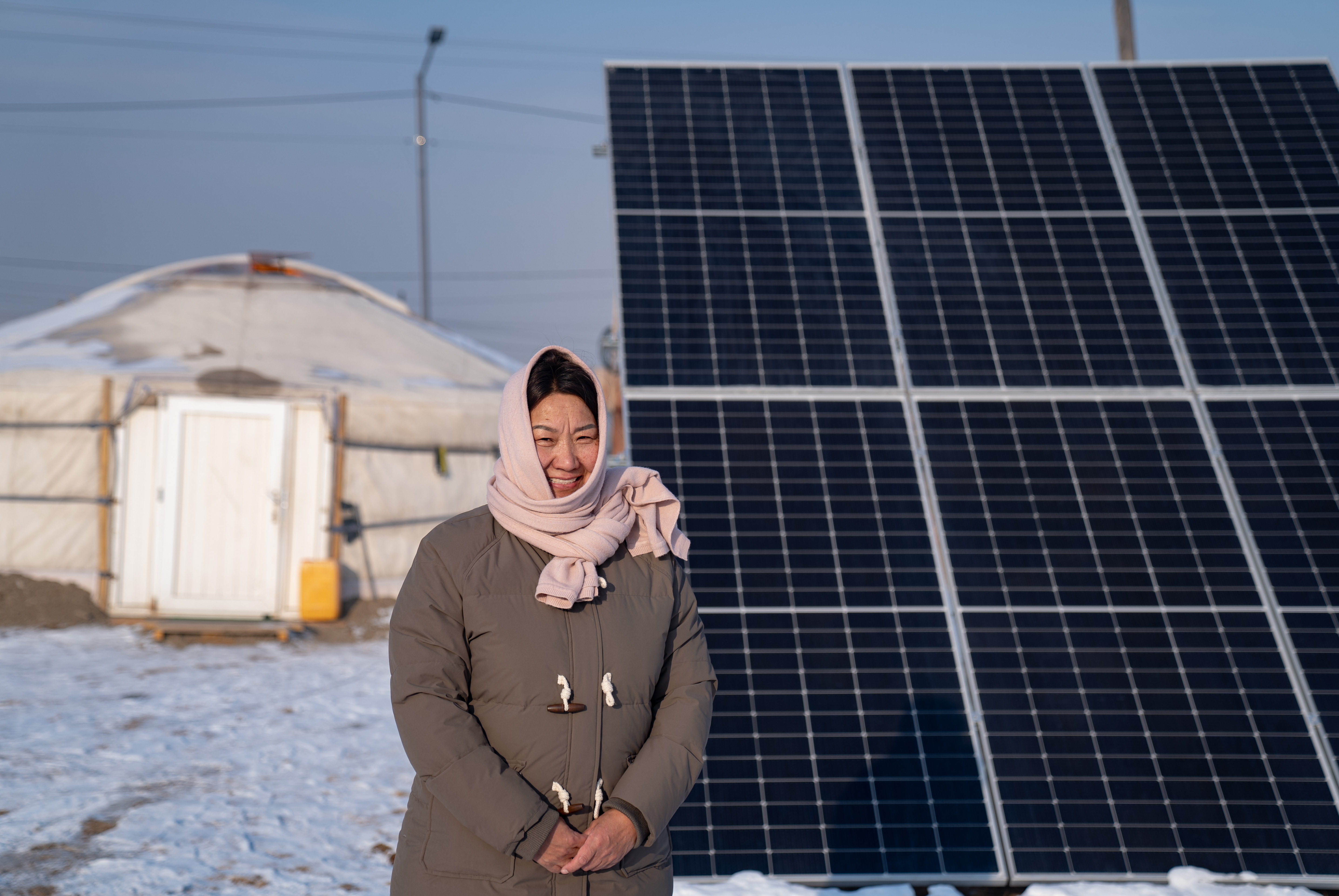
Through two years of testing and piloting, URECA developed a plug-and-play system that enables coal-dependent households to switch to renewable energy while financing the transition.
As Orchlon explains, cost is a major factor in climate tech adoption. With that in mind, the team focused on making the technology reliable and affordable by researching and developing both their hardware embedded systems and software internally.
Their infrastructure combines an array of – as Orchlon puts it – “low-cost, dumb, but very high-quality devices” like solar panels, inverters and electric heaters, all integrated with URECA’s verification, monitoring and reporting technologies. The latter include IoT sensors, AI, and other tools that track energy use in real time once families switch to renewable energy.
In practice, these systems allow URECA to insulate a yurt, install solar panels and batteries, then deploy smart sensors that track air quality, humidity and other indicators at five-minute intervals to verify whether any coal burning occurs throughout the day. Emission reductions are automatically calculated, continuously verified, and monetised through URECA’s platform, enabling families to fund their transition to renewable energy with carbon credits they generate entirely on their own.
Since all of these devices are interconnected, each household effectively becomes a small virtual power plant that can be both monitored and controlled. Homes can operate in sync with the grid, ensuring no additional strain during peak demand, while remaining self-sustaining when the grid is under pressure.
By the end of 2025, the team had almost 200 households using their technology. Their goal is to transition over 100,000 households by 2030. That would mean about 1.3 million tonnes of CO2 removed from the air per year, and Ulaanbaatar’s air pollution reduced by more than 70 per cent. This would also represent the first truly ‘just’ energy transition at global scale: bringing the lowest-income households into clean energy markets in one of the coldest capitals in the world.
With help from the EBRD’s Star Venture programme and the European Union, URECA received the Gold Standard certification for carbon credits, one of the leading standards in the voluntary carbon market and a seal of approval that will help will attract global partners, enable carbon credit trading, and accelerate the adoption of clean energy solutions.
Making the tech affordable and reliable was their first challenge. Next came getting families in Ulaanbaatar to adopt their technology, as they did not believe that they could survive -30°C temperatures on solar panels. “The key factor was giving families the option to switch and empowering them with the confidence that their homes would be safer at night, their air cleaner and their children safer,” adds Amar.
Orchlon says that cost was another important factor that he and his team needed to address: “The discourse around climate change is at times so far removed from the reality of these families, who don’t burn coal because they like coal, but rather to survive. Although they might recognise the benefits of renewable energy, they see it attached with a hefty price tag. We took a very pragmatic approach. Once we started framing the issue from their perspective and really bringing it down to the basics of how URECA could impact them positively day to day, we saw them start to let their guard down and accept our proposal.”
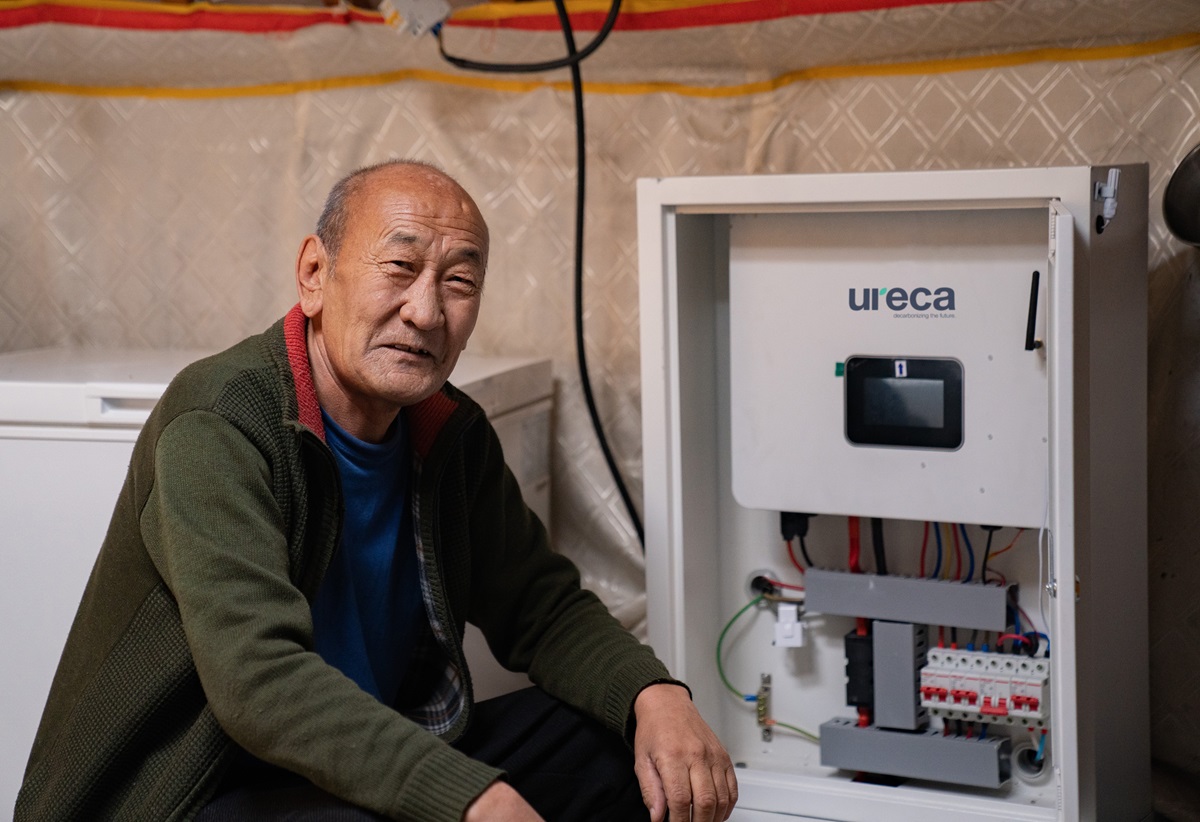
The impact they have seen on the ground has been remarkable. Hundreds of households have now gone through two or even three winters without burning a single lump of coal, dramatically improving quality of life.
Indoor air quality has improved significantly and there have been notable gains in health, particularly among children.
Families participating in the pilot report fewer illnesses, including a sharp decline in seasonal flu and improved overall well-being.
The shift has also delivered major productivity gains: households no longer need to wake several times each night to replenish coal stoves.
Orchlon is optimistic about their potential: “If we are successful in securing large-scale carbon offtake volumes – which we believe we can – then the model relies on competitive market fundamentals rather than public budgets or philanthropy,” he asserts.
Mongolia’s evolving bilateral carbon cooperation with the likes of Singapore is creating practical pathways for governments and companies to access Mongolian carbon credits through trusted platforms, helping unlock financing for household clean energy transitions.
“What we’ve done is position thousands of low-income families as independent generators of those credits, able to sell directly into an existing global market,” concludes Orchlon.
And if families living in felt yurts can rely on solar power to survive -30°C degree winters for three to four months, it proves a broader point: a clean energy transition is possible anywhere. The model is inherently replicable.URECA is now focused on developing utility-scale renewable energy and commercial residential solar projects, showing how grassroots, community-based initiatives can have a global impact.