

EBRD lends US$ 20 million to Futurefert in Egypt
Funds will be used to construct and operate three plants in Suez Canal Economic Zone
02 Apr 2026

 Eng
Eng
 Eng
Eng
The European Bank for Reconstruction and Development (EBRD) has today announced the shortlist for the 2026 EBRD Literature Prize, featuring 10 books in English translation from 9 of the countries in which the Bank operates.
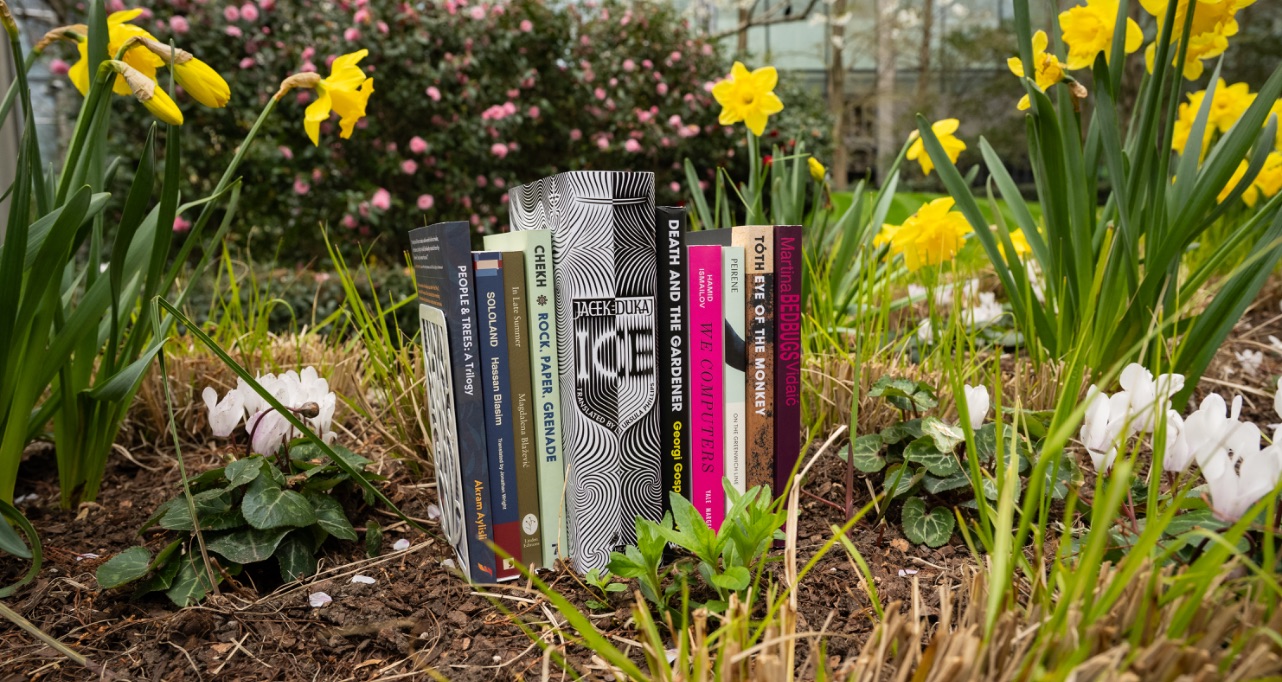
The shortlisted books, in alphabetical order by author, are:
People and Trees: A Trilogy by Akram Aylisli (Azerbaijan), originally written in Azerbaijani and translated from the Russian by Katherine E. Young and published by Plamen Press
Sololand by Hassan Blasim (Iraq), translated from the Arabic by Jonathan Wright and published by Comma Press
In Late Summer by Magdalena Blažević (Croatia), translated from the Croatian by Anđelka Raguž and published by Linden Editions
Rock, Paper, Grenade by Artem Chekh (Ukraine), translated from the Ukrainian by Olena Jennings and Oksana Rosenblum and published by Seven Stories Press UK
Ice by Jacek Dukaj (Poland), translated from the Polish by Ursula Phillips and published by Head of Zeus, an imprint of Bloomsbury Publishing
Death and the Gardener by Georgi Gospodinov (Bulgaria), translated from the Bulgarian by Angela Rodel and published by Weidenfeld & Nicolson
We Computers by Hamid Ismailov (Uzbekistan), translated from the Uzbek by Shelley Fairweather-Vega and published by Yale University Press London
On the Greenwich Line by Shady Lewis (Egypt), translated from the Arabic by Katharine Halls and published by Peirene Press
Eye of the Monkey by Krisztina Tóth (Hungary), translated from the Hungarian by Ottilie Mulzet and published by Seven Stories Press UK
Bedbugs by Martina Vidaić (Croatia), translated from the Croatian by Ellen Elias-Bursać and published by Sandorf Passage
The independent jury is chaired by writer, critic and cultural journalist Dr Maya Jaggi and includes Albanian academic and author Professor Lea Ypi, Nigerian novelist Professor Chigozie Obioma and non-fiction writer Dr Marek Kohn.
Dr Jaggi said: “My fellow judges and I were thrilled by the poetry, inventiveness and sheer audacity of fiction emerging from societies in transitional turmoil – even at war. Spanning the 1920s to the dystopian future, from south London to Siberia, our shortlist ranges from a newly translated classic from mountainous Azerbaijan that dared to challenge the ideology of the day, to a love-hate triangle with a misogynist psychiatrist in the heart of Europe, tracing how authoritarian power and flagrant inequality corrode intimacy and trust. From the epic and elegiac to the epistolary and auto-fictional, these writers’ bold formal experiments vary from a Polish sci-fi odyssey of counterfactual history asking what if the Russian revolution had never happened, and a Bildungsroman centred on a Ukrainian Afghan-war veteran with PTSD, to a moving meditation on grief for a gardener-father. Another is set in a time before artificial intelligence’s infiltration of publishing, when an Uzbek novelist imagined a computer-generated narrator fed on Persian poetry, spawning a Borgesian novel in ghazal form.
“In the first year of Iraqi authors’ eligibility for the prize, an educated woman’s scorn for sharia law under Islamic State heads a trio of novellas that scourge sectarian militias (at great risk to the writer) and champion the ‘daydreaming’ imagination. That trilogy, and a darkly comic absurdist satire on the bureaucracy of funerals far from home – also translated from the Arabic – are reminders that economic transition is often inseparable from the agonies of displacement. That several of these books, chosen by an independent panel of judges, were written in some form of exile, underlines the vital need to defend freedom of expression.”
Three finalists will be announced at the end of April. The winning author and translator will be revealed on 2 July at a public awards ceremony and reception at the EBRD’s headquarters in London, attended by the judges and the finalist authors, translators and publishers. Prize money of €20,000 will be divided equally between the winning author and translator. The authors and translators of the other two finalist works will each receive €2,000.
The EBRD Literature Prize has been running since 2018 and is an annual award for a work of literary fiction originally written in a language of an economy where the Bank invests, translated into English and published in the past year, by a publisher based in Europe, North America or in a territory where the Bank operates.
For press and interview enquiries please contact:
lily@collective-wisdom.co.uk or truda@collective-wisdom.co.uk
