
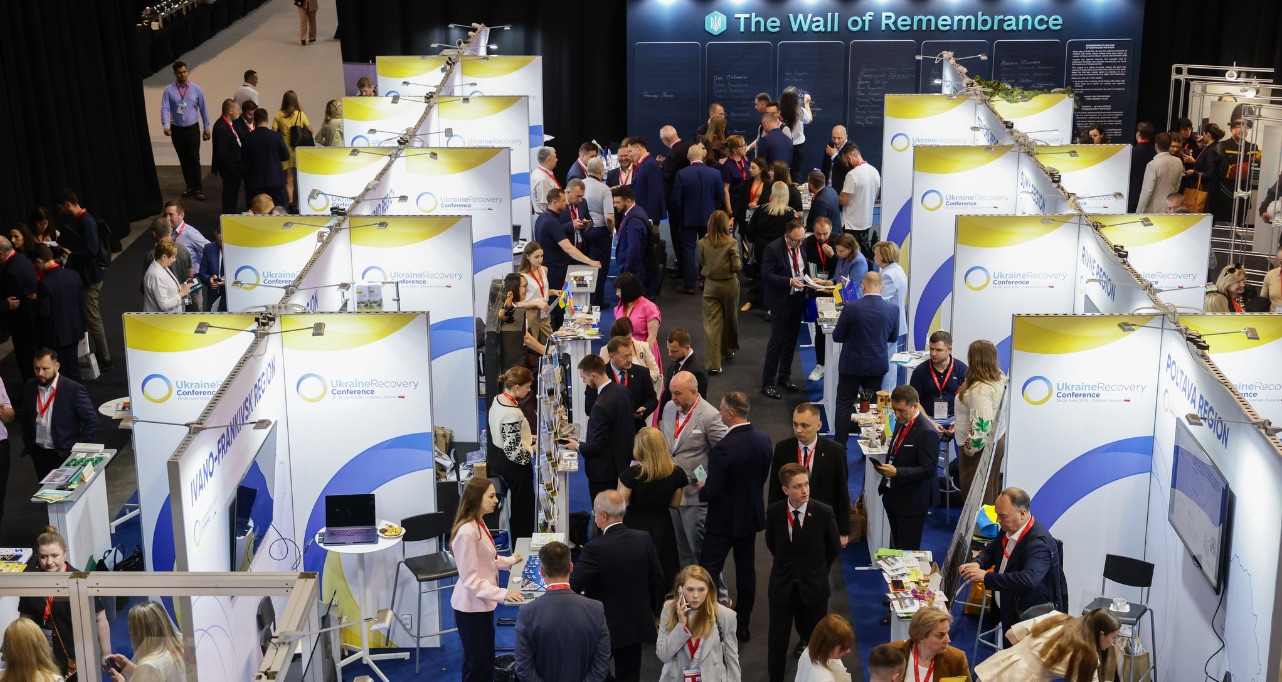
EBRD support for wartime Ukraine surpasses €10.5 billion as Bank commits significant new funding at Recovery Conference
More than €500 million of new finance agreed, reflecting the EBRD’s role as a key partner for Ukraine’s economy
26 Jun 2026
Who we are
Overview: about the EBRDWho we are
Overview: about the EBRD
Learn about the EBRD's journey to investing more than €220 billion in over 7,800 projects.
What we do
Overview: how the EBRD operatesWhat we do
Overview: how the EBRD operates
Across three continents, the EBRD supports the transition to successful market economies.
Work with us
Overview: how you can work with the EBRDWork with us
Overview: how you can work with the EBRD
We draw on three decades of regional knowledge and financial expertise to tailor our products and approaches to each client's needs.

 Eng
Eng
 Eng
Eng
Author: EBRD Press Office

The European Bank for Reconstruction and Development (EBRD) has announced sanctions on Nihat Demiroğlu and Ahmet Yalçın Yazici, both Turkish nationals, and an entity they jointly control. The two individuals have been debarred for 2 years, 4 months and 3 years, respectively.
These settlements were reached in connection with collusive and corrupt practices relating to two EBRD financed projects: one in Serbia (involving Mr Demiroğlu) and another in Ukraine (involving Mr Yazici). Both projects concerned the construction and rehabilitation of solid waste management systems and infrastructure.
At the time of the events in question, Mr Demiroğlu and Mr Yazici were working as a project manager and a business development manager, respectively, at a construction company that was ineligible to participate in EBRD-financed projects due to a debarment imposed previously by the EBRD.
An investigation by the EBRD’s Office of the Chief Compliance Officer (OCCO) found that Mr Demiroğlu and Mr Yazici, while serving as managers and acting under the guidance of their former employer, engaged in a collusive scheme to circumvent the company’s debarment. This scheme involved the use of a front entity to participate in EBRD-financed projects. These actions constitute a collusive practice under the EBRD’s Enforcement Policy and Procedures.
The investigation found that, while acting under the guidance of their former employer, Mr Demiroğlu and Mr Yazici also engaged in corrupt practices in two different tender procedures in an attempt to influence their outcomes. In one tender procedure, Mr Demiroğlu facilitated the receipt of an improper payment from a fellow bidder; and in a second one, Mr Yazici offered improper payments to another participant. Mr Yazici also engaged in a collusive practice by supporting another bidder’s participation in a procurement exercise to ensure sufficient competition and improve his former employer’s chances of securing that contract.
The settlement agreements provide for reduced sanction periods in recognition of the two individuals’ admissions of culpability and their cooperation during the investigation. Under the settlements, Mr Demiroğlu and Mr Yazici are ineligible to participate in EBRD-financed projects for 2 years, 4 months and 3 years, respectively.
These sanctions qualify for cross-debarment by other multilateral development banks under the Agreement for Mutual Enforcement of Debarment Decisions signed on 9 April 2010.
About OCCO
OCCO plays a central role in the EBRD’s commitment to integrity through its mandate to investigate prohibited practices in EBRD-financed projects. More information on OCCO’s broader mandate and the EBRD’s sanctions system is available on our website.
More than €500 million of new finance agreed, reflecting the EBRD’s role as a key partner for Ukraine’s economy
26 Jun 2026

€25 million loan supports energy-efficient urban development in Ulaanbaatar
26 Jun 2026

Bank mobilises new SME financing by investing PLN 520 million in notes issued by VEHIS
25 Jun 2026