


Video
Helping women entrepreneurs thrive across the southern and eastern Mediterranean
With support, women entrepreneurs in Egypt, Jordan, Morocco and Tunisia are accessing finance and expertise
15 Oct 2026

 Eng
Eng
 Eng
Eng
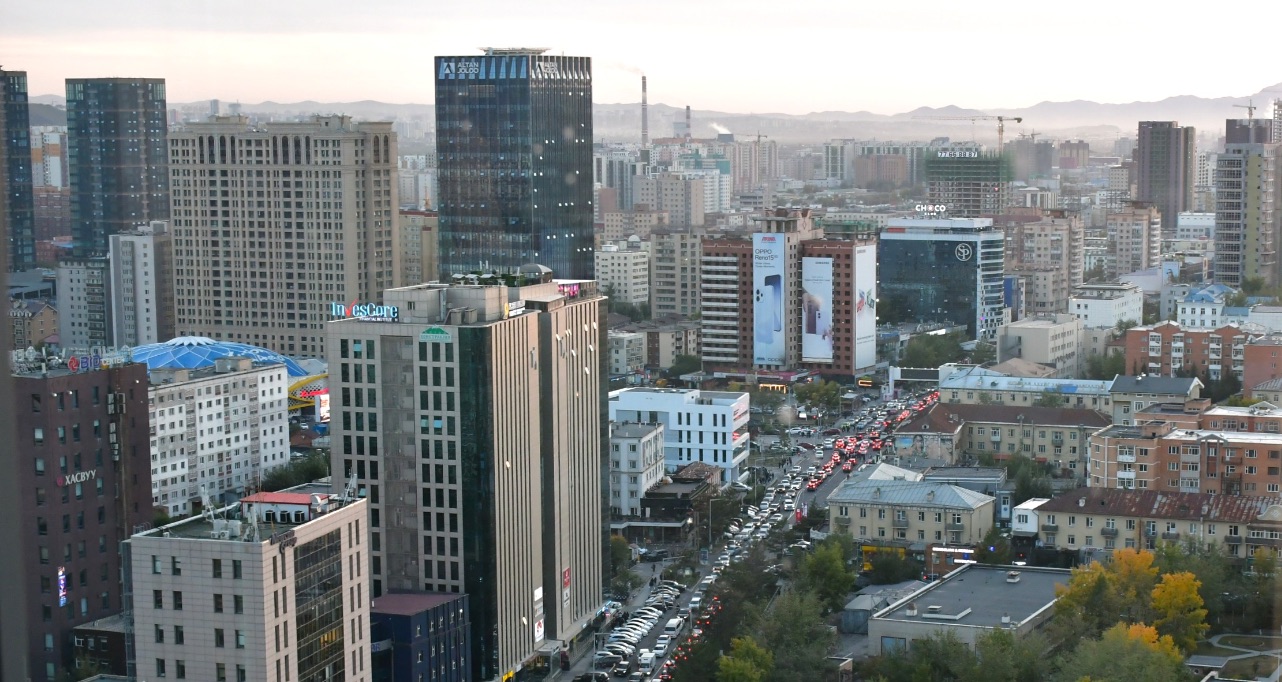
Growth across Central Asia and Mongolia remained strong, at 5.9 per cent year on year, in the first half of 2026, according to the latest Regional Economic Prospects report published by the European Bank for Reconstruction and Development (EBRD).
The Bank forecasts growth in Central Asia and Mongolia to remain robust at 5.8 per cent in 2026 and 5.3 per cent in 2027. It warns that weakening demand among key trading partners, elevated global energy prices linked to the Middle East conflict, disruptions to Russian fuel supplies and trade routes, and lower global commodity prices could all weigh on future economic expansion.
The fastest rates of GDP growth in the six months to June were recorded in the Kyrgyz Republic, Tajikistan and Uzbekistan, driven by the construction and manufacturing sectors, as well as domestic demand. Mongolia benefited from rising mining output and exports. Kazakhstan’s growth moderated due to lower oil production following export disruptions, while Turkmenistan continued to expand at a stable pace, supported by services, construction and state-led investment.
Economic growth in the region’s largest economy, Kazakhstan, slowed to 4.1 per cent year on year in the first half of 2026. Disruptions along the Caspian Pipeline Consortium export route and incidents at the Tengiz field resulted in the contraction of oil and gas output. At the same time, manufacturing output increased, supported by a strong performance in the machinery, food-processing and chemical industries. The construction sector expanded, too, driven by large-scale infrastructure projects. The Bank projects Kazakhstan’s GDP growth to reach 4.7 per cent in 2026 before moderating slightly to 4.5 per cent in 2027. The main downside risks stem from further disruptions to oil export routes, weaker external demand and lower commodity prices.
In the Kyrgyz Republic, real GDP expanded by 11.1 per cent year on year, driven by strong investment activity. Fixed capital investment rose significantly and was largely directed to transport, mining and energy infrastructure projects. Solid growth was also observed in the construction and manufacturing sectors. The EBRD projects GDP growth of 8.7 per cent in 2026 and 7.0 per cent in 2027. The key downside risks are linked to the Kyrgyz Republic's dependence on Russia for remittances and fuel imports.
Mongolia’s economic growth remained strong in the first six months, at 7.7 per cent year on year, mainly driven by mining. Coal production increased 52.4 per cent year on year, while copper output rose 20 per cent on the year as production at the Oyu Tolgoi mine continued to ramp up. These developments translated into stronger exports, with external demand emerging as the main driver of growth. The economy is forecast to grow by 6.3 per cent in 2026 and 5.5 per cent in 2027. Key downside risks include weaker demand from China and Mongolia’s dependence on fuel imports from Russia, which leaves it vulnerable to supply disruptions and higher global energy prices.
Tajikistan’s real GDP growth of 8.2 per cent year on year in the first half of 2026 was boosted by an expansion in services, manufacturing and agriculture. Household consumption remained resilient, supported by rising real wages and strong remittance inflows. Fixed capital investment grew 35.9 per cent year on year, reflecting continued infrastructure development. Exports increased significantly, by 57.2 per cent year on year, on the back of rising shipments of mineral products and precious and semi-precious metals and stones. According to the Regional Economic Prospects report, Tajikistan’s economic growth is likely to moderate to 7.9 per cent in 2026 and 7 per cent in 2027. The key downside risks stem from the country’s dependence on Russia as its main source of remittances and fuel. Prolonged disruptions to fuel supplies could weaken growth, particularly in the agricultural, trade and industrial sectors.
Turkmenistan’s economy continued to expand in the first six months of 2026, with official GDP growth of 6.3 per cent year on year. This growth was broad-based, driven by strong performances in the transport and communications, trade and other service sectors. Construction activity also grew, underpinned largely by continued state-led investment and the ongoing implementation of large-scale infrastructure and industrial projects. Turkmenistan’s growth is projected at 6.3 per cent in both 2026 and 2027. Downside risks lie mainly in weaker demand in China, lower energy prices and rising inflationary pressures from higher food and import costs.
Uzbekistan’s GDP growth accelerated to 8.5 per cent year on year in the first half of 2026, driven primarily by services and manufacturing. This growth also reflected strong investment in the manufacturing, construction and agricultural sectors. The EBRD projects real GDP to grow by 7.5 per cent in 2026 and 6 per cent in 2027. The main downside risks include a slowdown in Russia and prolonged disruptions to Russian fuel supplies, which could amplify the effects of elevated global energy prices caused by the conflict in the Middle East.